
Stories
38
49
0
2430
30
Briefs: Materials
Selective Clay Placement Within a Silicate Clay-Epoxy-Blend Nanocomposite
The dispersion of a layered silicate into an epoxy matrix often increases the material strength and stiffness, but reduces resin toughness. This innovation is a method to selectively place organically modified clay within specific regions of an epoxy blend, where the clay...
Briefs: Materials
Insulating Materials and Precursor Formulations, and Method of Forming
Methods were developed for forming an insulating material that combines a polysilazane, a cross-linking compound, and a gas-generating compound to form a reaction mixture, and curing the reaction mixture to form a modified polysilazane. The gas-generating compound may be water,...
Briefs: Energy
Negative Dielectric Constant Material Based on Ion-Conducting Materials
Metamaterials, or artificial negative index materials (NIMs), have generated great attention due to their unique and exotic electromagnetic properties. A negative dielectric constant material, which is an essential key for creating the NIMs, was developed by doping ions into a...
Briefs: Materials
Innovative, Low-CTE, Lightweight Structures with Higher Strength
A series of lightweight (density below 2.0 gm/cm3) composites has been manufactured that have controllable properties. The core composite has been improved to provide higher strength (similar to aluminum), extremely low density, receptivity to exterior coatings, and highly designable...
Briefs: Materials
Woven Thermal Protection System
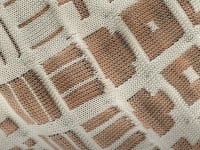
Woven thermal protection system (WTPS) is a new approach to producing TPS materials that uses precisely engineered 3D weaving techniques to customize material characteristics needed to meet specific missions requirements for protecting space vehicles from the intense heating generated during atmospheric entry. Using...
Briefs: Materials
Modeling Transmission Effects on Multilayer Insulation
Recent experimental results within the NASA community have shown apparent degradation in the performance of multilayer insulation (MLI) when used in low-temperature applications, e.g., in liquid hydrogen tanks. There was speculation that this degradation was due to the appearance of radiative...
INSIDER: Nanotechnology
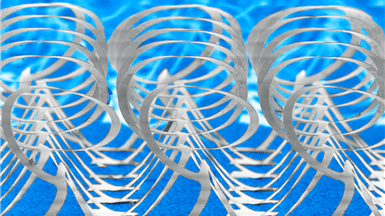
Exploiting mechanics principles similar to those found in children’s ‘pop-up’ books, researchers at the University of Illinois at Urbana-Champaign have developed a unique process for...
INSIDER: Materials
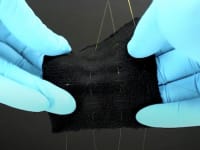
Scientists have developed a novel nanowire coating that can both generate heat and trap the heat from our bodies better than regular clothing.

Who's Who: Materials
Susan Draper performs microstructural analysis of metals and determines where fractures have occurred and propagated. Draper is currently characterizing...

Briefs: Materials
Improving Foreign Object Damage Performance for 2D Woven Ceramic Matrix Composites
As the power density of advanced engines increases, the need for new materials that are capable of high operating temperatures, such as ceramic matrix composites (CMCs), is critical for turbine hot-section static and rotating components. Such advanced materials can...
Briefs: Materials
Predictive Modeling of Corrosion Efficiencies and Toxicities
Atmospheric corrosion is significantly accelerated by the presence of heat, humidity, corrosive salts, and sunlight. At Kennedy Space Center (KSC), all of these accelerants are present, producing an extremely corrosive environment. Toxicity and environmental impacts of some inorganic...
Briefs: Materials
Selective Functionalization of Carbon Nanotubes
This invention is a process by which carbon nanotubes can be chemically functionalized according to their precise electronic structure. The process involves an exploitation of charge transfer stability at the nanotube sidewall to direct selective reaction of certain electronic structures over others....
Briefs: Materials
High-Performance Polyimide Powder Coatings
Powder coatings are used throughout industry to paint a myriad of metallic objects. This method of coating has gained popularity because of its conservation of materials and elimination of volatile organic compounds (VOCs). Resins used in powder coatings are traditionally chosen from those that have low...
Briefs: Sensors/Data Acquisition
Low-Weight, Durable, Low-Cost Metal Rubber Sensor System for Ultra-Long-Duration Scientific Balloons
Large axial load forces and extreme temperature ranges are typical for scientific balloon missions. Therefore, a durable, flexible, and thermally stable sensor material is needed. In this innovation, sensors have been designed to be integrated onto...
Briefs: Sensors/Data Acquisition
Magnetic Thermometer for High-Resolution 10-mK Scale Thermometry
A thin-film magnetic thermometer with integrated, superconducting quantum interference device (SQUID) readout has been designed for fast, precision temperature measurements in the 10-mK range. The compact magnetic thermometer consists of a miniature DC SQUID susceptometer with a...
Articles: Manufacturing & Prototyping
The technologies NASA develops don’t just blast off into space. They also improve our lives here on Earth. Life-saving search-and-rescue tools, implantable medical devices, advances in commercial aircraft safety,...
News: Semiconductors & ICs
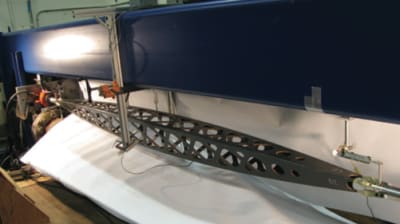
Scientists at the Department of Energy’s Oak Ridge National Laboratory have discovered exceptional properties in a garnet material that could enable development of...

News: Materials
A new way of switching the magnetic properties of a material using just a small applied voltage, developed by researchers at MIT and collaborators elsewhere, could signal the beginning...

Technologies: Materials
Shape Memory Alloys
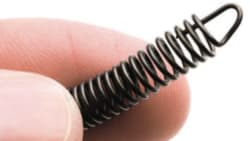
Shape Memory Alloys (SMAs) can be deformed at low temperature and recover their original shape upon heating. New alloys can operate up to ~300 °C, compared to ~80 °C for...
Technologies: Green Design & Manufacturing
Contaminated Water Treatment
This method offers a way of processing and recycling liquids to remove contaminants. The two-step process provides a contaminant treatment pouch, called a “urine cell” or...

Articles: Physical Sciences
Most of us cannot comprehend the task of building something to withstand temperatures over 4,000 °F, but NASA can. The space shuttles endured such temperatures when returning to Earth’s...

News: Materials
Researchers have developed new organic compounds characterized by higher modularity, stability, and efficiency that could be applicable for use in electronics or lighting. A...

News: Green Design & Manufacturing
Stanford engineers have invented a revolutionary coating material that can help cool buildings, even on sunny days, by radiating heat away from the buildings and sending it directly into space.

News: Sensors/Data Acquisition
Stanford engineers have invented a wireless pressure sensor that has already been used to measure brain pressure in lab mice with brain injuries. The underlying technology has such broad...
Who's Who: Materials
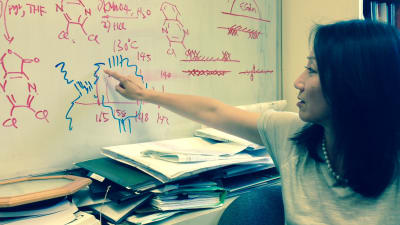
Jeff Ding, Aerospace Welding Engineer, Marshall Space Flight Center, Huntsville, AL
Jeff Ding developed Ultrasonic Stir Welding (USW) to join large pieces of very high‑strength metals, such as titanium and Inconel. The solid-state weld process improves the current Thermal Stir Welding process by adding high-power ultrasonic (HPU) energy at 20 kHz...
News: Materials
Researchers Measure Stress in 3D-Printed Metal Parts
Lawrence Livermore National Laboratory researchers have developed an efficient method to measure residual stress in metal parts produced by powder-bed fusion additive manufacturing (AM).The 3D-printing process produces metal parts layer by layer using a high-energy laser beam to fuse metal powder...
News: Materials
Microbot Muscles Self-Assemble and Flex
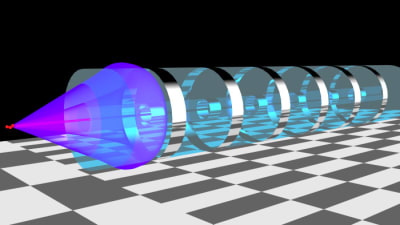
In a step toward robots smaller than a grain of sand, University of Michigan researchers have shown how chains of self-assembling particles could serve as electrically activated muscles in the tiny machines."We are inspired by ideas of microscopic robots," said Michael Solomon, a professor of chemical...
INSIDER: Photonics/Optics
Particle physicists have a hard time identifying all the elementary particles created in their particle accelerators. But now researchers at Chalmers University of Technology have...
Articles: Materials
Epoxies are versatile polymer systems that are “go-to materials” for electrical, electronic, and microelectronic systems, especially in applications where outstanding electrical insulation...

Top Stories
 Blog: Robotics, Automation & Control

Aerial Microrobots That Can Match a Bumblebee's Speed
 Blog: Electronics & Computers

Turning Edible Fungi into Organic Memristors
 Blog: Manufacturing & Prototyping

Revolutionizing the Production of Semiconductor Chips
 News: Energy

 INSIDER: Electronics & Computers

World’s Smallest Programmable, Autonomous Robots
 INSIDER: Manufacturing & Prototyping

Webcasts
 On-Demand Webinars: Power

E/E Architecture Redefined: Building Smarter, Safer, and Scalable Vehicles
 Upcoming Webinars: Energy

Hydrogen Engines Are Heating Up for Heavy Duty
 Upcoming Webinars: Electronics & Computers

Advantages of Smart Power Distribution Unit Design for Automotive...
 Upcoming Webinars: Automotive

Quiet, Please: NVH Improvement Opportunities in the Early Design...
 Upcoming Webinars: Power

A FREE Two-Day Event Dedicated to Connected Mobility
 Podcasts: Defense

How Sift's Unified Observability Platform Accelerates Drone Innovation