
Stories
38
49
0
480
30
Application Briefs: Semiconductors & ICs
New satellites equipped with Corning’s advanced hyperspectral-imaging technology can detect pipeline leaks and other environmental issues, providing precise monitoring and exploration capabilities for businesses and governments.

Application Briefs: Photonics/Optics
Optical parametric oscillator (OPO) lasers have long been utilized in sophisticated test and measurement applications such as mass spectrometry, photoacoustic imaging, and spectroscopy.
Articles: Photonics/Optics
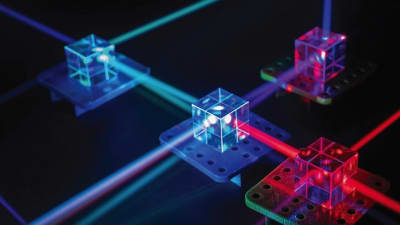
The blue laser has become the ideal light source for high-reflective metal processing, offering substantial advantages in various industrial applications such as cutting and welding.

Articles: Photonics/Optics
Any plan for the long-term exploration or habitation of the Moon and Mars will almost certainly entail the use of multiple habitats, vehicles and remotely located equipment, all of which will require power sources.

5 Ws: Electronics & Computers
Researchers at Tufts University have created microprocessor-scale transistors that can detect and respond to biological states and the environment.

Blog: Power
Which videos were the most popular this year? Find out, as we’ve curated the top 5 Tech Briefs videos from 2023. Relive their greatness here.

Podcasts: Materials
Dr. Johannes Dapprich, NeuroPair’s CEO and founder, discusses their revolutionary approach to spinal cord repair that won the Grand Prize in the 2023 Create the Future Design Contest.

INSIDER: Electronics & Computers
New research from Flinders University and UNSW Sydney, published in ACS Nano, explores switchable polarization in a new class of silicon compatible metal oxides...
INSIDER: Nanotechnology
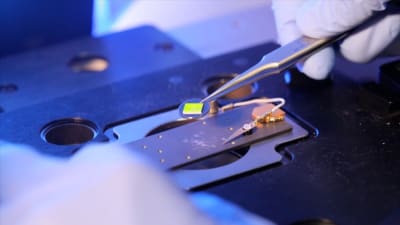
The 'wonder material' graphene is well-known for its high electrical conductivity, mechanical strength, and flexibility. Stacking two layers of graphene...
Blog: Imaging
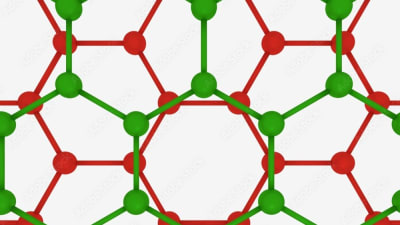
A new laser-based technique could speed up the discovery of promising metamaterials for real-world applications.
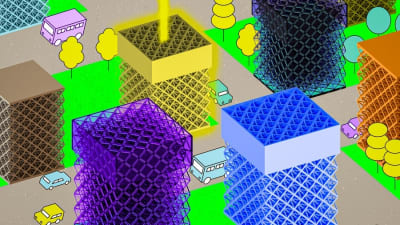
Briefs: Photonics/Optics
To further shrink electronic devices and to lower energy consumption, the semiconductor industry is interested in using 2D materials but manufacturers need a quick and accurate method for detecting defects in these materials to determine if the material is suitable for device manufacture.
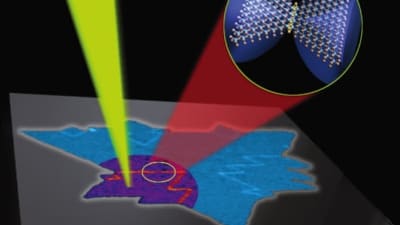
Briefs: Robotics, Automation & Control
Dr. Song Kahye along with Professor Lee, Dae-Young have jointly developed a soft gripper with a woven structure that can grip objects weighing more than 100 kg with 130 g of material. To increase the loading capacity of the soft robot gripper, the team applied a new structure inspired by textiles.

Articles: Manufacturing & Prototyping
Optimizing EV motors before they hit the market is crucial. As the demand for clean energy vehicles grows, customers need assurance that their chosen vehicle is reliable and fulfills sustainability promises.

Products: Materials
See the new products this month, including Motor Stator Busbars for EVs; high-power, liquid-cooled configurable power solution; a compact, automated battery cycler and test system; and more.
Briefs: Materials
A collaborative research team has achieved a groundbreaking milestone in battery technology. Their remarkable achievement in developing a non-flammable gel polymer electrolyte is set to revolutionize the safety of Li-ion batteries by mitigating the risks of thermal runaway and fire incidents.

Briefs: Materials
A team developed a framework for designing solid-state batteries (SSBs) with mechanics in mind. Their paper, published in Science, reviewed how these factors change SSBs during their cycling.

Briefs: Materials
Researchers at Chalmers University of Technology, Sweden, have created a new and efficient way to recycle metals from spent electric vehicle (EV) batteries. The method allows recovery of 100 percent of the aluminum and 98 percent of the lithium in EV batteries.

Briefs: Energy
To improve battery performance and production, Penn State researchers and collaborators have developed a new fabrication approach that could make for more efficient batteries that maintain energy and power levels.
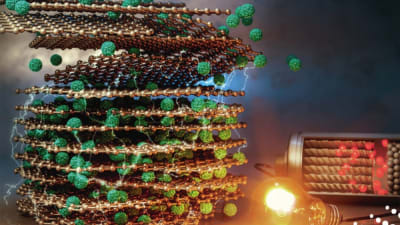
Blog: Robotics, Automation & Control
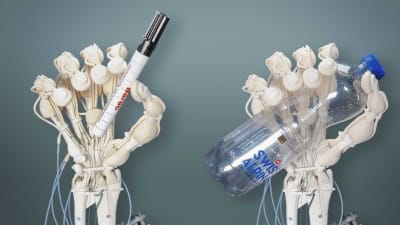
For the first time, researchers have succeeded in printing a robotic hand with bones, ligaments, and tendons made of different polymers using a new laser scanning technique.
Special Reports: Power

Additive Manufacturing - November 2023
AM/3D Printing is fundamentally changing how products are prototyped and produced in aerospace, medical, electronics, and many other fields. To help you keep pace with the latest advances, we present this...INSIDER: Research Lab
Flow-driven turbines lie at the heart of many machines that have shaped our societies, from windmills to airplanes. Even life itself depends critically on turbines for fundamental...

Q&A: Research Lab
Doctor Sergiy Kalnaus and his team at Oak Ridge National Laboratory have developed a framework for designing solid-state batteries that focuses on their underlying mechanics.

INSIDER: Medical
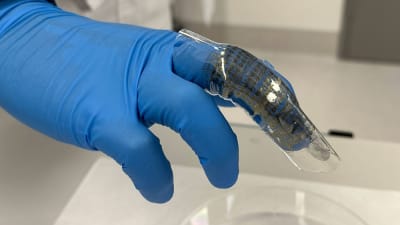
Researchers have invented an experimental wearable device that generates power from a user’s bending finger and can create and store memories, in a promising step...
NASA Spinoff: Materials
A coating material developed by NASA for protecting spaceplanes’ heat shields is now being used in high-tech fibers and fabrics.

5 Ws: Energy
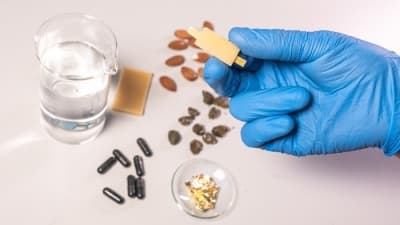
A team of researchers at the Italian Institute of Technology (IIT) has created a totally edible and rechargeable battery, starting from materials that are normally consumed as part of our daily diet.
Special Reports: Research Lab

EV Battery Innovation - November 2023
Read about the latest advances in EV battery testing, fast-charging, materials technology, and much more in this new report brought to you by Battery & Electrification Technology and Automotive...Briefs: Materials
Researchers have developed a viable dust, water, and ice mitigation optical coating for space flight, aeronautical, and ground applications. The innovation of the LOTUS coating prevents contamination on sensitive surfaces.

Briefs: Photonics/Optics
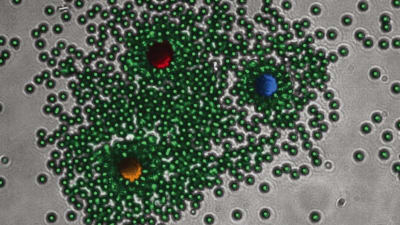
Researchers from Imperial College London and University College London have demonstrated the first spontaneously self-organizing laser device, which can reconfigure when conditions change.
Briefs: Materials
Researchers at the University of California San Diego have developed soft devices containing algae that glow in the dark when experiencing mechanical stress, such as being squished, stretched, twisted, or bent.

Top Stories
 Blog: Robotics, Automation & Control
Aerial Microrobots That Can Match a Bumblebee's Speed
 Blog: Electronics & Computers

Turning Edible Fungi into Organic Memristors
 Blog: Manufacturing & Prototyping

Revolutionizing the Production of Semiconductor Chips
 News: Energy

 INSIDER: Electronics & Computers

World’s Smallest Programmable, Autonomous Robots
 INSIDER: Manufacturing & Prototyping

Webcasts
 On-Demand Webinars: Power

E/E Architecture Redefined: Building Smarter, Safer, and Scalable Vehicles
 Upcoming Webinars: Energy

Hydrogen Engines Are Heating Up for Heavy Duty
 Upcoming Webinars: Electronics & Computers

Advantages of Smart Power Distribution Unit Design for Automotive...
 Upcoming Webinars: Automotive

Quiet, Please: NVH Improvement Opportunities in the Early Design...
 Upcoming Webinars: Power

A FREE Two-Day Event Dedicated to Connected Mobility
 Podcasts: Defense

How Sift's Unified Observability Platform Accelerates Drone Innovation