
Stories
38
49
0
2280
30
Briefs: Materials
Toughened Uni-piece Fibrous Reinforced Oxidation-Resistant Composite (TUFROC)
The Toughened Uni-piece Fibrous Reinforced Oxidation-Resistant Composite (TUFROC) allows for much more affordable and sustainable operations involving Space Launch Services and other systems that utilize Earth re-entry vehicles. TUFROC has an exposed surface design and...
Briefs: Materials
Measuring Bond Site Concentration on the Intrinsic Aerogel Surface Through Chemisorption of Chlorosilanes
This work involves development of aerogel to be used as a passive absorption media — effectively a concentrator of trace organics — that can be detected by optical techniques. Such a trace organic detection scheme is very different from all...
Briefs: Materials
Resistive Heating Method for TPS Property Measurements
A unique ultrasonic-based technique has been developed to measure temperature profiles in materials used in thermal protection systems (TPS). The technology requires measurements of the thermal expansion coefficient and the ultrasonic velocity for these materials as a function of temperature in...
Briefs: Materials
NASA has developed a class of low-density, flexible ablators that can be fabricated into heat-shields capable of being packaged, stowed, and deployed in space. The key characteristics of this new ablative...

Briefs: Materials
Shape memory alloys (SMAs), sometimes known as “smart metals,” provide a lightweight, solid-state alternative to conventional actuators and switches, such as...

INSIDER: Energy
Researchers Say Wood Windows Outshine Glass
In a University of Maryland study, researchers at the A. James Clark School of Engineering have demonstrated that windows made of transparent wood provide more consistent natural lighting and better energy efficiency than glass.
INSIDER: Imaging
A pair of University of Alabama in Huntsville (UAH) researchers aim to explore fundamental properties of infrasonic optical sensors that could make them more sensitive...
INSIDER: Electronics & Computers
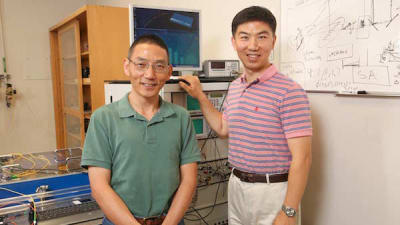
Deep inside the electronic devices that proliferate in our world, from cell phones to solar cells, layer upon layer of almost unimaginably small transistors and delicate circuitry shuttle...
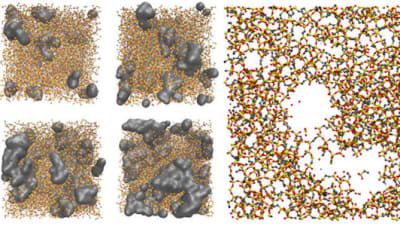
Briefs: Materials
NASA’s Langley Research Center has developed a new technique to enable the preparation of metal/composite hybrid laminates, also known as fiber metal laminates (FML), by...
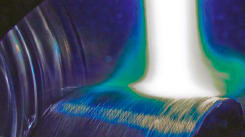
Briefs: Materials
Approach for Achieving Flame Retardancy While Retaining Physical Properties in a Compatible Polymer Matrix
NASA’s Kennedy Space Center (KSC) seeks to license its Advanced Fire Retardant Materials to industry. KSC’s scientists have developed processes and know-how to impart fire retardancy to common polymers such as nylons, polyesters, and...
Briefs: Materials
Catalytic Oxidation of Organic Contaminants at Reduced Pressure
The current technology for catalytic oxidation of aqueous organic contaminants at elevated temperature and pressure works well at operating conditions of 265 °F and 70 psia with effluent TOCs (total organic carbon) of less than 0.5 ppm. However, it does not perform well at the reduced...
Briefs: Materials
NASA-developed polyimide aerogels are 500 times stronger than conventional silica aerogels. The innovative aerogels represent a revolutionary advance over fragile silica aerogels...
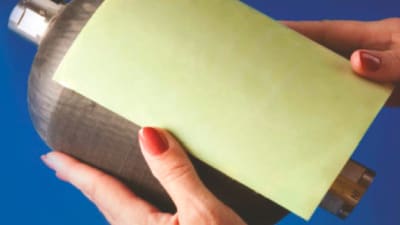
News: Lighting
The arrival of a thin, lightweight computer that even rolls up like a piece of paper will not be in the far distant future. Flexible organic light-emitting diodes (OLEDs), built upon a plastic...
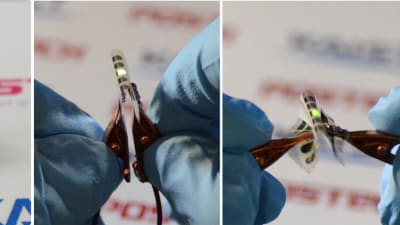
News: Materials
By inserting platinum atoms into an organic semiconductor, University of Utah physicists were able to "tune" the plastic-like polymer to emit light of different colors – a step toward more...
INSIDER: Manufacturing & Prototyping
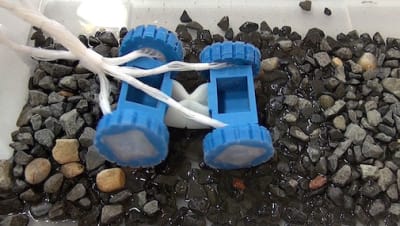
A small, squishy vehicle equipped with soft wheels was developed at Rutgers University to roll over rough terrain and run underwater. The vehicle features a soft motor that...
INSIDER: Aerospace
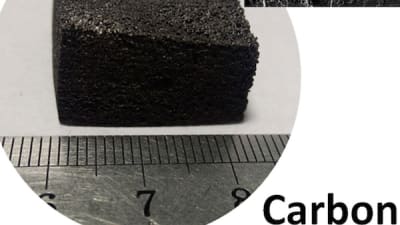
Sturdy, lightweight carbon foam has many structural and insulating applications in aerospace engineering, energy storage, and temperature maintenance. Researchers have developed a strong, lightweight, environmentally...
INSIDER: Materials
Researchers Develop Self-Healing, Shape-Changing Smart Material
Washington State University researchers have created a multi-functional smart material that changes shape when subjected to heat or light; the material then assembles and disassembles itself.
Briefs: Materials
Processing and Manufacture of Inorganic-Organic Hybrid Syntactic Structural Cryogenic Insulator
Reducing the cost and weight of launch structures is essential to meeting NASA goals for reliable access to space. Currently, separate systems are used for structure and pressure containment, cryogenic insulation, and high-temperature insulation. One way...
Briefs: Materials
Aluminoborosilicate Supplement for Thermal Protection of a Re-entrant Vehicle
The Toughened Uni-piece Fibrous Reinforced Oxidation-Resistant Com posite (TUFROC) allows for much more affordable and sustainable operations involving Space Launch Services and other systems that utilize Earth reentry vehicles. TUFROC has an exposed surface design and...
Briefs: Materials
Carbon Nanotube-Assisted Microwave Healing of Thermally Re-Mendable Composites
A method creates thermally healable composites using carbon nanotubes. Carbon nanotube microwave heating provides a pathway to overcome issues associated with electrical resistive heating networks. Carbon nanotubes embedded within a thermally reversible polymer can be...
Briefs: Materials
Ultralow-Temperature-Operable Solid Propellant Binder
A unique binder was developed that exhibits a glass transition temperature of –100 °C, which is more than 50 °C lower than that of traditional HTPB (hydroxyl-terminated polybutadiene) and CTPB (carboxyl-terminated polybutadiene) binders. This innovation would be a solid propellant that would...
Briefs: Materials
Aromatic Thermosetting coPolyester (ATSP) Composites for High-Temperature and Cryogenic Applications
Advanced composite materials processable by cost-effective manufacturing play an important role in developing lightweight structures for future space and planetary exploration missions. With the growing demand for improved performance in the...
Briefs: Materials
Integrated Ceramic Matrix Composite-Carbon/Carbon Structures for Large Rocket Engine Nozzles and Nozzle Extensions
Low-cost access to space demands durable, cost-effective, efficient, and low-weight propulsion systems. Key components include boost and upper stage rocket engine nozzles and extensions. Nozzle material options include ablatives,...
Briefs: Materials
NASA’s Langley Research Center has developed a technology that uses commercially available additive print manufacturing to add various levels of structural hierarchy to thin-film...
Briefs: Materials
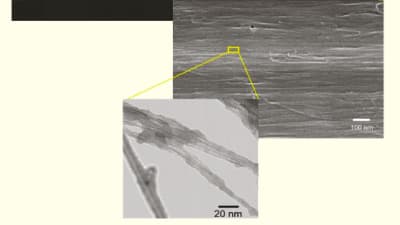
NASA’s Langley Research Center has developed a method to consolidate carbon nanotube yarns and woven sheets and graphene sheets via the dehydration of sucrose. The resulting...
Briefs: Materials
Method for Exfoliation of Hexagonal Boron Nitride
NASA’s Langley Research Center has developed a method for exfoliating commercially available hexagonal Boron Nitride (hBN) into nanosheets a few atomic layers thick. Currently, hBN has limited use because it is insoluble with limited dispersibility, despite hBN having excellent thermal...
INSIDER: Manufacturing & Prototyping
The present-day chemical industry is based on oil. Many chemical products – from plastics through to detergents and solvents, to medication and crop protection products – have their origins...

INSIDER: Mechanical & Fluid Systems
Researchers Keep Hydrogels Hydrated
Engineers at the Massachusetts Institute of Technology (MIT) have developed a way to prevent hydrogels from dehydrating. The water-based technique could lead to longer-lasting contact lenses, stretchy microfluidic devices, flexible bioelectronics, and even artificial skin.
INSIDER: Materials
3D-Printed Polymer Turns Methane to Methanol
By combining biology and 3D printing, Lawrence Livermore National Laboratory (LLNL) scientists have created a reactor that continuously produces methanol from methane at room temperature and pressure.
Top Stories
 Blog: Robotics, Automation & Control

Aerial Microrobots That Can Match a Bumblebee's Speed
 Blog: Electronics & Computers

Turning Edible Fungi into Organic Memristors
 Blog: Manufacturing & Prototyping

Revolutionizing the Production of Semiconductor Chips
 News: Energy

 INSIDER: Electronics & Computers

World’s Smallest Programmable, Autonomous Robots
 INSIDER: Manufacturing & Prototyping

Webcasts
 On-Demand Webinars: Power

E/E Architecture Redefined: Building Smarter, Safer, and Scalable Vehicles
 Upcoming Webinars: Energy

Hydrogen Engines Are Heating Up for Heavy Duty
 Upcoming Webinars: Electronics & Computers

Advantages of Smart Power Distribution Unit Design for Automotive...
 Upcoming Webinars: Automotive

Quiet, Please: NVH Improvement Opportunities in the Early Design...
 Upcoming Webinars: Power

A FREE Two-Day Event Dedicated to Connected Mobility
 Podcasts: Defense

How Sift's Unified Observability Platform Accelerates Drone Innovation