
Stories
38
49
0
420
30
Articles: Internet of Things
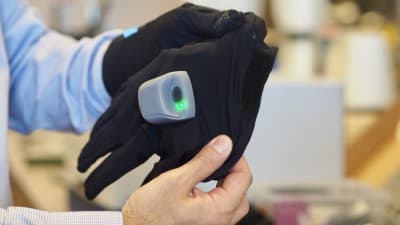
See the products of tomorrow, including: a new wireless smart textile technology that can boost hand mobility of stroke patients, a metal-free magnetic gel, and a new fuel cell that harvests energy from microbes living in dirt.
INSIDER: Automotive
A common carbon compound is enabling remarkable performance enhancements when mixed in just the right proportion with copper to make electrical wires. It’s a phenomenon that defies...

INSIDER: Materials
Guided by machine learning, chemists at the Department of Energy’s Oak Ridge National Laboratory designed a record-setting carbonaceous supercapacitor...

INSIDER: Research Lab
Researchers at Lawrence Livermore National Laboratory have furthered a new type of soft material that can change shape in response to light, a discovery that could advance “soft...
INSIDER: Materials
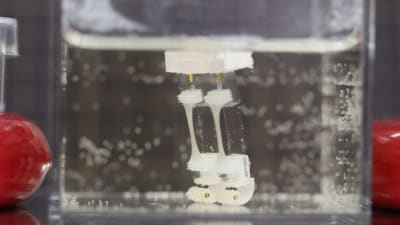
Compared to robots, human bodies are more flexible, capable of fine movements, and can efficiently convert energy into movement. Drawing inspiration from human gait, researchers...
INSIDER: Design
Scientists have created the world’s first working nanoscale electromotor, according to research published in the journal Nature Nanotechnology. The science team designed a turbine engineered from DNA...

Technology & Society: Design
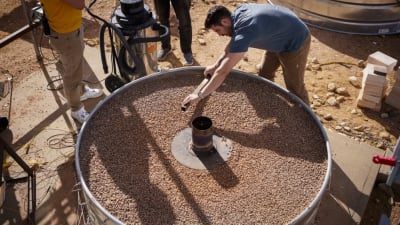
Sandia engineers convert excess renewable electricity into heat that gets stored in piles of gravel.
Special Reports: Communications

Test & Measurement - February 2024
From advanced fighter aircraft to future fleets of driverless cars, innovative test technologies are enabling major performance, quality, and cost improvements. Read about these and other applications in a new...Blog: Materials
Researchers have developed a battery that uses hemoglobin as an electrochemical reaction facilitator, functioning for around 20-30 days.

Special Reports: Manufacturing & Prototyping

Aerospace Manufacturing - February 2024
From AI to digital twins to extended reality (XR), an array of new technologies are coming together to shape the future of manufacturing. Read all about it in this compendium of articles from the editors...Events: Robotics, Automation & Control
Home How to Enter Terms & Conditions Meet the Judges Hall of Stars Sponsors
We are deeply grateful to our sponsors for their invaluable support of this year’s Rising Star Awards...

Events: Materials
Home How to Enter Terms & Conditions Meet the Judges Hall of Stars Sponsors
Meet the trailblazing women engineers who made history as winners of last year’s Rising Star Awards, chosen...

Events: Robotics, Automation & Control
Home How to Enter Terms & Conditions Meet the Judges Hall of Stars Sponsors
Thank you to our esteemed panel of judges, comprising leaders from engineering and technology fields, who bring...

Events: Electronics & Computers
Home How to Enter Terms & Conditions Meet the Judges Hall of Stars Sponsors
The Women in Engineering: Rising Star Awards program celebrates and recognizes women engineers who are enhancing the...

Events: Aerospace
Home How to Enter Terms & Conditions Meet the Judges Hall of Stars Sponsors
Nominations for the 2025 Rising Star Awards have closed.
All entries are being evaluated by a panel of judges...

Events: Aerospace
Home How to Enter Terms & Conditions Meet the Judges Hall of Stars Sponsors
Platinum Sponsors
See all sponsors
The wait is over. We’re thrilled to announce the...

Blog: Materials
Researchers led by Genki Kobayashi at the RIKEN Cluster for Pioneering Research in Japan have developed a solid electrolyte for transporting hydride ions at room temperature.

Special Reports: Green Design & Manufacturing

Award–Winning Breakthrough Inventions - February 2024
The Create the Future Design Contest recognizes and rewards engineering innovations that benefit humanity, the environment, and the economy. In this special report, learn about the eight...Articles: Materials
See the products of tomorrow, including the University of Maryland's "cooling glass"; the Reconfigurable Robotics Lab's sensor that can perceive combinations of bending, stretching, compression, and temperature changes using color; Tufts' tiny biological robots; and more.

Briefs: Wearables
A stretchable system that can harvest energy from human breathing and motion for use in wearable health-monitoring devices may be possible, according to an international team of researchers.

Briefs: Energy
Scientists at the U.S. Department of Energy’s (DOE) Argonne National Laboratory are researching solutions to these Li-ion battery issues by testing new materials in battery construction. One such material is sulfur.

Briefs: Materials
A team from Chalmers University of Technology has succeeded in observing how the lithium metal in the cell behaves as it charges and discharges. The new method may contribute to batteries with higher capacity and increased safety in our future cars and devices.

Briefs: Energy
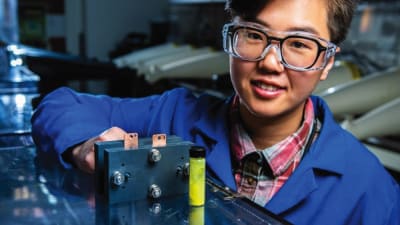
A research team from the Department of Energy’s Pacific Northwest National Laboratory reports that the flow battery, a design optimized for electrical grid energy storage, maintained its capacity to store and release energy for more than a year of continuous charge and discharge.
Briefs: Photonics/Optics
Researchers at the U.S. Department of Energy’s (DOE) Argonne National Laboratory have developed an autonomous, or self-driving, microscopy technique. It uses AI to selectively target points of interest for scanning. Read on to learn more.

Briefs: Photonics/Optics
An international team of researchers reports on a compact high-brightness mid-IR-driven source combining a gas-filled anti-resonant-ring photonic crystal fiber with a novel nonlinear-crystal. The tabletop source provides a seven-octave coherent spectrum from 340 nm–40,000 nm with spectral brightness 2–5 orders of magnitude higher than one of the brightest synchrotron facilities.

Briefs: Materials
Researchers have unveiled a remarkable new material with potential to impact the world of material science: amorphous silicon carbide (a-SiC). Beyond its exceptional strength, this material demonstrates mechanical properties crucial for vibration isolation on a microchip. It is therefore particularly suitable for making ultra-sensitive microchip sensors.

Briefs: Materials
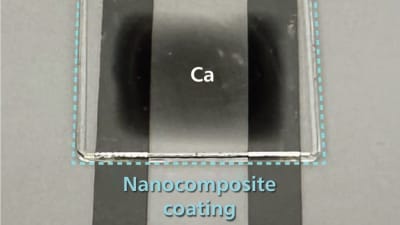
Developed by a team led by Lawrence Berkeley National Laboratory, a self-assembling nanosheet could significantly extend the shelf life of consumer products. And because the new material is recyclable, it could also enable a sustainable manufacturing approach that keeps single-use packaging and electronics out of landfills.
Briefs: Materials
A series of buzzing “loop-currents” could explain a recently discovered, never-before-seen phenomenon in a type of quantum material. The quantum material is known by the chemical formula Mn 3Si2Te6, but it’s safe to call it “honeycomb.” Read on to learn more.

Briefs: Materials
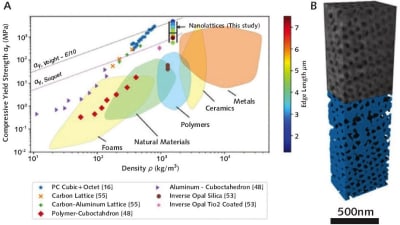
Scientists at the Columbia University, University of Connecticut, and the U.S. Department of Energy’s (DOE) Brookhaven National Laboratory were able to fabricate a pure form of glass and coat specialized pieces of DNA with it to create a material that was not only stronger than steel, but incredibly lightweight.
Top Stories
 Blog: Robotics, Automation & Control

Aerial Microrobots That Can Match a Bumblebee's Speed
 Blog: Electronics & Computers

Turning Edible Fungi into Organic Memristors
 Blog: Manufacturing & Prototyping

Revolutionizing the Production of Semiconductor Chips
 News: Energy

 INSIDER: Electronics & Computers

World’s Smallest Programmable, Autonomous Robots
 INSIDER: Manufacturing & Prototyping

Webcasts
 On-Demand Webinars: Power

E/E Architecture Redefined: Building Smarter, Safer, and Scalable Vehicles
 Upcoming Webinars: Energy

Hydrogen Engines Are Heating Up for Heavy Duty
 Upcoming Webinars: Electronics & Computers

Advantages of Smart Power Distribution Unit Design for Automotive...
 Upcoming Webinars: Automotive

Quiet, Please: NVH Improvement Opportunities in the Early Design...
 Upcoming Webinars: Power

A FREE Two-Day Event Dedicated to Connected Mobility
 Podcasts: Defense

How Sift's Unified Observability Platform Accelerates Drone Innovation