
Stories
38
0
2130
30
Briefs: Aerospace
Compact Termination for Structural Soft Goods
Space environments are particularly harsh for the high-strength fibers NASA relies on for soft structures. Kevlar, Nomex, Nylon, and other synthetic fibers are broken down by exposure to the combination of vacuum, atomic oxygen, and ultraviolet radiation. Glass fiber offers unique advantages for...
Briefs: Materials
Demands for improved computer processing power have led researchers to explore both new processes and other materials beyond silicon to produce electronic components....

Briefs: Medical
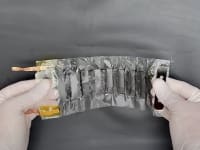
Removable Implant May Control Type 1 Diabetes
For the more than 1 million Americans who live with Type 1 diabetes, daily insulin injections are literally a matter of life and death. And while there is no cure, a new device may help manage the disease.
Products: Materials
Laser Sensors
The optoNCDT 1750 laser sensors from Micro-Epsilon, Raleigh, NC, feature measuring ranges of 500 and 750 mm for fast, high-precision measurement tasks that require large measuring ranges. They are...

Briefs: Electronics & Computers
For several decades, improvements in conventional transistor materials have been sufficient to sustain Moore’s Law — the historical pattern of microchip manufacturers...
Briefs: Photonics/Optics
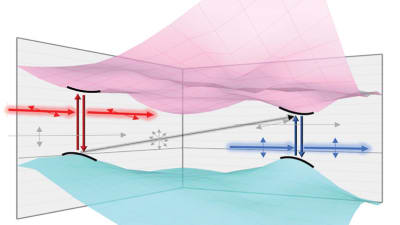
Commercial buildings in the United States account for nearly 40% of the total energy consumption. Among them, electricity is the largest energy source for buildings....

Briefs: Test & Measurement
It has been established opinion since the 1950s that organic crystals and liquid scintillators can work for detecting neutrons, but that plastics are not suitable for neutron detection. For years,...

Briefs: Aerospace
Aircraft coatings are the first line of defense when it comes to mitigating structural corrosion of an air platform. As new coatings are developed — particularly those that contain non-chrome primers...

Briefs: Materials
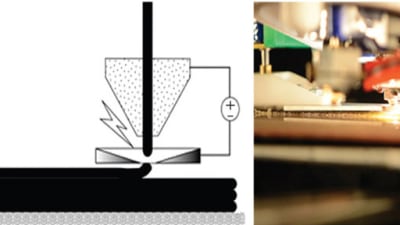
NASA Langley Research Center has developed a simple mechanism for the clean cutting of high-strength and high-toughness carbon nanotube/poly-mer fiber composites on demand without high blade wear or replacement...
Facility Focus: Defense
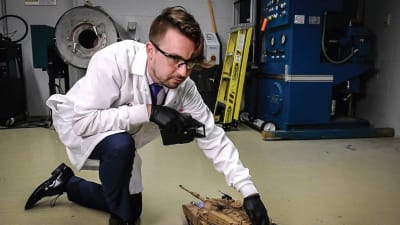
In October 1992, the U.S. Army Research Laboratory (ARL) was activated, consolidating the seven corporate labs of the Laboratory Command (LABCOM) with other Army research elements to form a centralized laboratory...
Briefs: Materials
Aerogels are among the lightest materials in the world, and are highly porous with strong absorption capacity and low thermal conductivity. These unique properties make aerogels highly suitable...

Articles: Sensors/Data Acquisition
With very little fanfare, a special class of alloys has been finding its way into our daily lives. From indestructible eyewear, to smartphone cameras, to coronary stents, this material is...
Articles: Materials
When engineer Mark Doyle started to put together plans for an exoskeleton to support surgeons in 2012, he wanted to develop a lightweight product that they could wear comfortably for...

Briefs: Robotics, Automation & Control
An eel-like robot was developed that can swim silently in salt water without an electric motor. Instead, the robot uses artificial muscles filled with water to propel itself. The...
INSIDER: Motion Control
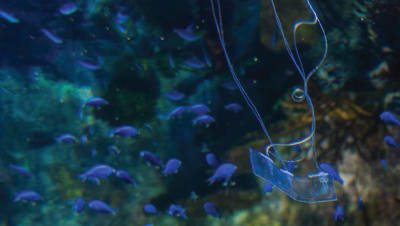
A 3D-printed smart gel that grabs objects and moves them could lead to soft robots that mimic sea animals like the octopus, which can walk underwater and bump into things without damaging them. Soft...

Blog: Manufacturing & Prototyping
Answering Your Questions: Beyond Prototyping, How is 3D Metal Printing Being Used in the Automotive Industry?
Can metal 3D printing help automakers with more than just prototyping? It can, and it has, says our engineering expert.
Blog: Materials
Professor Paul Steen helped to create a beetle-inspired adhesive. Now it's about finding applications for it.

Blog: Electronics & Computers
A stretchy material, modeled after squid skin, achieves thermal invisibility by reflecting heat.

Articles: Electronics & Computers
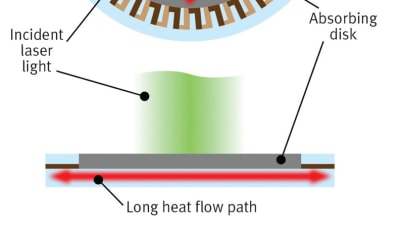
The need to measure laser output characteristics, including average power, pulse energy, and pulse shape, is a common requirement across many industrial and research applications. However,...
Application Briefs: Materials
Digital microscopes are being automated and computerized to make them easier to use, display more data with more detail and precision, and expand their areas of application. With traditional...

Articles: Sensors/Data Acquisition
Laser engineers are leveraging new materials, unusual gain mechanisms, and innovative cavity designs to push laser performance into new regimes. Pulse lengths are getting shorter,...

Briefs: Energy
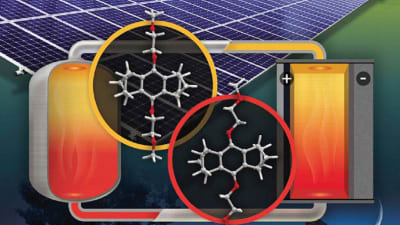
Researchers have created a material that consists of carefully structured molecules designed to be particularly electrochemically stable in order to prevent the battery from losing energy to unwanted reactions. In...
Briefs: Medical
A “4D printing” method was developed for a smart gel that could lead to the development of living structures in human organs and tissues, soft robots, and targeted drug delivery.

Briefs: Nanotechnology
New Methods in Preparing and Purifying Nanomaterials
Innovators at NASA’s Glenn Research Center have made several breakthroughs in treating hexagonal boron nitride (hBN) nanomaterials, improving their properties to supplant carbon nanotubes in many applications. These inventors have greatly enhanced the processes of intercalation and exfoliation....
Briefs: Photonics/Optics
Two-photon lithography (TPL), a high-resolution 3D printing technique, is capable of producing nanoscale features smaller than 1/100 the width of a human hair. The technique could enable X-ray...

Facility Focus: Electronics & Computers
This year, Oak Ridge National Laboratory (ORNL) marks 75 years as a research institution. Located in Oak Ridge, TN, ORNL is the largest US Department of Energy science and energy laboratory, conducting basic and...

Briefs: Test & Measurement
Plastic Material Works as a Heat Conductor
Plastics are excellent insulators, meaning they can efficiently trap heat — a quality that can be an advantage in something like a coffee cup sleeve. But this insulating property is less desirable in products such as plastic casings for laptops and mobile phones that overheat, in part, because the...
Briefs: Materials
This technology uses extracts produced from yeast transformed with a new anti-UV DNA construct to block ultraviolet (UV) radiation.

Briefs: Electronics & Computers
Technique Measures Temperature of 2D Materials at the Atomic Level
Newly developed two-dimensional (2D) materials such as graphene — which consists of a single layer of carbon atoms — have the potential to replace traditional microprocessing chips based on silicon, which have reached the limit of how small they can get. But engineers have been...
Top Stories
 Blog: Robotics, Automation & Control

Aerial Microrobots That Can Match a Bumblebee's Speed
 Blog: Electronics & Computers

Turning Edible Fungi into Organic Memristors
 Blog: Manufacturing & Prototyping

Revolutionizing the Production of Semiconductor Chips
 News: Energy

 INSIDER: Electronics & Computers

World’s Smallest Programmable, Autonomous Robots
 INSIDER: Manufacturing & Prototyping

Webcasts
 On-Demand Webinars: Power

E/E Architecture Redefined: Building Smarter, Safer, and Scalable Vehicles
 Upcoming Webinars: Energy

Hydrogen Engines Are Heating Up for Heavy Duty
 Upcoming Webinars: Electronics & Computers

Advantages of Smart Power Distribution Unit Design for Automotive...
 Upcoming Webinars: Automotive

Quiet, Please: NVH Improvement Opportunities in the Early Design...
 Upcoming Webinars: Power

A FREE Two-Day Event Dedicated to Connected Mobility
 Podcasts: Defense

How Sift's Unified Observability Platform Accelerates Drone Innovation