Materials & Coatings

Materials

Learn the latest developments and technical resources for next-generation materials technologies. Learn more about the applications in aerospace, medical, military, and 3D printing.

Latest Briefs & News

38
49
0
0
30
Briefs: Manufacturing & Prototyping
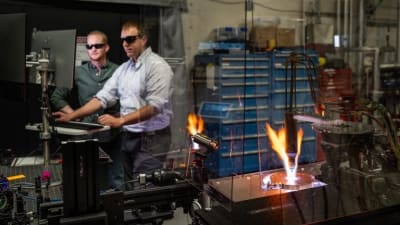
Researchers successfully used laser-based 3D printing to make alloys from two different metals, Inconel 718 and René 41, without cracking. Read on to learn more.
Feature Image
Articles: Mechanical & Fluid Systems
See the products of the month, including a new method that automatically keeps a fleet of robots moving smoothly; inspiration for a new class of materials built on interlocking particles; and a new chip design that could improve how GPUs convert and manage power.
Feature Image
Briefs: Mechanical & Fluid Systems
A lollipop gripper is one demonstration of a new type of soft magnetic hydrogel developed by engineers at MIT and their collaborators at EPFL in Switzerland and the University of Cincinnati. The MIT team reports on a new method to print and fabricate the gel, which can be made into complex, magnetically activated three-dimensional structures. Read on to learn more.
Feature Image
Briefs: Energy
Researchers at Columbia Engineering have developed a new gel electrolyte that both improves the lifetime and safety of anode-free lithium batteries, an emerging battery architecture that could dramatically boost energy density while simplifying manufacturing. Read on to learn more.
Feature Image
INSIDER: Electronics & Computers
The rapid expansion of data generation is challenging the capabilities of traditional charge-based electronics, such as smartphones and laptops. In response, researchers at Argonne National Laboratory are investigating alternative technologies that utilize electron spin. Read on to learn more.
Feature Image
Special Reports: Defense
Document cover
RF & Microwave Electronics - May 2026
NASA demonstrates first‐of‐its‐kind space communications…RF‐over‐fiber provides backbone of next‐gen mil/aero networks…how the US Space Force is leveraging commercial antennas for defense...

Special Reports: Materials
Document cover
Medical Manufacturing & Outsourcing - May 2026
'Make or break' material choices for miniaturized medical devices…new 3D printing technique for tissue engineering…rethinking contract manufacturing for a new era. Read all about it in this...

Webinars: Electronics & Computers
Feature Image
As electronic devices and components are required to operate in increasingly demanding environments, the need for highly reliable, conformal protective coatings...
Blog: AR/AI
Researchers developed a form of hafnium oxide that acts as a highly stable, low‑energy ‘memristor’ — a component designed to mimic the efficient way neurons are connected in the brain.
Feature Image
INSIDER: Lighting Technology
Scientists at Heriot‑Watt University have demonstrated in a world-first, that light can be used to control every aspect of how electromagnetic waves...
Feature Image
White Papers: Automotive
Document cover
Reducing CO2 Emissions by Up to 42% in Vehicle Cabin
Learn how a leading cab manufacturer for agricultural, construction, and industrial vehicles improved vehicle efficiency by trading welding for structural adhesives. The result: lighter,...

Quiz: Energy
Here is a five-question quiz to see how much you know about fuel cells. Take now!
Feature Image
Summits: Materials
While aluminum and aluminum alloys, steel, titanium alloys, and fiber-reinforced composites continue to dominate the aerospace materials and manufacturing industry, advanced materials such...
Feature Image
Briefs: Materials
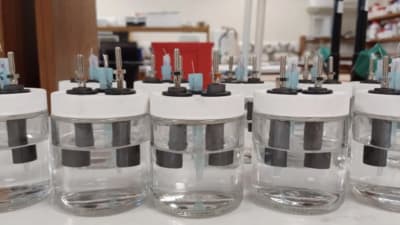
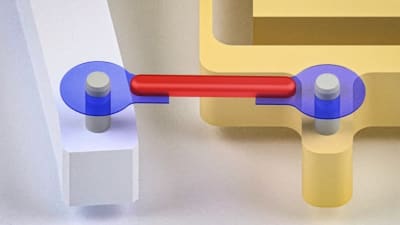
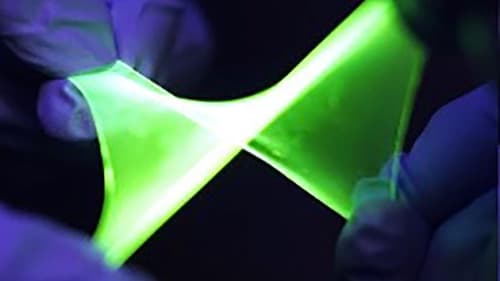
Is there a way to stick hard and soft materials together without any tape, glue, or epoxy? A new study published in ACS Central Science shows that applying a small voltage to certain objects forms chemical bonds that securely link the objects together. Read on to learn more.
Feature Image
Briefs: Photonics/Optics
Researchers at Lawrence Livermore National Laboratory have optimized and 3D-printed helix structures as optical materials for Terahertz frequencies, a potential way to address a technology gap for next-generation telecommunications, non-destructive evaluation, chemical/biological sensing and more. Read on to learn more.
Feature Image
Briefs: Physical Sciences
In an article published in Physical Review X, a team in The Grainger College of Engineering at the University of Illinois Urbana-Champaign showed how to engineer two-dimensional magnetic systems to obey the same equations as mobile electrons in the two-dimensional material graphene. Read on to learn more.
Feature Image
Articles: Energy
See the products of tomorrow, including a new material that can use sunlight and water to convert carbon dioxide into carbon monoxide; a novel design for solar-powered data centers that will orbit the Earth and could realistically scale to meet the growing demand for AI computing while reducing the environmental impact of data centers; and more.
Feature Image
Briefs: Electronics & Computers
Scientists are striving to discover new semiconductor materials that could boost the efficiency of solar cells and other electronics. But the pace of innovation is bottlenecked by the speed at which researchers can manually measure important material properties. A fully autonomous robotic system developed by MIT researchers could speed things up. Read on to learn more.
Feature Image
Briefs: Materials
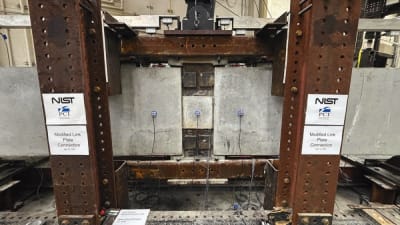
A University of Houston engineer has developed a method to detect possible damage in concealed cold-formed steel construction framing materials hidden behind walls, without having to tear the walls open. Read on to learn more.
Feature Image
Briefs: Sensors/Data Acquisition
It's a challenge that today’s sensors do not work optimally in humid environments. Now, researchers at Chalmers University of Technology, Sweden, are presenting a new sensor that is well suited to humid environments — and actually performs better the more humid it gets. Read on to learn more about it.
Feature Image
Briefs: Energy
Researchers have developed a flexible nylon-film device that generates electricity from compression and keeps working even after being run over by a car multiple times, opening the door to self-powered sensors on our roads and for other electronic devices. Read on to learn more.
Feature Image
White Papers: Medical
Document cover
Adhesive Bonding of Plastics in Medical Device Applications
Designing with plastics in medical devices isn’t straightforward. Surface energy, crystallinity, thermal expansion, and sterilization all require superior bond performance. This...

Special Reports: Materials
Document cover
Advanced Materials & Coatings - April 2026
In this compendium of articles from the editors of Tech Briefs and Aerospace & Defense Technology, learn how breakthroughs in materials science are enabling exciting new applications in defense...

Events: AR/AI
Thank you to everyone who shared their Tech Briefs story. We are no longer accepting submissions. Watch for featured stories in our September issue.  
Feature Image
White Papers: Materials
Document cover
Beyond Desiccant Packs: A Structural Approach to Moisture Control
Traditional desiccants take up space and can fail under vibration. Injection-molded desiccants offer a different approach—combining moisture adsorption with mechanical...

White Papers: Medical
Document cover
Eliminate Stiction in Medical Device Designs
Struggling with friction, stiction, or tolerance stack-up in your medical devices? PTFE dry lubricants offer a proven way to reduce actuation force, improve consistency, and enhance performance,...

Briefs: Materials
Imagine a tiny robot, no bigger than a leaf, gliding across a pond’s surface like a water strider. One day, devices like this could track pollutants, collect water samples, or scout flooded areas too risky for people. Baoxing Xu, Professor of Mechanical and Aerospace Engineering at the University of Virginia’s School of Engineering and Applied Science, is pioneering a way to build them. Read on to learn more.
Feature Image
Briefs: Energy
Even in arid parts of the world, there is usually moisture in the air. This moisture could provide much-needed water for drinking and irrigation, but extracting water out of air is difficult. A new technology developed by KAUST researchers can consistently extract liters of water out of thin air each day without needing regular manual maintenance. Read on to learn more.
Feature Image

Videos