
Stories
56
-1
480
30
INSIDER: Electronics & Computers
Researchers have created an exotic 3-D racetrack for electrons in ultrathin slices of a nanomaterial they fabricated at the Department of Energy’s Lawrence Berkeley...

INSIDER: Automotive
A new material could one day speed up the charging process of electric cars and help increase their driving range. Researchers have combined a covalent organic framework (COF) – a...

INSIDER: Materials
Advanced Spray-On Material Repels Water
A new spray-on material from engineers at The Australian National University (ANU) offers a more robust waterproofing capability than previous coatings. Combining two plastics, one tough and one flexible, the invention could eventually be used to protect mobile phones, de-ice airplane parts, or keep boat...
INSIDER: Nanotechnology
Plastic-Based Textile Leads to 'Cool' Clothes
A low-cost, plastic-based textile from Stanford University engineers could cool the body efficiently when woven into clothing.
INSIDER: Electronics & Computers
Technion researchers have developed a method for growing carbon nanotubes that could lead to the day when molecular electronics replace the ubiquitous silicon chip as the building...

INSIDER: Electronics & Computers
Baratunde Cola would like to put sand into your computer. Not beach sand, but silicon dioxide nanoparticles coated with a high dielectric constant polymer to inexpensively provide...

INSIDER: Nanotechnology
A breakthrough by an Australian collaboration of researchers could make infrared technology easy-to-use and cheap, potentially saving millions of dollars in defense and other areas using sensing...
INSIDER: Materials
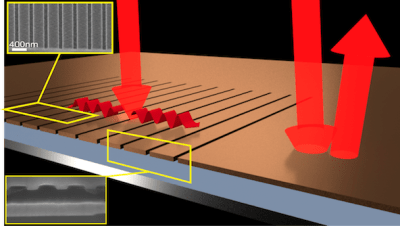
Syracuse University chemists have discovered a new way to visualize and monitor chemical reactions in real time. The team's advanced nanomaterial changes color when it interacts with ions and other...
INSIDER: Materials
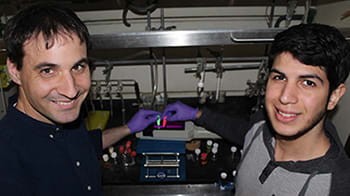
Researchers at Purdue University have created electrodes from a species of wild fungus called Tyromyces fissilis. Carbon fibers derived from the sustainable source have been shown to outperform...

INSIDER: Medical
Nanoparticles can be found in everything from drug-delivery formulations to high-definition televisions. They’re also expensive and a pain to make. Researchers at USC have created a new...

INSIDER: Imaging
Scientists at Australian National University have created a lens that measures one two-thousandth the thickness of human hair. The technology will support the development of flexible computer displays and...
NASA Spinoff: Sensors/Data Acquisition
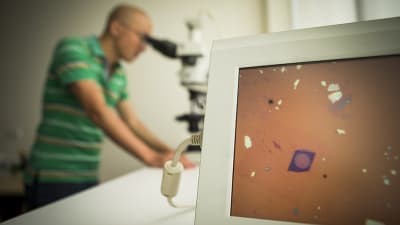
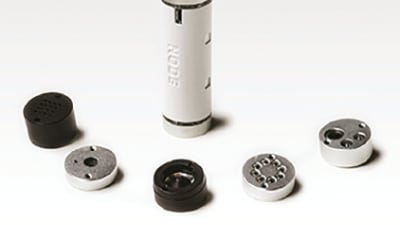
In 2007, when the Department of Homeland Security (DHS) issued a call for a sensor that could equip a smartphone with the ability to detect dangerous gases and chemicals, NASA Ames...
INSIDER: Mechanical & Fluid Systems
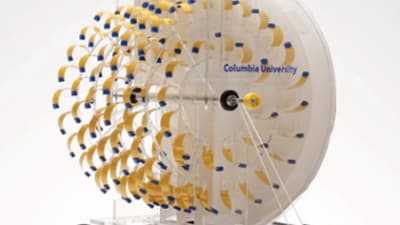
Biological systems are known to convert energy generated from the evaporation of water confined within nanoscale compartments into muscle-like mechanical work in response to changes in...
INSIDER: Photonics/Optics
Each of the single-molecule, 244-atom submersibles built at Rice University has a motor powered by ultraviolet light. With each full revolution, the motor’s tail-like propeller moves the sub forward...

INSIDER: Manufacturing & Prototyping
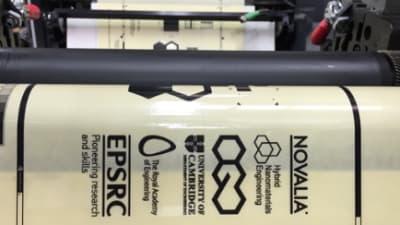
A low-cost, high-speed method for printing graphene inks using a conventional roll-to-roll printing process, like that used to print newspapers, could open up a...
INSIDER: Materials
Sponge-Like Material Soaks Up Oil Spills
In hopes of limiting the disastrous environmental effects of massive oil spills, scientists from Drexel University and Deakin University, in Australia, have teamed up to manufacture and test a new material. The boron nitride nanosheet absorbs up to 33 times its weight in oils and organic solvents — a...
INSIDER: Motion Control
Machines that are much smaller than the width of a human hair could one day help clean up carbon dioxide pollution in the oceans. Nanoengineers at the University of...

INSIDER: Motion Control
Rice University scientists have created light-driven, single-molecule submersibles that contain just 244 atoms. The motors of the "nanosubmarines" run at more than a million RPM, and the sub's...

INSIDER: Power
Capacitors are key components of portable electronics, computing systems, and electric vehicles. In contrast to batteries, which offer high storage capacity, but slow...

INSIDER: Motion Control
When driving a car, the clutch mechanically carries the torque produced by the engine to the chassis of the vehicle – a coupling that has long been tested and optimized in such macroscopic machines,...

INSIDER: Nanotechnology
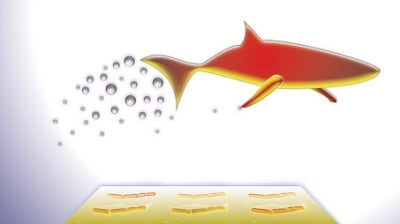
Nanoengineers at the University of California, San Diego used an innovative 3D printing technology they developed to manufacture multipurpose fish-shaped microrobots that swim around...
INSIDER: Energy
Quantum dots are nanoparticles of semiconductor that can be tuned to glow in a rainbow of colors. Since their discovery in the 1980s, these remarkable nanoparticles have held out tantalizing prospects for all...

INSIDER: Energy
New Nanowires Absorb Light
Harvard University scientists have created nanowires with new useful properties. The wire not only absorbs light at specific wavelengths, but also light from other parts of the spectrum. The technology could have applications in areas ranging from consumer electronics to solar panels.
INSIDER: Energy
Nanogenerator Harvests Power from Rolling Tires
A group of University of Wisconsin-Madison engineers and a collaborator from China have developed a nanogenerator that harvests energy from a car's rolling tire friction. The technology ultimately could provide automobile manufacturers with a new way to reuse energy and provide greater vehicle...
INSIDER: Test & Measurement
Researchers at Rice University have discovered a new way to make ultrasensitive conductivity measurements at optical frequencies on high-speed nanoscale electronic components. The...
INSIDER: Mechanical & Fluid Systems
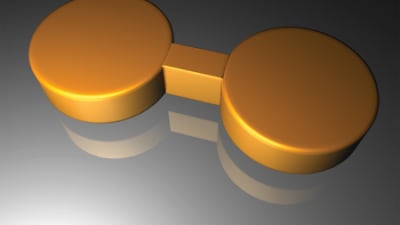
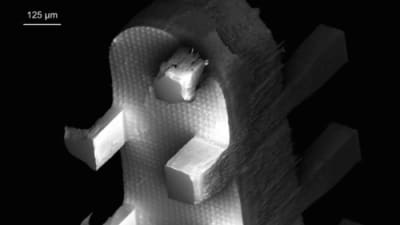
The high cost to manufacture nanofibers has relegated them to just a few niche industries. MIT researchers developed a new technique for producing nanofibers that increases the rate...
INSIDER: Electronics & Computers
New Computer Operates on Water Droplets
A synchronous computer from Stanford University operates using the unique physics of moving water droplets. The work combines the manipulation of droplet fluid dynamics with a fundamental element of computer science – an operating clock.
INSIDER: Mechanical & Fluid Systems
New Etching Method Boosts Nanofiber Production
A new technique from MIT researchers boosts production of nanofibers fourfold, while cutting energy consumption by more than 90 percent. Potential nanofiber applications include solar cells, water filtration, and fuel cells.
INSIDER: Materials
New Nanomaterials Mimic Bird Feathers
Inspired by the way iridescent bird feathers play with light, UC San Diego scientists have created thin-film materials in a wide range of pure colors: red, orange, yellow, and green. The hues are determined by physical structure rather than pigments.
Top Stories
 Blog: Robotics, Automation & Control

Aerial Microrobots That Can Match a Bumblebee's Speed
 Blog: Electronics & Computers

Turning Edible Fungi into Organic Memristors
 Blog: Manufacturing & Prototyping

Revolutionizing the Production of Semiconductor Chips
 News: Energy

 INSIDER: Electronics & Computers
World’s Smallest Programmable, Autonomous Robots
 INSIDER: Manufacturing & Prototyping

Webcasts
 Upcoming Webinars: Software

E/E Architecture Redefined: Building Smarter, Safer, and Scalable...
 Upcoming Webinars: Automotive

Hydrogen Engines Are Heating Up for Heavy Duty
 Upcoming Webinars: Electronics & Computers

Advantages of Smart Power Distribution Unit Design for Automotive...
 Upcoming Webinars: Transportation

Quiet, Please: NVH Improvement Opportunities in the Early Design...
 Upcoming Webinars: AR/AI

A FREE Two-Day Event Dedicated to Connected Mobility
 Podcasts: Manufacturing & Prototyping

How Sift's Unified Observability Platform Accelerates Drone Innovation