39
-1
0
30
Briefs: Mechanical & Fluid Systems
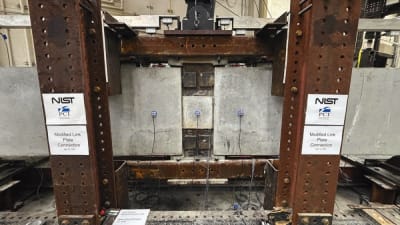
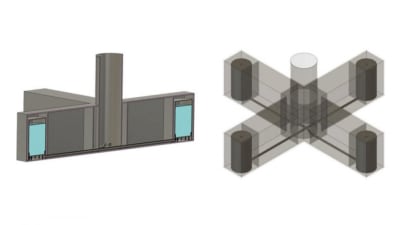
Researchers have developed five new ways to securely connect large concrete pieces. These connection methods are intended for a type of material called “precast concrete,” in which parts such as beams and columns are made in a factory and assembled later at a construction site. Read on to learn more.
Briefs: Robotics, Automation & Control
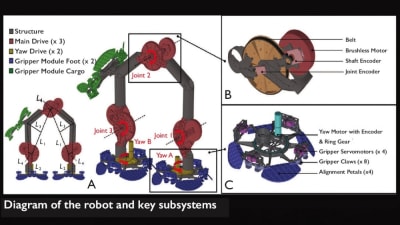
Missions to the moon and other planets will require large-scale infrastructure that would benefit from autonomous assembly by robots without on-site human intervention. NASA Ames Research Center has developed a novel and efficient mobile bipedal robot system to construct low-mass, high precision, and largescale infrastructure. Read on to learn more.
Briefs: Sensors/Data Acquisition
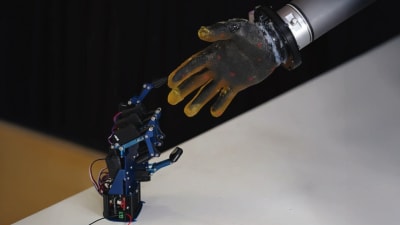
A team of engineers has developed a low-cost, durable, highly-sensitive robotic ‘skin’ that can be added to robotic hands like a glove, enabling robots to detect information about their surroundings in a way that’s similar to humans. Read on to learn more.
Briefs: Motion Control
Researchers have created a light-powered soft robot that can carry loads through the air along established tracks, similar to cable cars or aerial trams. The soft robot operates autonomously, can climb slopes at angles of up to 80°, and can carry loads up to 12 times its weight. Read on to learn more.

Briefs: Design
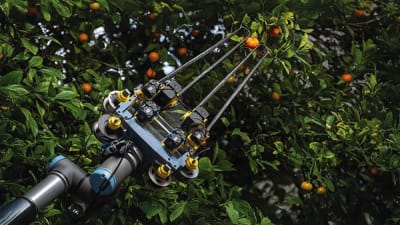
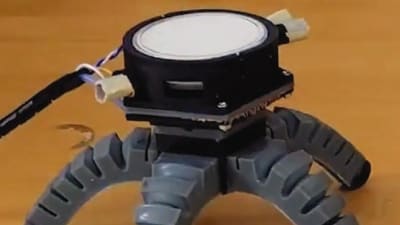
It’s a game a lot of us played as children — and maybe even later in life: unspooling measuring tape to see how far it would extend before bending. But to engineers at the University of California San Diego, this game was an inspiration, suggesting that measuring tape could become a great material for a robotic gripper. Read on to learn more about their robot, GRIP-tape.
Briefs: Materials
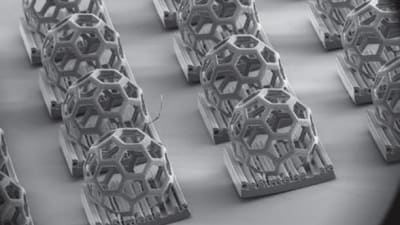
Researchers at Stanford University have introduced a more efficient processing technique that can print up to 1 million highly detailed and customizable microscale particles a day. Read on to learn more about it.
Briefs: Mechanical & Fluid Systems
In creating a pair of new robots, Cornell researchers cultivated an unlikely component: fungal mycelia. By harnessing mycelia’s innate electrical signals, the researchers discovered a new way of controlling “biohybrid” robots that can potentially react to their environment better than their purely synthetic counterparts. Read on to learn more.
Briefs: Manufacturing & Prototyping
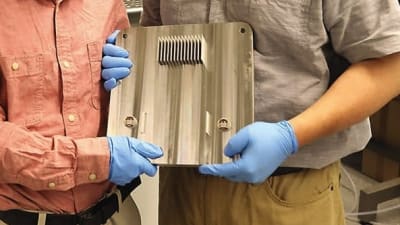
A research team led by Associate Professor Tao Sun has made new discoveries that can expand additive manufacturing in aerospace and other industries that rely on strong metal parts. Read on to learn more.
Briefs: Mechanical & Fluid Systems
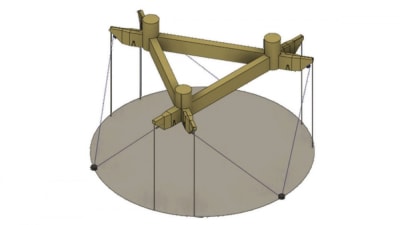
NASA engineers have developed a new approach to mitigating unwanted motion in floating structures. Ideally suited to applications including offshore wind energy platforms and barges, the innovation uses water ballast as a motion damping fluid.

Briefs: Mechanical & Fluid Systems
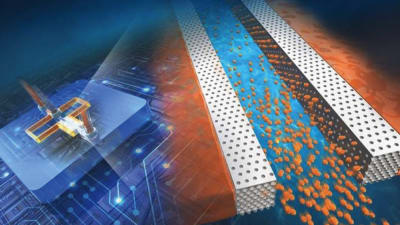
Researchers have introduced a microfluidic system that utilizes porous “inverse colloidal crystal” structures to dramatically improve the efficiency of microdroplet generation. Read on to learn more about it.
Briefs: Mechanical & Fluid Systems
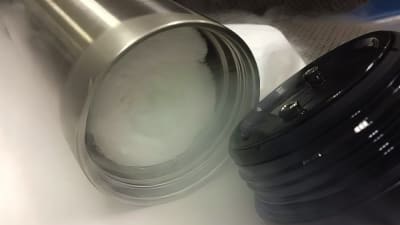
NASA’s Cryogenic Flux Capacitor capitalizes on the energy storage capacity of liquefied gases. By exploiting a unique attribute of nano-porous materials, aerogel in this case, fluid commodities such as oxygen, hydrogen, methane, etc. can be stored in a molecular surface-adsorbed state. Read on to learn more.
Briefs: Physical Sciences
NASA Kennedy Space Center engineers developed a Cryogenic Oxygen Storage Module to store oxygen in solid-state form and deliver it as a gas to an end-use environmental control and/or life support system. Read on to learn more about it.
Briefs: Software
Owl-Wing Study Could Aid in Developing Low-Noise Fluid Machinery
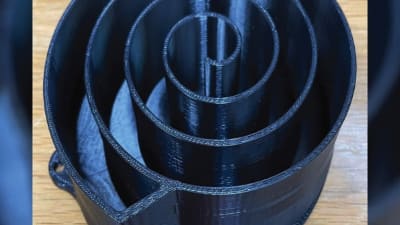
The study could aid in understanding the role of TE fringes in the silent flight of owls and can inspire biomimetic designs that could lead to the development of low-noise fluid machinery. Read on to learn more.
Briefs: Mechanical & Fluid Systems
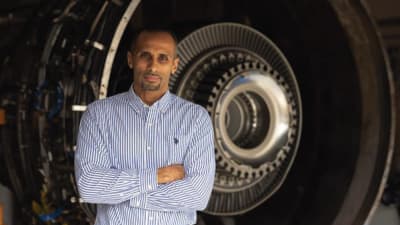
Over the past year, the DoD has awarded funding to hypersonics research led by University of Central Florida Mechanical and Aerospace Engineering Professor Kareem Ahmed to support the advancements he’s making in the technology. The support is a testament to the progress UCF has made in the field. Read on to learn more about these advances.
Briefs: Unmanned Systems
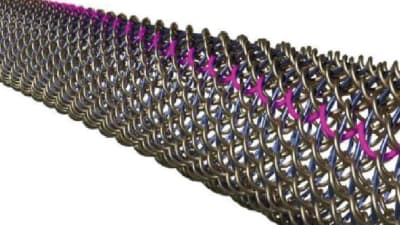
Applications include vehicle and aircraft tires, sports helmets, military equipment, and seals and couplings. Read on to learn more.
Briefs: Manufacturing & Prototyping
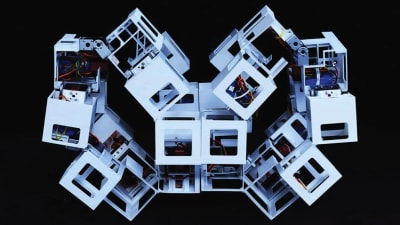
Inspired by the paper-folding art of origami, North Carolina State University engineers have discovered a way to make a single plastic cubed structure transform into more than 1,000 configurations using only three active motors. The findings could pave the way for shape-shifting artificial systems that can take on multiple functions and even carry a load. Read on to learn more.
Briefs: Software
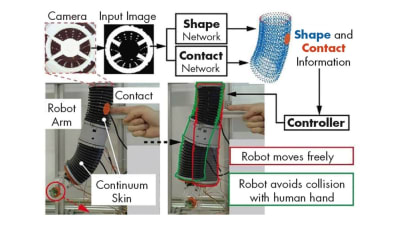
The sensing and control principles used in this framework could lead to new tactile sensors that can be attached to any existing robotics system, offering new sensing and control paradigms for safe human-robot interaction without altering the robot’s original design. Read on to learn more.
Briefs: Robotics, Automation & Control
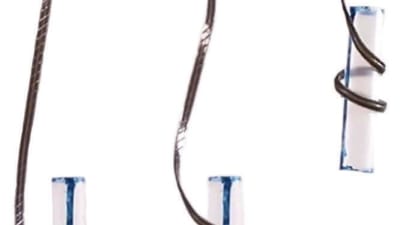
Researchers from NC State University have demonstrated mini soft hydraulic actuators that can be used to control the deformation and motion of soft robots that are less than a millimeter thick. The researchers also demonstrated that this technique works with shape memory materials.
Briefs: Manufacturing & Prototyping
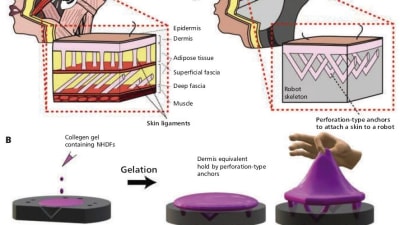
Researchers have found a way to bind engineered skin tissue to the complex forms of humanoid robots. This brings with it potential benefits to robotic platforms such as increased mobility, self-healing abilities, embedded sensing capabilities and an increasingly lifelike appearance.
Briefs: Materials
A team of scientists has successfully created a new synthetic metamaterial with 4D capabilities, including the ability to control energy waves on the surface of a solid material. These waves, called mechanical surface waves, are fundamental to how vibrations travel along the surface of solid materials.
Briefs: Mechanical & Fluid Systems
Led by Purdue University, the Resilient ExtraTerrestrial Habitats institute's goal is to “design and operate resilient deep space habitats that can adapt, absorb and rapidly recover from expected and unexpected disruptions.”
Briefs: Manned Systems
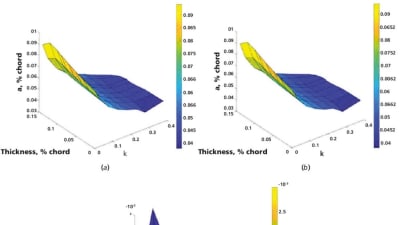
NASA’s Ames Research Center has developed a novel closed-form solution to model wing flutter aerodynamics for any aircraft wing (within a certain thickness regime and without camber). This closed-form solution can be readily extended to wing sections with camber.
Briefs: Materials
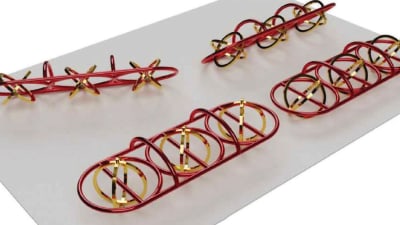
A technique enables manufacturing of minuscule robots by interlocking multiple materials in a complex way.
Briefs: Communications
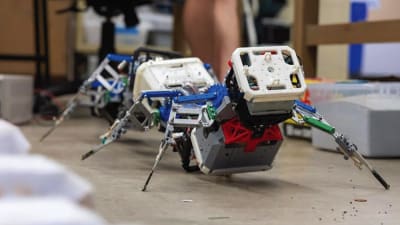
Intrigued to see if many limbs could be helpful for locomotion in this world, a team at the Georgia Institute of Technology is using a centipede's style of movement to its advantage. They developed a new theory of multilegged locomotion and created many-legged robotic models.
Briefs: Design
The ventilators are simpler and cheaper to make than those currently available.
Briefs: Robotics, Automation & Control
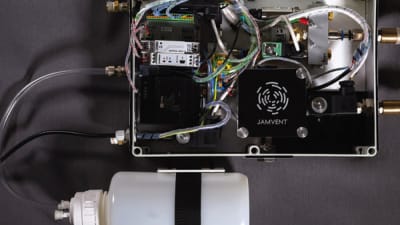
A team at ETH Zurich has developed an ultrasonically actuated glass needle that can be attached to a robotic arm. This lets them pump and mix minuscule amounts of liquid and trap particles.
Briefs: Mechanical & Fluid Systems
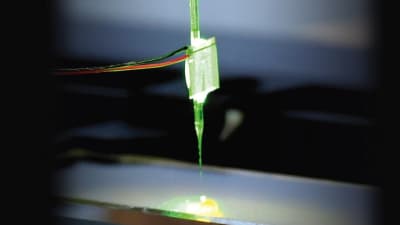
An ultra-small actuator has nanometer-scale precision.
Briefs: Energy
NASA engineers have developed a new approach to mitigating unwanted motion in floating structures. Ideally suited to applications including offshore wind energy platforms and barges, the innovation uses water ballast as a motion damping fluid.
Briefs: Design
The innovation can provide a wide range of damping forces, a linear damping function and/or an extended dynamic range of attenuation, providing broad flexibility in configuration size and functional applicability.
Top Stories
 Blog: Lighting

A Stretchable OLED that Can Maintain Most of Its Luminescence
 Blog: Energy

Batteries that Can Withstand the Cold
 INSIDER: Energy

Advancing All-Solid-State Batteries
 Blog: Power

My Opinion: We Need More Power Soon — Is Nuclear the Answer?
 Quiz: Power

 Blog: Data Acquisition

Webcasts
 Upcoming Webinars: AR/AI

From Spreadsheets to Insights: Fast Data Analysis Without Complex...
 Upcoming Webinars: Electronics & Computers

Cooling a New Generation of Aerospace and Defense Embedded...
 Upcoming Webinars: Sensors/Data Acquisition

Beyond AI-Copy-Paste Engineering: Advanced AI-Integration Success...
 Upcoming Webinars: Automotive

Battery Abuse Testing: Pushing to Failure
 Upcoming Webinars: Communications

A FREE Two-Day Event Dedicated to Connected Mobility
 Upcoming Webinars: Test & Measurement

Choosing the Right N-Port Strategy: Multiport VNAs vs. Switch...