Stories
0
0
0
INSIDER: Wearables
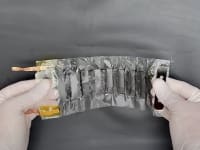
Researchers at the University of Houston report that they have designed and produced a smart electronic skin and a medical robotic hand capable of assessing vital diagnostic data...

INSIDER: Electronics & Computers
For a long time, something important has been regularly neglected in electronics. If you want to make electronic components smaller and smaller, you also need the right insulator materials. This is...

INSIDER: Electronics & Computers
The proliferation and miniaturization of electronics in devices, wearables, medical implants, and other applications has...

INSIDER: Sensors/Data Acquisition
Researchers at Helmholtz Zentrum München and the Technical University of Munich (TUM) have developed the world’s smallest ultrasound detector. Based on miniaturized...

Special Reports: Energy

RF & Microwave Electronics - October 2020
In this compendium of recent articles from the editors of Aerospace & Defense Technology and Tech Briefs, read about how advances in RF electronics are enabling new applications in space and ground...Special Reports: Packaging & Sterilization
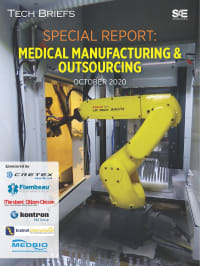
Medical Manufacturing and Outsourcing - October 2020
Discover how advances in factory automation, robotics, 3D printing and other fabrication technologies are shaping the future of medical device manufacturing in this Special Report – a...Special Reports: Internet of Things

Electronics Innovations - October 2020
In this compendium of articles from the editors of Tech Briefs magazine, discover how advances in electronic components are enabling game-changing applications in mobile healthcare/wearables, autonomous...Briefs: Electronics & Computers
The response time of kinetic inductance bolometers can be greatly enhanced by electrothermal feedback for devices that are both sensitive and speedy.

Products: Manufacturing & Prototyping
Tubing plugs, displacement measurements, CAM software, and more.
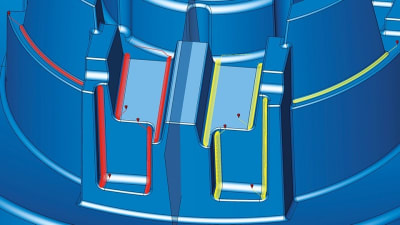
Briefs: Nanotechnology
A nanostructure design lends extraordinary strength to a promising storage ingredient.
Facility Focus: Test & Measurement
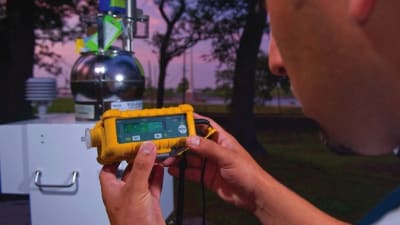
In 2020, the EPA marks 50 years of preparing for, responding to, preventing, and mitigating natural and manmade disasters.
Briefs: Photonics/Optics
A metal-organic framework does not contain cost-intensive raw materials and can be produced in bulk.

Briefs: Photonics/Optics
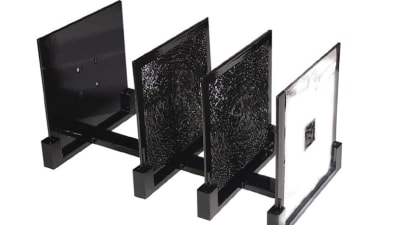
This technology can work with multiple wavelengths of light simultaneously.
Briefs: Imaging
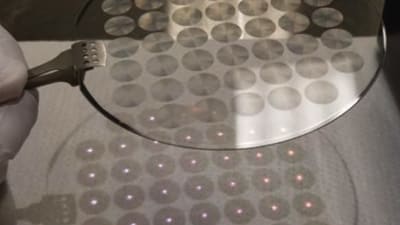
Applications include low-light conditions such as on orbital satellites and VR applications where the lens needs to be larger than a pupil.
Briefs: Semiconductors & ICs
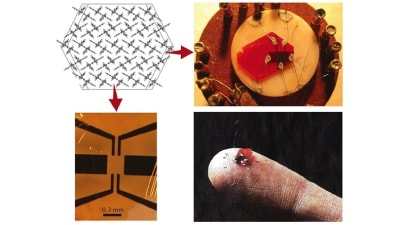
This method could benefit next-generation electronics.
NASA Spinoff: RF & Microwave Electronics
NASA's UAS traffic management expertise leads to advances in drone navigation.

Briefs: Energy
The new battery technology could improve electric vertical takeoff and landing aircraft and supercharge safe, long-range electric cars.

Briefs: Materials
These non-reciprocal devices on a compact chip pave the way for applications from two-way wireless to quantum computing.

Articles: Photonics/Optics
Nanowire masks, underwater imaging, and tiny 3D-printed block that repair bone breaks.

Briefs: Wearables
Fully integrated flexible electronics made of magnetic sensors and organic circuits open the path towards the development of electronic skin.

Briefs: Energy
This technique may enable speedy, on-demand design of softer, safer neural devices.
Briefs: Software
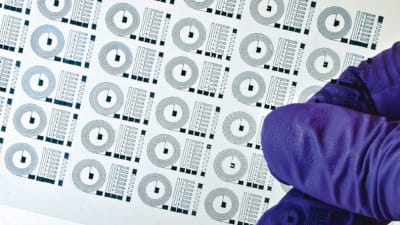
A higher-order network could be built that looks for subtle changes in data that point to suspicious activity.

Briefs: RF & Microwave Electronics
This system has a capacity of more than 1,500 times the volume of a typical testing facility.
Briefs: Materials
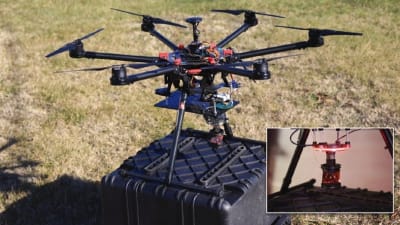
This technology makes it possible to save extensive data in objects such as shirt buttons, water bottles, or the lenses of glasses and then retrieve it years later.

Briefs: Manufacturing & Prototyping
The technique could enable the printing of circuit boards, electromechanical components, and robots.

Briefs: Unmanned Systems
The learning approach allows swarms of unmanned vehicles to optimally accomplish their mission while minimizing performance uncertainty.

Articles: Imaging
New collaborative robot-based vision systems are changing how manufacturers can inspect their parts.

Briefs: Sensors/Data Acquisition
Tiny aircraft that weigh as much as a fruit fly could serve as Martian atmospheric probes.

5 Ws: Green Design & Manufacturing
Would you take a walk in biodegradable flip-flops?
Briefs: Sensors/Data Acquisition
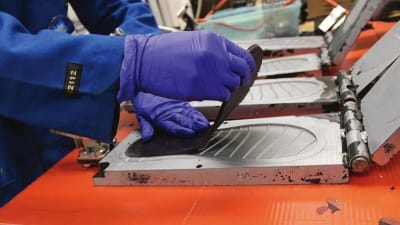
This method integrates 3D plasmonic nanoarrays onto stickers that adhere to any surface.
Briefs: Manufacturing & Prototyping
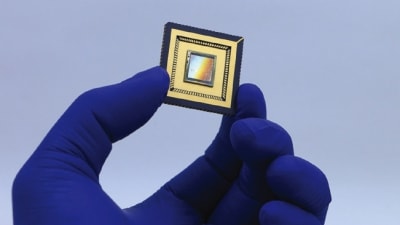
Applications include rapid prototyping, medical, aerospace, and automotive.
Briefs: Wearables
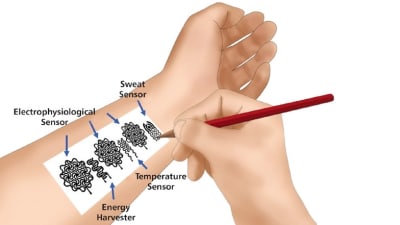
People could monitor their own health conditions by picking up a pencil and drawing a bioelectronic device on their skin.
Briefs: Manufacturing & Prototyping
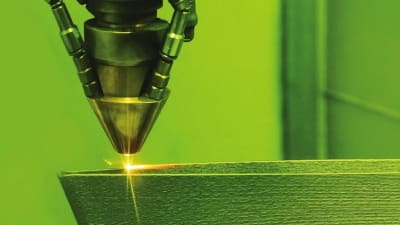
Temperature data is used to tune, and fix, defects in 3D-printed metallic parts.
Briefs: Electronics & Computers
This approach could engineer quantum materials atom-by-atom for new electronic, magnetic, and sensing applications.

Q&A: Test & Measurement
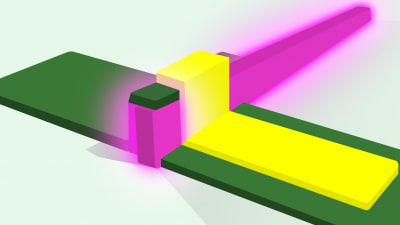
A nanoLED has up to 1,000 times the brightness of conventional submicron-sized LEDs.
Briefs: Transportation
The software assesses the quality of parts in real time, without the need for expensive characterization equipment.
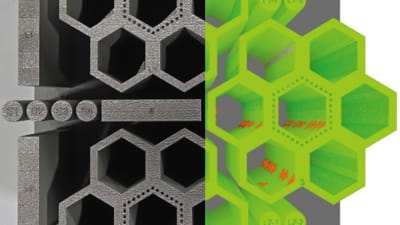
Briefs: RF & Microwave Electronics
Taking a cue from birds and insects, the wing design helps drones fly more efficiently and makes them more robust to atmospheric turbulence.
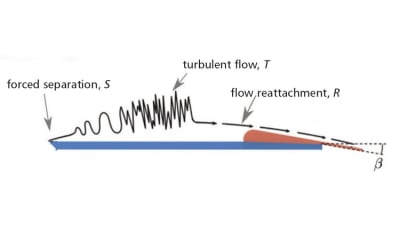
Briefs: Transportation
This method could impact optical technologies such as smartphone cameras, biosensors, or autonomous vision for robots and self-driving cars.

Briefs: Electronics & Computers
The algorithm provides an extra layer of safety and security against hackers of electronic devices.

Briefs: Energy
Traditional spark plugs are replaced by an optical pumping source.

Briefs: Energy
This battery would enable a 10-minute electrical vehicle recharge.

Briefs: RF & Microwave Electronics
The tiny unit is significant for the miniaturization of optoelectronic systems.

Briefs: Test & Measurement
This method can be used in astronomy, surveillance, and optics manufacturing.

Briefs: Test & Measurement
“EasyPass” would enable smart warehouses, automated factories, and more to operate without delays.

Briefs: Energy
Perovskites could be the active ingredient that makes the next generation of low-cost, efficient, lightweight, and flexible solar cells.
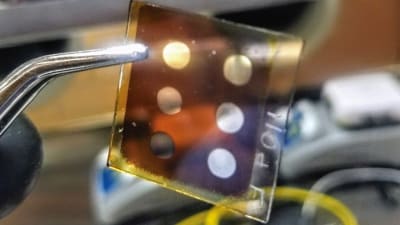
Briefs: Electronics & Computers
To make electronic components smaller, semiconductor 2D materials are combined with new types of insulator materials.

Briefs: Electronics & Computers
Neuromorphic computing uses memristors that could function and operate like real brain synapses.
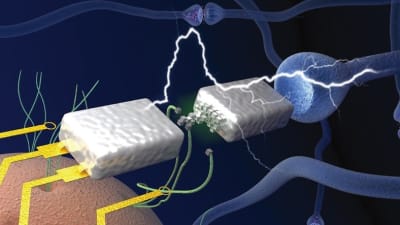
Briefs: Software
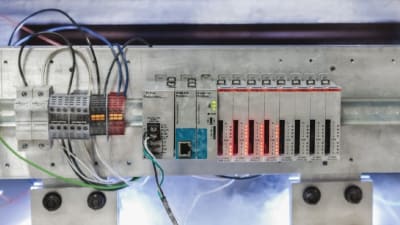
Open source microcontroller technologies in industrially hardened form factors address critical applications.
Briefs: Unmanned Systems
This capability will optimize performance of the vehicle through different phases of flight.

Briefs: Materials
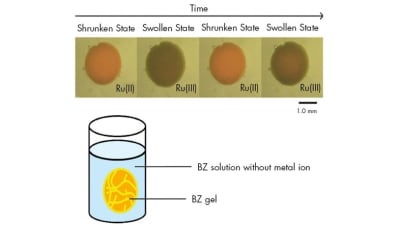
A soft hydrogel, driven by an oscillatory chemical reaction, produces an autonomous integrated pump for microfluidic applications.
Articles: Sensors/Data Acquisition
By consolidating tasks traditionally performed by multiple devices into a single, high-performing controller, manufacturers can improve operations.

Articles: Software
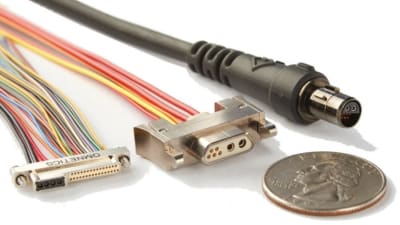
Standard commercial off-the-shelf (COTS) connectors continue to be a great resource for quick prototypes and reference designs.
Application Briefs: Motion Control
See how Blue Joule developed and delivered the Mini Mount (MM) Gimbal to Johns Hopkins University.

Briefs: Motion Control
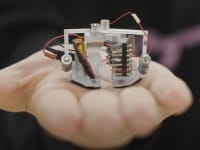
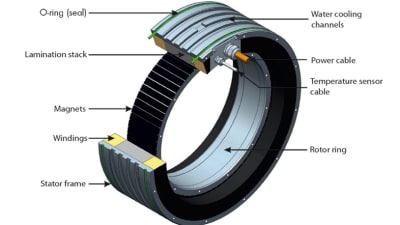
This mini robot improves precision and control of teleoperated surgical procedures.

Articles: Motion Control
Torque limiters protect against damage and downtime caused by machine overloads.

Special Reports: RF & Microwave Electronics
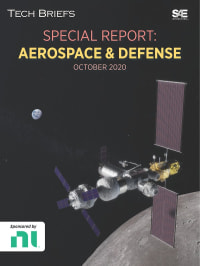
Aerospace & Defense - October 2020
In this compendium of recent articles from the editors of Tech Briefs and Aerospace & Defense Technology, you'll learn about NASA's return to the moon with Apollo's twin sister Artemis, how autonomous...Technology Leaders: Electronics & Computers
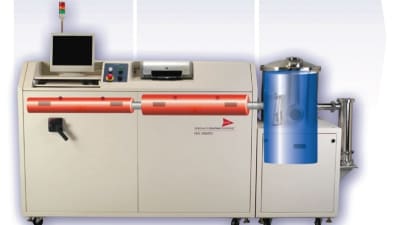
For nearly 50 years, engineers in the electronics, aerospace, defense, medical device, and transportation industries have relied on Parylene coatings.
Products: Software
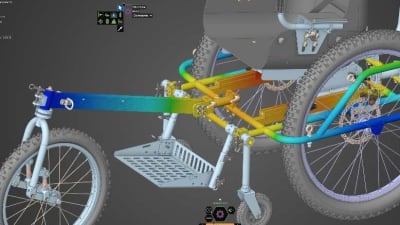
Users can edit the shape of a model while viewing results and watch the simulation update immediately.
Podcasts: Manufacturing & Prototyping
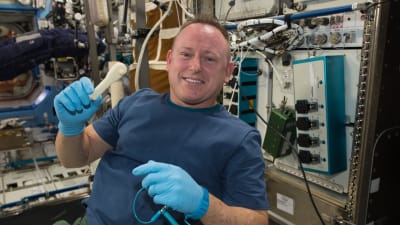
In this episode of Here's an Idea, NASA's Tracie Prater wants to leave spare parts back on Earth...and 3D print them in space.
INSIDER: Robotics, Automation & Control
Researchers created a way to send tiny, soft robots into humans. Doctors would use magnetic fields to steer the soft robot inside the body, bringing medications or treatments to places that need them.
Question of the Week: Photonics/Optics
Will Flat Fisheye Lenses Play a Greater Role in Medical Imaging and Consumer Electronics?
A recent Tech Briefs TV video demonstrated an achievement from engineers at MIT and the University of Massachusetts at Lowell. The teams designed the first completely flat fisheye lens to produce crisp, 180-degree panoramic images. The lenses, according to...
Blog: Mechanical & Fluid Systems
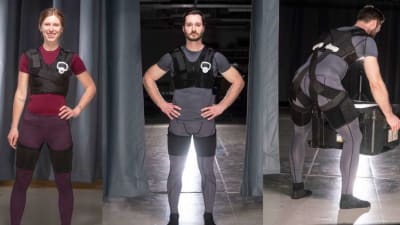
Vanderbilt University engineers are proving that their elastic exosuit can provide relief for people doing the heavy lifting.
Blog: Sensors/Data Acquisition
A reader asks, "Will the public feel safe enough in an autonomous vehicle?"

Question of the Week: Wearables
Will We Someday 'Draw' Sensors On Our Skin?
A Tech Brief featured in our October issue showcases how University of Missouri researchers are creating pencil-drawn sensors. The engineers demonstrated that the simple combination of pencils and paper could be used to create personal, health-monitoring devices.
Blog: Power
Researcher Nina Mahmoudian is finding a new way for underwater robots to recharge and upload their data, and then go back out to continue exploring, without the need for human intervention.

Blog: Mechanical & Fluid Systems
University of Central Florida researchers are developing a human-like way for large machines to cool off and keep from overheating: Letting the machines "breathe."

Question of the Week: Electronics & Computers
Will Self-Erasing Chips Catch On?
University of Michigan engineers reported that their new self-erasing chips could help stop counterfeit electronics or provide alerts if sensitive shipments are tampered with. The chips use a new material that temporarily stores energy, changing the color of the light it emits. The self-erase period takes seven...
Blog: Robotics, Automation & Control
A robot being tested at the University of California San Diego takes after an aquatic invertebrate that has a jet-like way moving through the water: The Squid.

Blog: Test & Measurement
A reader asks, "For AV testing, what are the respective role of simulation, closed course, and public road testing?"

Question of the Week: Robotics, Automation & Control
Would You Use a ‘SwingBot?’
A “SwingBot” robotic arm from MIT can learn the physical features of a handheld object through tactile exploration. Instead of using cameras or vision methods, the robot’s grippers use GelSight tactile sensors that measure the pose and force distribution of the object. Watch the demo on Tech Briefs TV.
INSIDER: Robotics, Automation & Control
NASA’s DuAxel, a pair of two-wheeled rovers each called Axel, can split in half with each half connected only by a tether that unspools as the lead axle approaches a hazard.

Blog: Manufacturing & Prototyping
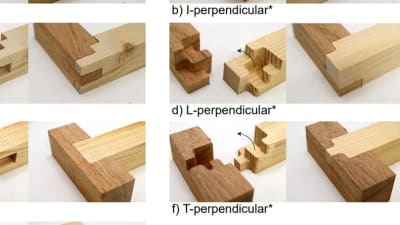
An interactive software being developed at the University of Tokyo allows architects and furniture makers with little experience in woodworking to to design and build structurally sound wood joints.
Blog: Photonics/Optics
Purdue University innovators are taking cues from the spider to develop 3D photodetectors for biomedical imaging.

Top Stories
 Blog: Power

My Opinion: We Need More Power Soon — Is Nuclear the Answer?
 Blog: AR/AI

Aerial Microrobots That Can Match a Bumblebee's Speed
 News: Energy

 Blog: Electronics & Computers

Turning Edible Fungi into Organic Memristors
 Blog: Robotics, Automation & Control

Microscopic Swimming Machines that Can Sense, Respond to Surroundings
 INSIDER: Sensors/Data Acquisition

Webcasts
 Upcoming Webinars: Power

Hydrogen Engines Are Heating Up for Heavy Duty
 Upcoming Webinars: Semiconductors & ICs

Advantages of Smart Power Distribution Unit Design for Automotive...
 Upcoming Webinars: Automotive

Quiet, Please: NVH Improvement Opportunities in the Early Design...
 Upcoming Webinars: AR/AI

From Spreadsheets to Insights: Fast Data Analysis Without Complex...
 Upcoming Webinars: Power

A FREE Two-Day Event Dedicated to Connected Mobility
 Podcasts: Aerospace

SiPhog Technology: Enabling GPS‑Independent Flight for Uncrewed Aerial...