Stories
0
3840
30
INSIDER: Energy
As we trend toward more renewables and distributed energy resources (DERs), the design of the electric distribution system itself imposes physical...

INSIDER: Materials
Safe, cheap, and sustainable technology for energy storage has been developed at the Laboratory of Organic Electronics, Linköping University (LiU). It is based on two major...
INSIDER: Electronics & Computers
Scientists from City University of Hong Kong (CityU) has recently developed battery-like electrochemical Nb2CTx MXene electrodes.

Question of the Week: Transportation
Will Automotive and Aerospace Industries Adopt Self-Healing Composites?
An INSIDER story this month highlighted how researchers from RPI and the University of Washington have created a composite that reverses fatigue damage — after applying some heat.
INSIDER: Motion Control
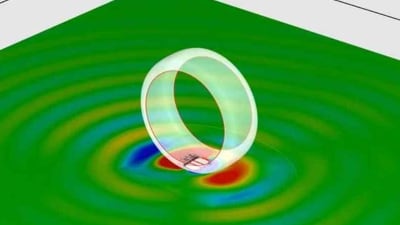
NASA Kennedy Space Center developed the Inductive Non-Contact Position Sensor for motion control applications. The sensor was designed to monitor the precise movements of an optical inspection system that...
INSIDER: Motion Control
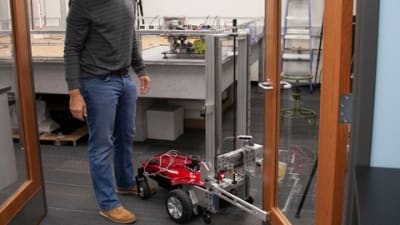
University of Cincinnati researchers developed an autonomous robot that can open a door for itself. It uses an appendage on a simple motorized lift the robot can raise and lower to reach a...
Blog: Transportation
A reader asks our industry expert:""Do the materials of construction have a big effect on gear generated noise?"
Blog: Materials
With some help from mussels and spider silk, a team of researchers has developed a strong, biocompatible adhesive that works well underwater.

Articles: Photonics/Optics
See top suppliers and manufacturers in over 20 categories, including high-speed cameras, sensors, and optical components.

INSIDER: Robotics, Automation & Control
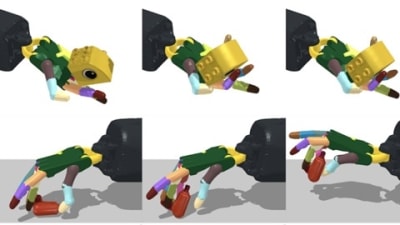
A robotic hand system was developed at MIT that can reorient over 2,000 diverse objects with a hand facing both upward and downward, in a step toward more human-like manipulation. This...
INSIDER: Robotics, Automation & Control
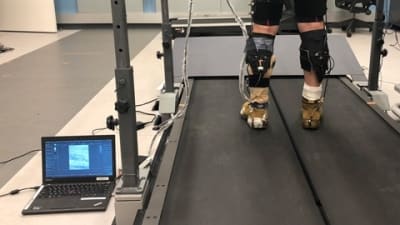
Researchers from Harvard University developed a new approach in which robotic exosuit assistance can be calibrated to an individual and adapt to a variety of real-world walking tasks in a...
INSIDER: Robotics, Automation & Control
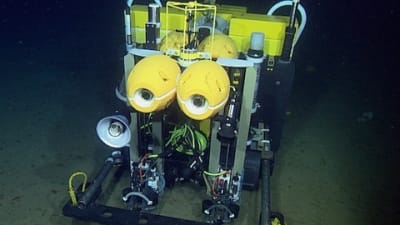
An autonomous robotic rover, Benthic Rover II, has provided new insight into life 13,100 feet beneath the surface of the ocean. The data collected are fundamental to understanding the...
Question of the Week: Aerospace
Will Mars Habitats Be Made from Blood?
Transporting a single brick to Mars is extremely expensive. The high cost presents a challenge for those planning the future construction of a Martian colony.
Blog: Materials
A team has created a new type of carbon fiber reinforced material that reverses any fatigue damage -- you just need a little heat.
Special Reports: Electronics & Computers

Medical Manufacturing & Outsourcing - November 2021
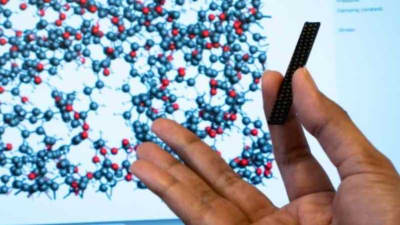
In this new report from the editors of Medical Design Briefs and Tech Briefs magazines, discover how the latest advances in 3D printing, machining, molding and more are changing the way...Question of the Week: Aerospace
Will Spinning Magnets Clean Up Space Debris?
Our lead story today highlights an effort from the University of Utah to use spinning magnets – and robots – to someday retrieve scraps and bring them to a decaying orbit.
INSIDER: Lighting
Climate change and its consequences are becoming...
INSIDER: Photonics/Optics
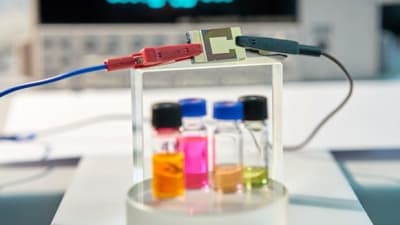
On isolated mountaintops across the planet, scientists await word that tonight is the night. The complex coordination between dozens...

INSIDER: Imaging
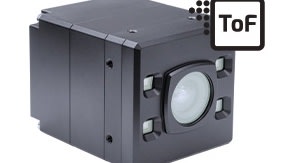
Time-of-Flight Camera
LUCID Vision Labs, Inc. (Richmond, BC, Canada) recently announced its new Helios™2+ 3D Time-of-Flight (ToF) camera offering two new on-camera depth processing modes: High Dynamic Range Mode (HDR) and...
INSIDER: Materials
Infrared (IR) light is invisible to humans. However, some animals, such as rattlesnakes or bloodsucking bats, can perceive IR radiation and use it to find food. But even for humans, the ability to see...

Blog: Transportation
A reader asks a simulation expert: How do you compensate for the interaction of rain or snow storms on lidar sensors?

Blog: Materials
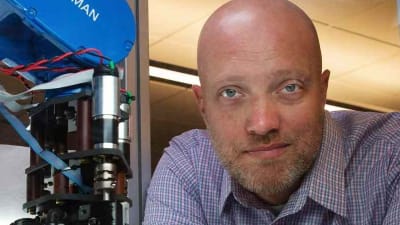
Prof. Jake J. Abbott is leading a team that has discovered a way to manipulate orbiting debris with spinning magnets.
Question of the Week: Nanotechnology
Can Borophane Beat Graphene?
A Tech Brief in our November issue highlights a new material that’s super-thin and super-strong. By combining hydrogen with an atom-thick sheet of boron known as borophane, researchers from Argonne National Laboratory (ANL) have created a potential alternative to the breakthrough 2D material graphene. The Argonne...
Articles: Aerospace
Thanos Yiagopoulos, Chief Technology Officer of Momentive Performance Materials, discusses how engineers can determine the best product for their application.

Articles: Materials
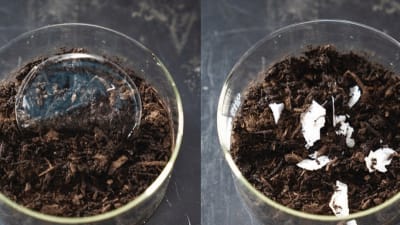
Once triggered, the enzyme-embedded plastics self-destruct, completely degrading and eliminating microplastics in days.
UpFront: Unmanned Systems
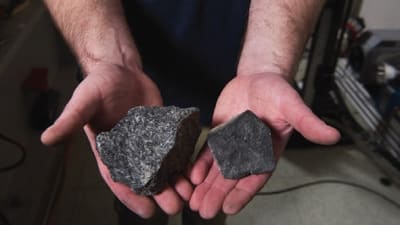
How to be a NASA intern; a new ideas for moon fabrics; and NASA's need for a better rover.
Articles: Electronics & Computers
Freetouch turns a smartphone into a touchscreen remote control.

Articles: RF & Microwave Electronics
Nanotube fibers that turn heat to power; a NASA antenna system; and an antimicrobial coating.

Application Briefs: Photonics/Optics
Unmanned aircraft present a range of optics challenges.

Top Stories
 Blog: Sensors/Data Acquisition

Going for Gold in Winter Olympic Curling
 Blog: Energy

Batteries that Can Withstand the Cold
 Blog: Lighting

A Stretchable OLED that Can Maintain Most of Its Luminescence
 INSIDER: Design

Advancing All-Solid-State Batteries
 Blog: Data Acquisition

 Blog: Materials

Webcasts
 On-Demand Webinars: Defense

Cooling a New Generation of Aerospace and Defense Embedded Computing...
 Upcoming Webinars: Software

Beyond AI-Copy-Paste Engineering: Advanced AI-Integration Success...
 Upcoming Webinars: Automotive

Battery Abuse Testing: Pushing to Failure
 Upcoming Webinars: Power

A FREE Two-Day Event Dedicated to Connected Mobility
 Upcoming Webinars: RF & Microwave Electronics

Choosing the Right N-Port Strategy: Multiport VNAs vs. Switch...
 Upcoming Webinars: AR/AI