Stories
0
7140
30
Question of the Week: Manufacturing & Prototyping
What are your Biggest Manufacturing Challenges?
What parts of the design process are the most difficult? What information are you looking for now to help you with your job? Is there a specific technology area that can be challenging to find out the latest solutions for?
Blog: Aerospace
Researchers from Purdue University demonstrated that thermoacoustics properties could theoretically occur in solids as well as liquids.

Blog: Sensors/Data Acquisition
‘FingerPing’ Recognizes Micro Motions, Soundly
A new system from the Georgia Institute of Technology has a sound approach to recognizing tiny gestures of the hand.
Question of the Week: Green Design & Manufacturing
Can a 'Cool' Strategy Improve Water-Purification Efforts?
Researchers from the University of Buffalo found a counter-intuitive way of improving the water-purification process: keeping things cool.
Blog: Electronics & Computers
A stretchy material, modeled after squid skin, achieves thermal invisibility by reflecting heat.
Blog: Sensors/Data Acquisition
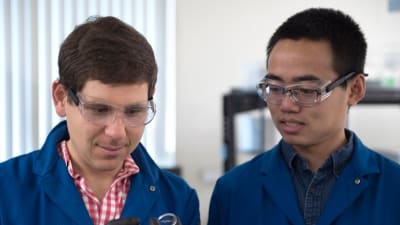
A new microchip allows sensor nodes to run uninterruptedly, even when the battery runs out.

Podcasts: Robotics, Automation & Control
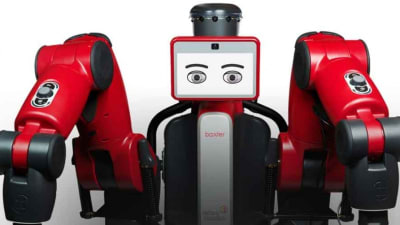
Some conditions are too dangerous, or just too mundane, for people.
Blog: Automotive
A “MapLite” framework from MIT allows self-driving cars to navigate roads – with just GPS and sensors as a guide.

Blog: Green Design & Manufacturing
Researchers at the University of Buffalo have found a counter-intuitive way of improving the water-purification process: keeping things cool.
Question of the Week: Electronics & Computers
Would You Wear a 'Mind-Reading' Headset?
A Tech Briefs TV video this week featured AlterEgo, a “mind-reading” wearable headset from MIT's Media Lab.The technology allows a user to silently converse with a computing device, AI assistant, or application without any audible voice or discernible movements. The wearable device captures electrical...
INSIDER Product: Imaging
Thermal Imager
Sierra-Olympic Technologies (Hood River, OR) introduced the Tenum™640, a thermal imager with a 640 x 512 array and 10-micron pixel pitch. The new camera, from the Leonardo DRS line of uncooled thermal cores...

INSIDER: Imaging
Holography, like photography, is a way to record the world around us. Both use light to make recordings, but instead of two-dimensional photos, holograms reproduce...

INSIDER: Imaging
MIT researchers have developed a system that can produce images of objects shrouded by fog so thick that human vision can’t penetrate it. It can also gauge the objects’ distance.

INSIDER: Photonics/Optics
To catch chemistry in action, scientists at the Department of Energy’s SLAC National Accelerator Laboratory use the shortest possible flashes of X-ray light to create “molecular movies”...

Blog: Transportation
Answering Your Questions: Will Reducing Nitrogen Oxide (NOx) Lead to Increased Particulate?
Does less nitrogen oxide mean more particulate emissions? A reader asks our expert.
Blog: Manufacturing & Prototyping
Will 3D Printing Get Past the Plastic?
If you think there’s too much hype surrounding 3D printing, perhaps that’s because you’re only thinking about plastic parts.
NASA Spinoff: Test & Measurement
Spinoff is NASA’s annual publication featuring successfully commercialized NASA technology. This commercialization has contributed to the development of products and services in...

Briefs: Robotics, Automation & Control
Polymer-Based 2D-to-3D Transformable Surfaces
Technologies using stretchable materials are increasingly important. Yet, in general, it is not possible to control how they stretch with much more sophistication than inflating balloons. A method was developed that allows the calculated transformation of 2D stretchable surfaces into targeted 3D shapes.
Briefs: Materials
Large-scale liquid rocket engines with regeneratively cooled nozzles will enable reliable and reduced-cost access to space. The coolant that circulates through the internal...

Application Briefs: Test & Measurement
Northrop Grumman CorporationAzusa, CAwww.northropgrumman.com
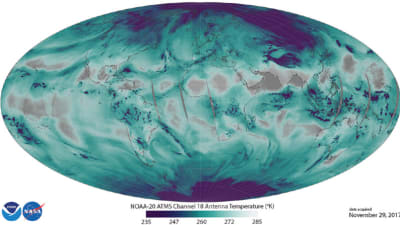
Two critical instruments built by Northrop Grumman for the National Oceanic and Atmospheric Administration’s...
Briefs: Photonics/Optics
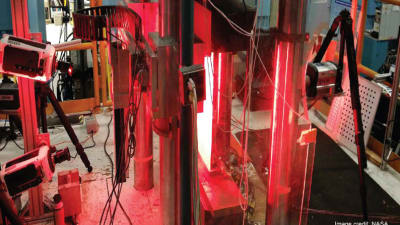
When testing composite structures, it is important to understand the response of the structure to the load. Of significance is the formation of damage and growth of that damage leading to...
Briefs: Software
Crew time on the International Space Station (ISS) is extremely limited for any operations on science payloads. Autonomous science experiments in small, self-contained, cubical payloads are highly desirable...

Briefs: Test & Measurement
Laser Technique Detects Toxic Agents in the Atmosphere
A real-time instrument was developed that could scan the atmosphere for toxic agents in order to alert communities to a biological or chemical attack.
Briefs: Test & Measurement
Correlation spectroscopy is an attractive technique for sensing and analysis applications because it combines the attributes of mechanical and optical simplicity, high selectivity, and good sensitivity. In correlation...

Briefs: Sensors/Data Acquisition
Mobile Instrument Detects and Samples Aerosol Particles
Hazardous airborne particles pose a risk for health and safety in a variety of environments; thus, detection of these small particles is essential. Current particle magnification systems are bulky and require a lot of power for operation, making them unsuitable to easily detect and analyze...
Articles: RF & Microwave Electronics
This column presents technologies that have applications in commercial areas, possibly creating the products of tomorrow. To learn more about each technology, see the contact information provided for that innovation.

Briefs: Aerospace
Method for Transferring a Spacecraft from Geosynchronous Transfer Orbit to Lunar Orbit
This novel innovation from Ames Research Center allows spacecraft to share rides with larger spacecraft that are headed to Geosynchronous Earth Orbit (GEO). The secondary spacecraft is dropped off Geosynchronous Transfer Orbit (GTO) at any time during the day or...
Briefs: Materials
Freeform Fabrication Using Electrically Conductive Filaments
The use of multifunctional composites such as mechanically reinforced, electrically and thermally conductive parts is of interest in a range of application areas. Especially interesting and important is where tailorability of function is achieved by strategic placement of materials with...
Briefs: Test & Measurement
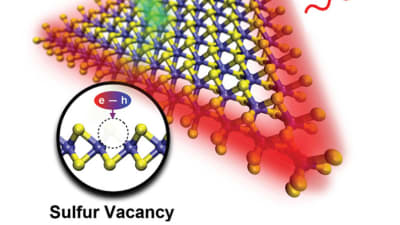
Thinning a material down to a single-atom thickness can dramatically change that material’s physical properties. Graphene, the best known two-dimensional (2D) material, has...
Top Stories
 Blog: Sensors/Data Acquisition

Going for Gold in Winter Olympic Curling
 Blog: Energy

Batteries that Can Withstand the Cold
 Blog: Lighting

A Stretchable OLED that Can Maintain Most of Its Luminescence
 INSIDER: Design

Advancing All-Solid-State Batteries
 Blog: Data Acquisition

 Blog: Materials

Webcasts
 On-Demand Webinars: Defense

Cooling a New Generation of Aerospace and Defense Embedded Computing...
 Upcoming Webinars: Software

Beyond AI-Copy-Paste Engineering: Advanced AI-Integration Success...
 Upcoming Webinars: Automotive

Battery Abuse Testing: Pushing to Failure
 Upcoming Webinars: Power

A FREE Two-Day Event Dedicated to Connected Mobility
 Upcoming Webinars: RF & Microwave Electronics

Choosing the Right N-Port Strategy: Multiport VNAs vs. Switch...
 Upcoming Webinars: AR/AI