Stories
0
2850
30
Briefs: Robotics, Automation & Control
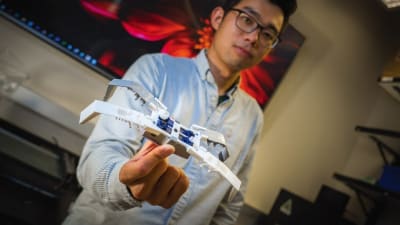
Instead of adding soft materials to a rigid robot body, researchers have taken a soft body and added rigid features to key components.
Briefs: Design
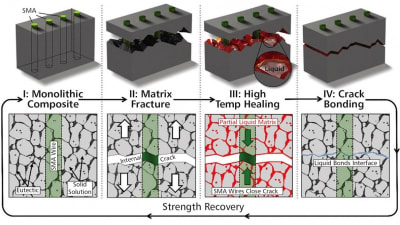
NASA has developed a new metal matrix composite (MMC) that can repair itself from large fatigue cracks that occur during the service life of a structure.
Briefs: Design
Manufacturing on Mars with 3D Printing
High-Martian content materials would be useful in making coatings to protect equipment from rust or radiation damage.
Briefs: Mechanical & Fluid Systems
Researchers have developed a shape-shifting material that can take and hold any possible shape.

Briefs: Materials
Researchers produced a soft, mechanical metamaterial that can “think” about how forces are applied to it and respond via programmed reactions.

Briefs: Materials
Computer-Implemented Energy Depletion Radiation Shielding
Radiation shielding for space as well as some terrestrial applications is challenging due to the wide variety and energy ranges of radiation particles.
Briefs: RF & Microwave Electronics
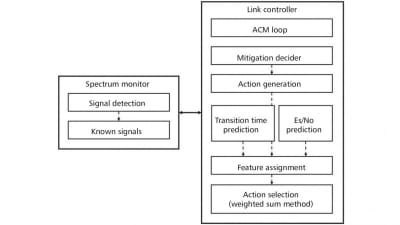
Innovators from the NASA Glenn Research Center developed a software-based automated RFI mitigation system to increase communication reliability.
Briefs: Communications
This device could pave the way to higher-bandwidth wireless communications.

Briefs: AR/AI
Digital data is subjected to errors when stored or transmitted due to the effects of noise on the medium or communication channel.

Briefs: Communications
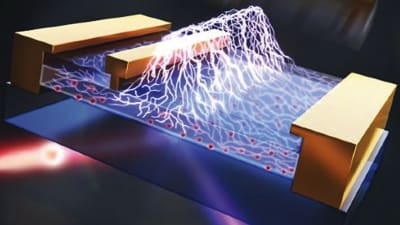
Researchers have developed a technique that will allow for faster communication systems and better energy-saving electronics.
Briefs: Aerospace
Concept Development for Advanced Spaceborne Synthetic Aperture Radar
Spaceborne Synthetic Aperture Radar (SAR) can globally monitor dynamic processes on the Earth’s Surface. The last SAR to be developed and deployed by NASA was in the year 2000.
Briefs: Imaging
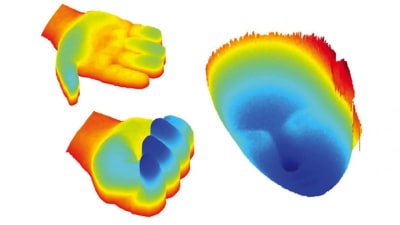
Traditional time-of-flight LiDAR has many drawbacks that make it difficult to use in many 3D vision applications.
Briefs: Lighting
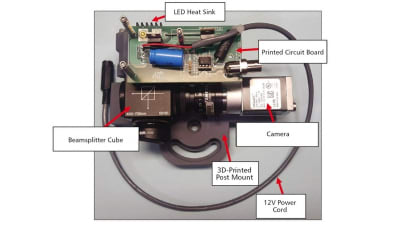
The imaging system tested in NASA wind tunnels can reduce or eliminate shadows that occur when using many existing BOS and photogrammetric measurement systems.
Briefs: Imaging
The assembly can simply be mounted in front of a camera to enable focusing schlieren imaging capability.

Briefs: Aerospace
Statistical Audibility Prediction Algorithm
Predicting the extent that one sound is heard over another is difficult, yet could help engineers to better design for sound management.
Briefs: Manufacturing & Prototyping
Companies in many industries are completely revamping the way in which their manufacturing arms are designing, building, producing, and servicing their goods.

Briefs: AR/AI
The new method could slash the energy cost of AI.
Briefs: Data Acquisition
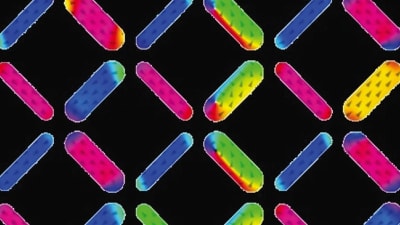
MMS was developed as an add-on to NASA Ames-patented Inductive Monitoring System (IMS), which estimates deviation from normal system operations.

Products: Sensors/Data Acquisition
See the new products on the market, including power inductors, vibration sensors, a field TV connector, and more.

Facility Focus: Unmanned Systems
The Grainger College of Engineering at the University of Illinois at Urbana–Champaign was established in 1868.

Articles: Test & Measurement
This column presents technologies that have applications in commercial areas, possibly creating the products of tomorrow.
Products: Manufacturing & Prototyping
The new IRB 1010 robot from ABB (Cary, NC) offers electronics manufacturers the opportunity to increase their production of small wearable devices.

Articles: Power
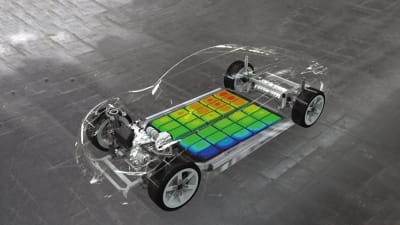
Today, batteries are the new engine for innovative electric vehicle (EV) development.
INSIDER: Sensors/Data Acquisition
At 200 times stronger than steel, graphene has been hailed as a super material of the future since its discovery in 2004. The ultrathin carbon material is an incredibly strong...
INSIDER: Electronics & Computers
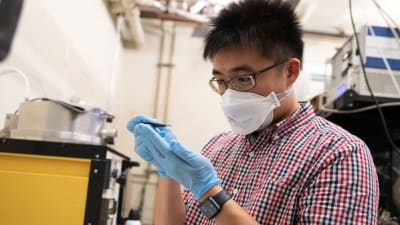
Diodes allow directed flows of current. Without them, modern electronics would be inconceivable. Until now, they had to be made from two materials with different characteristics. A...

INSIDER: Materials
The challenge of fabricating nanowires directly on silicon substrates for the creation of the next generation of electronics has finally been solved by...

Blog: RF & Microwave Electronics
For automated driving, LiDAR combines the best features of two of the other sensing technologies: radar and cameras.

Top Stories
 Blog: Power

My Opinion: We Need More Power Soon — Is Nuclear the Answer?
 Blog: AR/AI
Aerial Microrobots That Can Match a Bumblebee's Speed
 News: Energy

 Blog: Electronics & Computers

Turning Edible Fungi into Organic Memristors
 Blog: Robotics, Automation & Control

Microscopic Swimming Machines that Can Sense, Respond to Surroundings
 INSIDER: Sensors/Data Acquisition
Webcasts
 Upcoming Webinars: Power

Hydrogen Engines Are Heating Up for Heavy Duty
 Upcoming Webinars: Automotive

Advantages of Smart Power Distribution Unit Design for Automotive...
 Upcoming Webinars: Automotive

Quiet, Please: NVH Improvement Opportunities in the Early Design...
 Upcoming Webinars: Test & Measurement

From Spreadsheets to Insights: Fast Data Analysis Without Complex...
 Upcoming Webinars: Automotive

Battery Abuse Testing: Pushing to Failure
 Upcoming Webinars: Connectivity