Stories
0
7470
30
Products: Data Acquisition
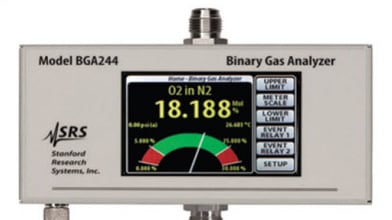
The BGA244 Binary Gas Analyzer from Stanford Research Systems, Sunnyvale, CA, continuously and non-invasively determines the ratio of gases in a binary mixture, or checks the purity of a single gas. It operates without...
Briefs: Test & Measurement
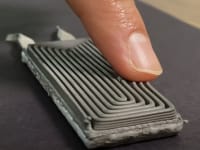
Non-Destructive Additive Manufacturing Characterization Coupon
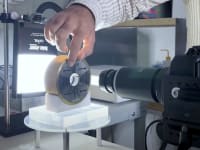
Additive manufacturing (AM) material assurance has relied upon traditional test coupons and testing methods that work well for wrought materials, but fail to address the unique and not as well-known characteristics of AM parts. A new standardized, integrated test coupon was designed...
Briefs: Research Lab
Methods for Characterizing Nonlinear Fields of a High-Intensity Focused Ultrasound Source
Minimally invasive and non-invasive therapeutic ultrasound treatments can be used to ablate, necrotize, and/or otherwise damage tissue. High-intensity focused ultrasound (HIFU), for example, is used to thermally or mechanically damage tissue. HIFU thermal...
Briefs: Software
AMMOS-PDS Pipeline Service (APPS)
APPS provides a multi-mission instrument data and metadata (i.e. label) transformation service that interfaces local or remote Mission Data provider’s data processing pipeline/end-products and the PDS (Planetary Data System) data archive to ensure compliance to standards in a schedule/cost-efficient manner (i.e....
Briefs: Imaging
Optical coherence tomography (OCT) is a high-resolution live imaging technique that can be used for early detection of retinal diseases such as age-related macular degeneration,...

Briefs: Manufacturing & Prototyping
Additive Manufacturing Facility for Utilization Primarily in Microgravity Environments
The purpose of this innovation is to create the ability to manufacture off Earth, primarily in a microgravity environment. This additive manufacturing facility (AMF) will have the capability to build tools, parts, experimental hardware, and upgrade hardware while...
Briefs: Manufacturing & Prototyping
Joining of Ti, Mo, and Ni Terminated Thermoelectric Segments via Brazing
The joining of low- and high-temperature thermoelectric materials (with ZT optimized to specific temperature ranges) to each other in a segmented configuration can lead to enhanced device efficiency. The resulting joints between these materials must be both chemically and...
Briefs: Electronics & Computers
Engineers have invented a new architecture for quantum computing based on novel “flip-flop” qubits. The new chip design allows for a silicon quantum processor that can be scaled...
Briefs: Robotics, Automation & Control
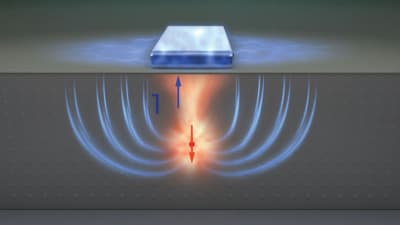
A software system was developed that helps robots more effectively act on spoken instructions — no matter how abstract or specific those instructions may be — from people who by...

Briefs: Materials
Process Turns Carbon Dioxide into 3D Graphene with Microporous Surface
The conversion of carbon dioxide to useful materials usually requires high energy input due to its ultrahigh stability. A heat-releasing reaction between carbon dioxide and sodium was developed to take carbon dioxide and turn it into 3D graphene with micropores across its...
Briefs: Software
From phone camera snapshots to life-saving medical scans, digital images play an important role in the way humans communicate information. But digital images are subject to a range of...

Briefs: Manufacturing & Prototyping
As 3D printing has become a mainstream technology, studies have investigated printable structures that will fold themselves into useful three-dimensional shapes when heated or...

Briefs: Photonics/Optics
Dual-Field-of-View Multiband Optics
Multi-spectral-band systems are steadily emerging as a desired feature in a camera system. Each spectral band offers different image characteristics. Shorter-wavelength spectral bands provide the potential for better resolution due to the smaller impact of diffraction on the size of the optics blur. This means...
NASA Spinoff: Aerospace
NASA Technology
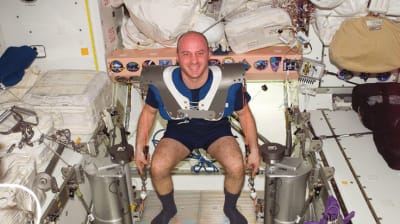
NASA astronaut Shannon Lucid spent hundreds of hours exercising during her 188-day stay on the Russian space station Mir in 1996. Although it was her least favorite part of...
Blog: Energy
Is the future electric? A reader asks an expert from Mercedes-Benz.

News: Photonics/Optics
For years many engineers have assumed that you cannot encode more than one holographic image in a single surface — at least without losing resolution. Caltech researchers made the idea a reality.

Blog: Imaging
With another year of Tech Briefs almost in the books, it's time to look at our most-read news articles of 2017.
Top stories included a look back at the life of Robert Goddard, and a look forward to new...

News: Imaging
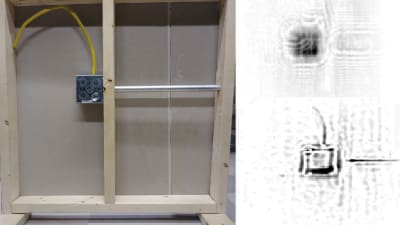
Using a narrow band of microwave frequencies, researchers at Duke University found a new way to see on the other side of the wall.
INSIDER: Manufacturing & Prototyping
A Tech Briefs reader asks our expert to compare three 3D-printing techniques.

INSIDER: Materials
A vortex in the atmosphere can churn with enough power to create a typhoon. But more subtle vortices form constantly in nature. Many of them are too small to be seen with the naked eye....

INSIDER: Manufacturing & Prototyping
One technology uses magnetic fields to generate mechanical work. The other enhances the magnetic properties of 3D-printed materials. Combined, they could lead to efficient, economical production of magnetic...

Question of the Week
Would you use "Printed Wi-Fi?"
This week, Tech Briefs TV featured an additive-manufacturing technology from the University of Washington.
Blog: Aerospace
During the historic Apollo 11 mission, the astronauts, mission control specialists, and back-room support staff did plenty of communicating. The University of Texas at Dallas launched a project to make all of the moon-mission audio accessible.
Sound-Off: Sensors/Data Acquisition
The “Internet of Things” links a variety of devices, from computers and industrial machines to heart monitors and robots. The interconnection also leads to some...
INSIDER: Aerospace
During a routine spacewalk, astronauts can easily lose their sense of orientation and direction. Creators of a new kind of spacesuit aim to address the challenge — with the push of a...

Products: Software
Boothroyd Dewhurst, Wakefield, RI, announced Design for Manufacturing (DFM) Concurrent Costing Version 3.0.

Question of the Week
Did You Ever Launch Model Rockets?
Our lead story today emphasized the inspirational role of the model rocket. What do you think? Did you ever launch model rockets?
INSIDER: Aerospace
If you ask engineers about their early days, many can't avoid talking about a favorite toy: the model rocket.

Top Stories
 Blog: Power

My Opinion: We Need More Power Soon — Is Nuclear the Answer?
 Blog: AR/AI

Aerial Microrobots That Can Match a Bumblebee's Speed
 News: Energy

 Blog: Electronics & Computers

Turning Edible Fungi into Organic Memristors
 Blog: Robotics, Automation & Control

Microscopic Swimming Machines that Can Sense, Respond to Surroundings
 INSIDER: Sensors/Data Acquisition

Webcasts
 Upcoming Webinars: Power

Hydrogen Engines Are Heating Up for Heavy Duty
 Upcoming Webinars: Automotive

Advantages of Smart Power Distribution Unit Design for Automotive...
 Upcoming Webinars: Automotive

Quiet, Please: NVH Improvement Opportunities in the Early Design...
 Upcoming Webinars: Test & Measurement

From Spreadsheets to Insights: Fast Data Analysis Without Complex...
 Upcoming Webinars: Automotive

Battery Abuse Testing: Pushing to Failure
 Upcoming Webinars: Connectivity