Stories
0
8610
30
Briefs: Aerospace
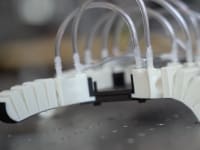
This technology is a new type of aircraft pylon design for noise control. A pylon connects the engine to the airframe of an aircraft. This design uses air passing through the pylon to actively disrupt...

Briefs: Aerospace
Supporting Test Aircraft with Lift Airbags
Innovators at NASA’s Armstrong Flight Research Center have developed a method of using aircraft lift airbags to support test aircraft during wing strain gage load calibration. In calibration testing, a set of known loads is applied to the wing, and the loads and strain gage responses are then recorded....
Briefs: Aerospace
Enhanced Aircraft State Display for Improved Situation Awareness of Flight Envelope Limitations
In the case of an aircraft system failure such as control surface or engine failure, an aircraft’s flight envelope may change. Notifying the pilots of these changes may improve situational awareness and, hence, increase flight safety because pilots...
Briefs: Propulsion
Turbine film cooling flows typically are subject to jet detachment and reduced cooling effectiveness for high blowing rates. Current concepts to improve jet attachment involve impractical or overly complex hole designs due...
Briefs: Aerospace
Aeronautical Data Link and Radar Simulator (ADRS)
Air traffic management research needs to adequately address all players, including flight crews, air traffic controllers/managers, and airline dispatchers. Interactions between the different stakeholders are crucial elements for the viability of a given concept. A simulation capable of addressing...
Briefs: Manufacturing & Prototyping
NASA has developed a versatile method and associated apparatus for constructing and using a conductive filament in various applications of 3D printing. It uses an attractive polymer formulation,...
Briefs: Manufacturing & Prototyping
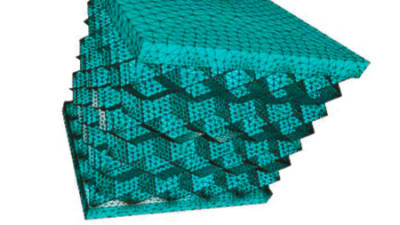
NASA’s Langley Research Center has developed carbon fiber reinforced composites with self-healing properties. The initiation and propagation of damage to carbon...
Briefs: Manufacturing & Prototyping
Improved Impact Toughness and Heat Treatment for Cast Aluminum
NASA’s Marshall Space Flight Center researchers have developed a new, stronger aluminum alloy, ideal for cast aluminum products that have powder or paint-baked thermal coatings. With advanced mechanical properties, the NASA-427 alloy shows greater tensile strength and increased...
Briefs: Manufacturing & Prototyping
NASA’s Marshall Space Flight Center developed the handheld laser torch, designed for welding and brazing metals, to repair hard-to-reach Space Shuttle engine nozzles. It incorporates various manual...

Briefs: Materials
NASA seeks to license the Adaptive Thermal Management System (ATMS) for use in commercial applications. Developed at the John F. Kennedy Space Center, the ATMS provides a way to regulate heat transfer and...

Briefs: Materials
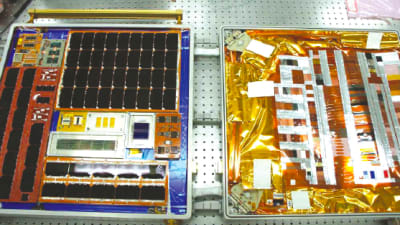
NASA’s Goddard Space Flight Center has developed a new method for bonding dissimilar materials using an elastic adhesive to permit the bond to withstand variations in temperature and pressure....
Briefs: Materials
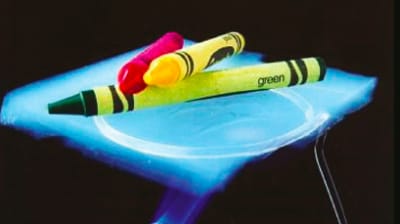
The Johnson Space Center researched methods to coat aerogel insulation in order to make it better able to withstand vibration, mechanical compression and...
Briefs: Materials
Insulative Carbon Fiber Systems for Aerospace Applications
New insulative carbon-fiber composite systems have been developed for use in structural and thermal applications for the aerospace vehicle interface. The sandwich-type composite structure, including carbon fiber and aerogel blanket materials, is based on the previously disclosed family of...
Briefs: Medical
NASA’s Langley Research Center has developed ZONE, an innovative method for improving athletes’ responses to stress, anxiety, and loss of...

Briefs: Medical
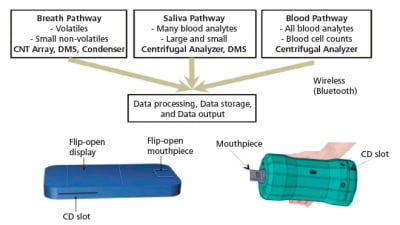
NASA has developed a novel technology strategy called “The NASA Analyzer” that would provide comprehensive in-flight medical diagnostic capability in a compact, handheld device for human deep-space...
Briefs: Medical
Methods and Systems for Non-Invasive Treatment of Tissue Using High-Intensity Focused Ultrasound Therapy
Minimally invasive and non-invasive therapeutic ultrasound treatments can be used to ablate, necrotize, and/or otherwise damage tissue. High-intensity focused ultrasound (HIFU), for example, is used to thermally or mechanically damage tissue....
Briefs: Software
NEQAIR v14.x Non-Equilibrium Radiative Transport and Spectra Program
There is a need to calculate the radiative heating rate at the surface of a vehicle entering any atmosphere, (e.g., Earth, Saturn, Titan, Mars, Venus etc). NEQAIR simulates the actual chemical and physical actions and reactions of the gaseous species in high-temperature shock...
Briefs: Information Technology
Systems Engineering Education and Development (SEED) Web Application
This application serves as Web-based management of the Systems Engi - neering Education and Development (SEED) program, and enables the SEED Program Manager to track and manage the applications and assignments. In the past, the handling of the applications and assignments was...
Briefs: Information Technology
Hammer 1.0
Many software applications have scripting needs including those based on the Goddard Mission Services Evolution Center (GMSEC) framework. In GMSEC, a user may want to automate the actions to take when a sequence of events occurs. Ideally, the scripting solution should allow the use of a familiar programming language and avoid unnecessary...
Briefs: Software
Extended Testability Analysis (ETA) Tool V8.0
An assessment of a system’s safety requirements is required early in the design process when cost and time impacts are minimal. These requirements include fault detection, failure isolation, and failure recovery. Systems engineering groups at NASA have been exploring model-based products to better...
Briefs: Robotics, Automation & Control
Lunar Regolith Simulant Sample Collection Mechanism for Remote Operation in a Thermal Vacuum Chamber
The Sample Capture Mechanism (SCM) is a remotely actuated, spring-driven mechanism designed to remotely capture and seal a 15-mL sample in less than 1 second. It was used to capture a 10-g sample of simulated regolith dispensed from a drill in a...
Briefs: Robotics, Automation & Control
NASA’s Johnson Space Center innovators have designed a Robotic Inspection System that is capable of surveying deep sea structures such as oil platform storage cells/tanks and pipelines in order to determine the...
Briefs: Robotics, Automation & Control
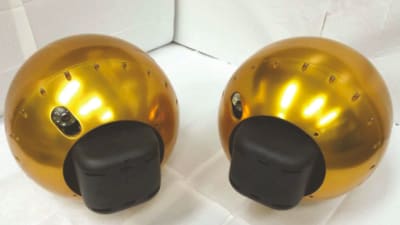
Researchers at the NASA Johnson Space Center (JSC), in collaboration with General Motors (GM) and Oceaneering, have designed a state-of-the-art, highly dexterous, humanoid robot: Robonaut 2 (R2). R2’s...

Briefs: Robotics, Automation & Control
Vessel Sealing Device for Robotic Devices
Invasive surgical procedures are essential for addressing various medical conditions. When possible, minimally invasive procedures are preferred, but these technologies are often limited in scope and complexity. These limitations are due in part to mobility restrictions from the use of rigid tools in small...
Application Briefs: Photonics/Optics
Improved Two-Step Replication Process for Producing Precision Optical Mirrors
Production of precision optical mirrors by replication requires molds or mandrels of the complementary shape. For example, replicating a concave mirror requires a convex mandrel. Convex shapes are difficult to fabricate and test since they do not focus light. Convex...
Application Briefs: Photonics/Optics
NASA’s Langley Research Center has made a breakthrough improvement in laser frequency modulation. Frequency modulation technology has been used for surface mapping...

Articles: Photonics/Optics
SpaceCube Processors
Next-generation spacecraft instruments are capable of producing data at rates of 108 to 1011 bits per second, and both their instrument designs and...

Articles: Aerospace
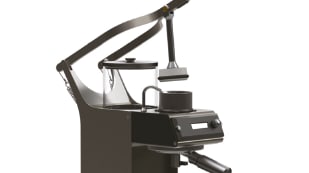
Technology often takes circuitous paths. A magnetron developed for precision bombing during World War II led to the microwave oven, and a battery-powered drill created for collecting samples...
Articles: Photonics/Optics
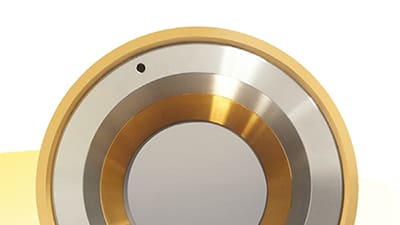
Over the last 15 years, breakthroughs in the manufacture and processing of diamond grown by chemical vapor deposition (CVD) have established diamond as an excellent substrate material for...
Top Stories
 Blog: Power

My Opinion: We Need More Power Soon — Is Nuclear the Answer?
 Blog: AR/AI

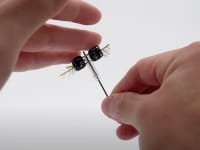
Aerial Microrobots That Can Match a Bumblebee's Speed
 News: Energy

 Blog: Electronics & Computers

Turning Edible Fungi into Organic Memristors
 Blog: Robotics, Automation & Control

Microscopic Swimming Machines that Can Sense, Respond to Surroundings
 INSIDER: Sensors/Data Acquisition
Webcasts
 Upcoming Webinars: Power

Hydrogen Engines Are Heating Up for Heavy Duty
 Upcoming Webinars: Automotive

Advantages of Smart Power Distribution Unit Design for Automotive...
 Upcoming Webinars: Automotive

Quiet, Please: NVH Improvement Opportunities in the Early Design...
 Upcoming Webinars: Test & Measurement

From Spreadsheets to Insights: Fast Data Analysis Without Complex...
 Upcoming Webinars: Automotive

Battery Abuse Testing: Pushing to Failure
 Upcoming Webinars: Connectivity