


Poison ivy ranks among the most medically problematic plants. Up to 50 million people worldwide suffer annually from rashes caused by contact with the plant — a climbing, woody vine native to the U.S., Canada, Mexico, Bermuda, the Western Bahamas, and several areas in Asia.
It’s found on farms, in woods, landscapes, fields, hiking trails, and other open spaces. So, if you go to those places, you’re susceptible to irritation caused by poison ivy, which can lead to reactions that require medical attention. Worse, most people don’t know poison ivy when they see it.
To find poison ivy before it finds you, University of Florida scientists published a new study in which they use artificial intelligence (AI) to confirm that an app can identify poison ivy.
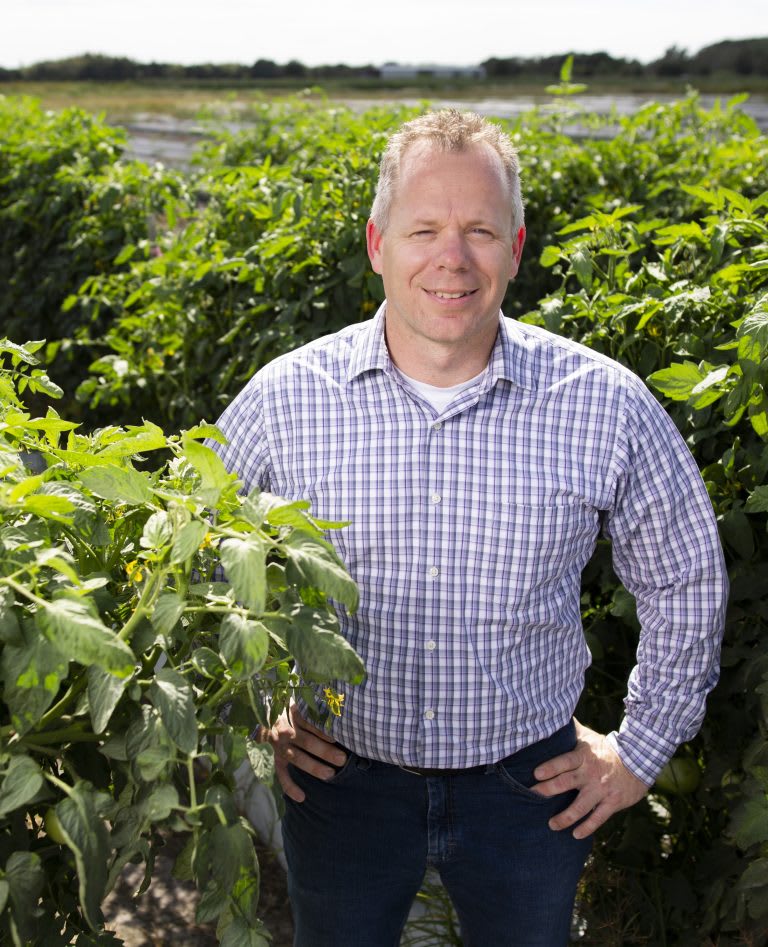
Nathan Boyd, Professor of Horticultural Sciences at the UF/IFAS Gulf Coast Research and Education Center near Tampa, led the research. Renato Herrig, a post-doctoral researcher in Boyd’s lab, designed the app.
“We were the first to do this, and it was designed as a tool for hikers or others working outdoors,” Boyd said. “The app uses a camera to identify in real time if poison ivy is present and provides you with a measure of certainty for the detection. It also functions even if you don’t have connectivity to the internet.”
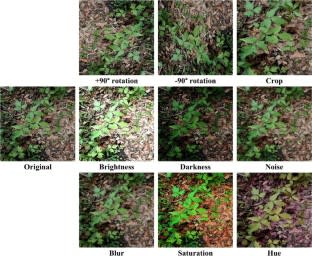
For the study, researchers collected thousands of images of poison ivy from five locations: Alderman’s Ford Conservation Park and Hillsborough River State Park, both in Florida; Eufala National Wildlife Refuge in Alabama; York River State Park in Virginia; and Fall Creek Falls State Park in Tennessee.
They labeled images, and, in each image, scientists put boxes around the leaves and stems of the plant. The boxed images were critical because poison ivy has a unique leaf arrangement and shape. Scientists use those characteristics to identify the plant.
They then ran the images through AI programs and taught a computer to recognize which plants are poison ivy. They also included images of plants that are not poison ivy or plants that look like poison ivy to be certain the computer learns to distinguish them.
“We believe that by integrating an object-detection algorithm, public health, and plant science, our research can encourage and support further investigations to understand poison ivy distribution and minimize health concerns,” Boyd said.
In their future work UF/IFAS researchers hope to expand the use of the app to identify more noxious plants.
Here is an exclusive Tech Briefs interview with Boyd, edited for length and clarity.
Tech Briefs: What was the biggest technical challenge you faced while developing this app?
Boyd: The collection of the images took the longest time. The second largest challenge was labelling the images within the database, which was very time-consuming.
Tech Briefs: Can you explain in simple terms how it works?
Boyd: You open the app on your phone and hold the camera over the plants of interest. It will draw a box around any detected poison ivy and let you know the level of certainty. You can also access information like plant images, treatment following exposure, etc.
Tech Briefs: What are its pros and cons?
Boyd: The pros are rapid detection of poison ivy — with or without access to Wi-Fi. The con is the app is focused solely on one species.
Tech Briefs: What are your next steps? Do you have any plans for further research?
Boyd: We do not have plans for further research at the present time. We are interested in commercialization but have not identified a feasible path.









