

The surging global popularity of electric vehicles (EVs) is creating a new challenge: a mounting pile of spent lithium-ion batteries. In just a decade, more than 1.2 million tons of lithium-ion batteries will reach their end-of-life, creating an urgent need for efficient and profitable recycling solutions.
This impending battery waste crisis presents both a challenge and an opportunity. The ability to sustainably manage this stockpile of spent batteries becomes crucial. The question looms large for industries and policymakers alike: Are we equipped with the right capabilities to profitably recycle these batteries, recovering valuable materials while minimizing environmental impact?
The EV Battery Landscape
By 2030, the number of EVs globally is expected to reach 145 million, a staggering 40 percent increase from today. This exponential growth is driving a significant reduction in carbon emissions. The transportation sector currently accounts for 21 percent of global carbon emissions, with passenger vehicles alone responsible for nearly half of that figure.
As EV popularity soars, so does the demand for lithium-ion batteries. By 2025, the consumption of these batteries is projected to grow by at least 400 percent. This surge in demand is putting immense pressure on the battery supply chain. China, Japan, and South Korea currently manufacture 85 percent of the world’s EV batteries.
The battery itself remains the most expensive component of an EV. Looming shortages and raw materials price increases are forcing manufacturers to explore circular economy solutions. This includes recovering materials from returned batteries to build new ones, a key sustainability strategy.
The Battery Recycling Imperative
The battery recycling imperative is driven by both economic potential and regulatory pressure. By 2030, the recycling industry could recover between 400,000 and 1 million tons of valuable materials from spent batteries, including 125,000 tons of lithium, 35,000 tons of cobalt, and 86,000 tons of nickel. This represents a market opportunity worth approximately $6 billion, highlighting the significant economic incentive for developing efficient recycling processes.
Regulatory agencies are pushing the industry toward more sustainable practices. The European Union, for instance, has set ambitious targets for battery recycling: 70 percent for battery collection, recovery rates of 95 percent for cobalt, copper, lead, and nickel, and 70 percent for lithium. Additionally, new regulations mandate minimum levels of recycled content in new batteries, further emphasizing the need for a circular economy approach.
Current battery designs pose significant challenges to recycling efforts. Many lithium-ion batteries are welded or glued together, making individual components difficult to replace or recycle. This often results in entire batteries being discarded, even when they retain up to 80 percent of their potential life.
The industry must shift toward a circular economy model for lithium-ion batteries. This approach not only ensures responsible disposal of hazardous waste but also reduces manufacturers’ dependence on volatile raw material supply chains, paving the way for a more sustainable and resilient battery industry.
Battery End-of-Life Management
Effective end-of-life management of EV batteries hinges on accurately assessing their state of health (SOH). SOH is a critical measure of a battery’s performance and longevity, typically quantified as run time on a full charge, estimated capacity in milliampere hours, or the number of charge cycles until end-of-life. However, precisely evaluating SOH presents significant challenges.
EV batteries endure harsh conditions, undergoing over 1,000 charging and discharging cycles within 5-10 years while exposed to temperature ranges from -20 °C to 70 °C. When a battery’s SOH drops to 80 percent, it’s usually removed from the vehicle. Yet, accurately measuring SOH is complex; capacity can’t be directly measured, and aging is influenced by various factors including battery condition, charging behavior, and temperature.
These challenges lead manufacturers to either install excess battery cells as a safety buffer or scale down specified values like vehicle range and warranty periods. Both approaches result in underutilized battery capacity.
However, batteries removed from EVs often retain significant capacity, opening opportunities for second-life applications. These spent EV batteries can find new purpose in powering electric bicycles, energy storage systems for homes and power grids, or portable charging devices. Companies including Renault are already partnering with energy firms to repurpose retired EV batteries for home energy storage, potentially extending battery life by up to 10 years before final recycling.
To facilitate both second-life applications and eventual recycling, it's crucial to design batteries with end-of-life management in mind. Incorporating design for recyclability from the outset can make disassembly less time-consuming, more cost-effective, and more sustainable. This approach is vital, considering that up to 80 percent of a product's environmental impact is determined during the design phase.
Recycling Challenges and Opportunities
Two lithium-ion recycling methods dominate the industry: pyrometallurgy and hydrometallurgy. In pyrometallurgy, battery components are shredded and then melted, while hydrometallurgy involves dissolving the shredded materials in acid. However, these processes are far from perfect, often resulting in a complex mixture that’s expensive to purify and yields low-value products.
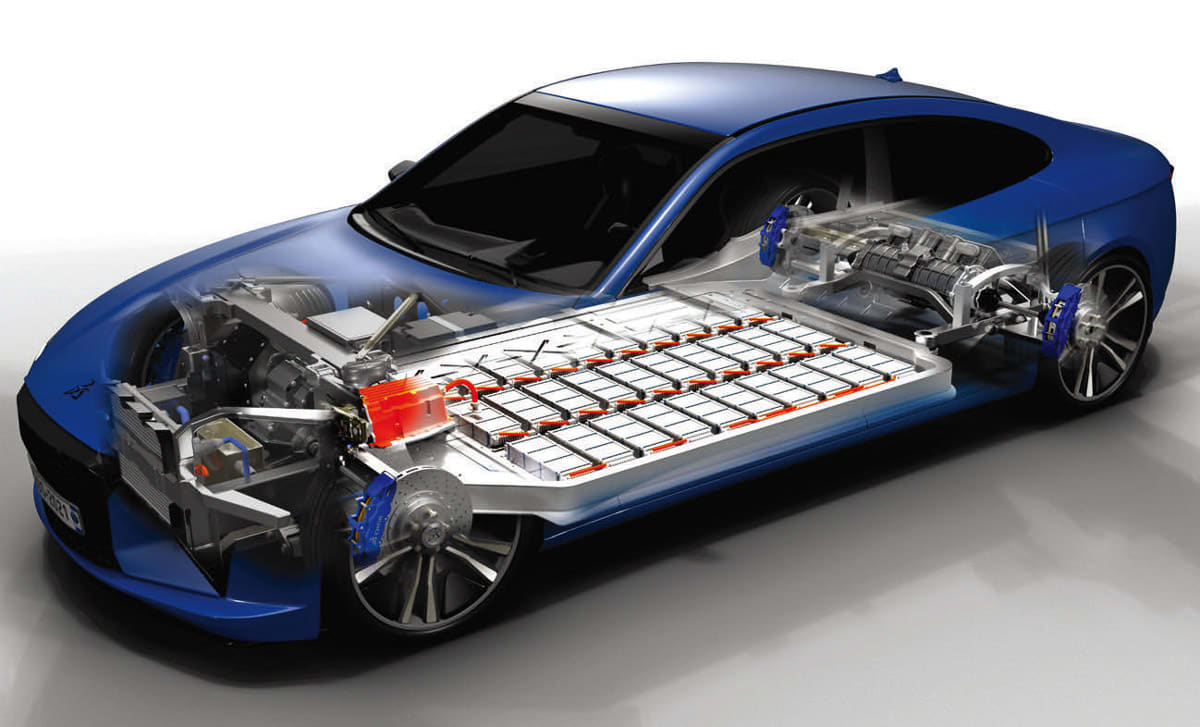
The diverse range of battery types with different designs, chemistries, and technologies present significant challenges. There's no one-size-fits-all recycling approach, forcing careful consideration of each battery's composition before disassembly. This complexity is further compounded by the intricate structure of lithium-ion batteries, consisting of cathodes, anodes, separators, and electrolytes, each tailored for specific performance parameters.
To address these challenges, efficient sorting and separation methods are crucial. Recycling plants must separate batteries into distinct streams based on their composition, similar to plastic recycling. This sorting process is essential to meet the specifications of buyers purchasing recycled materials, but it also adds complexity and cost to the recycling process.
Precision in material recovery is paramount, particularly for the cathode materials, which are the most valuable components of the battery. Current processes often reduce battery components to a mixture called “black mass,” requiring energy-intensive processing to recover usable materials. Achieving high purity in recovered materials is essential for producing battery-grade materials and meeting regulatory requirements like the EU Battery Digital Passport.
Despite these challenges, opportunities abound. Innovations in recycling technologies, coupled with design improvements for easier disassembly, could significantly enhance the efficiency and profitability of battery recycling. Developing more efficient and precise recycling methods can lead to higher purity in recovered materials, making them suitable for use in new batteries. Manual disassembly, although labor-intensive, allows for better preservation of valuable components. Additionally, designing batteries with recycling in mind — such as modular designs that are easier to disassemble — can make the process more cost-effective and sustainable.
Investing in advanced recycling technologies and designing for recyclability not only addresses environmental concerns but also helps in recovering valuable materials like lithium, cobalt, and nickel. This can reduce dependence on raw material imports and mitigate the environmental impact of mining.
Digitalizing the Recycling Process
Embracing digitalization is key to overcoming the complexities of battery recycling. Virtual twin technology, for instance, allows companies to create digital replicas of physical systems. This enables the simulation and optimization of recycling processes, helping identify bottlenecks and improve efficiency before implementing changes in the real world.
Modeling and simulation tools can evaluate various recycling methods, assess the return on investment for different battery chemistries, and optimize manufacturing lines. By simulating disassembly processes, companies can determine the most efficient ways to recover materials with the highest quality and least environmental impact.
Digitalization also enhances reverse logistics, which is crucial for establishing a circular battery lifecycle. Optimizing routes for collecting spent batteries reduces emissions and costs associated with transportation. Lifecycle assessments (LCA) integrated within digital platforms help companies evaluate the environmental impact of their decisions, such as choosing between operating a single large recycling facility or multiple smaller ones.

Furthermore, digital platforms enable better collaboration across the value chain, ensuring that raw material providers, manufacturers, and recyclers have access to real-time information. This transparency is essential for meeting regulatory requirements like the EU’s Battery Digital Passport, which aims to establish traceability throughout the battery's lifecycle.
Battery recycling is poised for significant growth, driven by the escalating number of EVs reaching end-of-life and increasing regulatory pressures. Developing a robust used battery market presents a major opportunity to rethink business models and unlock new revenue streams.
Companies are exploring second-life applications for EV batteries, such as energy storage systems for homes, buildings, and power grids. By extending the battery life, companies can maximize value before recycling is necessary. Additionally, advancements in recycling technologies promise to make the process more efficient and cost-effective, turning what was once considered waste into valuable resources.
Early adopters of innovative recycling practices will gain a competitive advantage, securing supplies of raw materials and aligning with global sustainability goals. By investing in research and collaborating across the industry, companies can drive the market forward and contribute to a more sustainable, carbon-free future.
This article was written by Nicolas Vallin, Transportation & Mobility Industry Business Value Consultant, Dassault Systèmes (Waltham, MA). For more information, visit here .











