

As technology advances, so do we as skilled professionals in the automation industry. Much like artificial intelligence (AI), we continuously learn and adapt to enhance our overall performance. AI advancement and straightforward learning algorithms have transformed how we implement servo systems.
Over the past few decades, times have changed dramatically. I recall my initial encounter with servo motors as a young controls engineer. Tuning was challenging — move profiles had to be tweaked for successful operation in real-world environments like the factory floor, rather than during the infamous late-night bench tests in the office with vice grips holding a motor in place. Issues such as thermal buildup were amplified by sloppy tuning or varying loads on the move profile. Harmonic resonance from a miscalculated sizing or just the machine’s mechanical design was a nightmare to compensate for.
We have all experienced the scenario where a perfectly tuned rotary servo motor attached to a linear ball screw application worked flawlessly until reaching the factory floor. Then, you find out that someone inadvertently sent the wrong product to test. Your eyes glaze over as you realize that all of your previous tuning, notch filters and testing are now irrelevant, and you must start anew for your application to be a finely tuned machine.
With the advent of AI, our lives have become a bit more manageable. While AI may not be the ultimate solution for the automation world, it certainly enhances machine performance, requiring less effort from the operator.
AI in Modern Motion Control
AI, by definition, is the theory and development of computer systems that perform tasks normally requiring human intelligence, such as visual perception, speech recognition, decision-making, and language translation. In servo control, AI is used in learning algorithms that analyze the move profile’s specific feedback. This data is then continuously compared with previous data, allowing the system to identify inconsistencies undetectable to the human eye. The system can then either report back to the operator or other appropriate personnel, or instantly correct any anomalies — needing no human interaction.
Revolutionizing Servo Tuning with AI
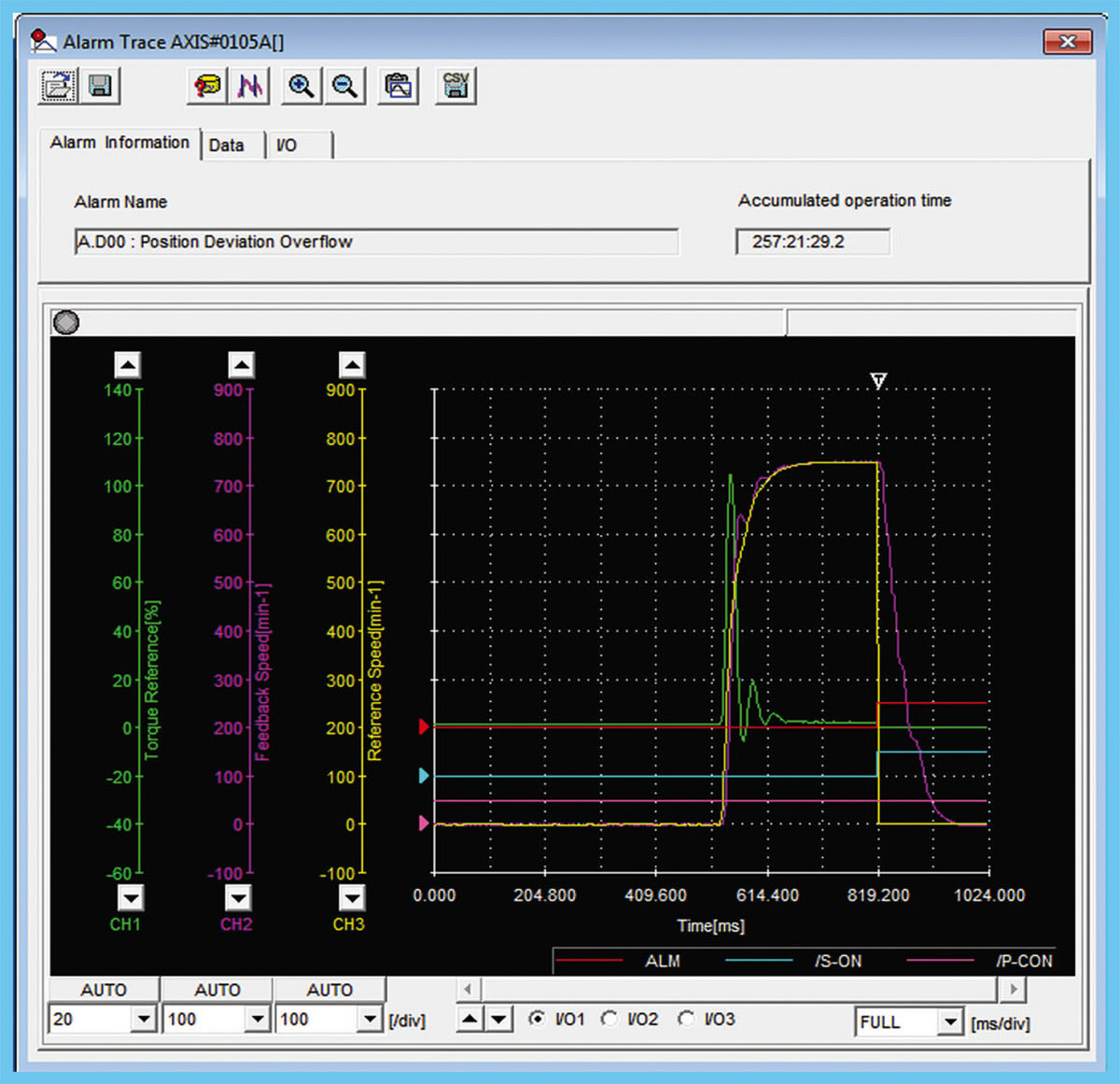
Let’s start with what might be the greatest AI advance in motion control: servo tuning. Machine learning algorithms facilitate continuous alterations and implementation of motor-specific tuning parameters, creating an adaptive tuning environment (Figure 1).
As the servo operates within its intended application, AI constantly makes micro corrections to the tuning parameters, optimizing the application’s overall performance. Whether the motor load changes significantly or slightly, the AI machine learning algorithm adapts accordingly, eliminating the need for a controls engineer to tune a motor during machine commissioning. This feature saves considerable time and allows for better-performing applications through its adaptability and consistent monitoring of the motion process.
Before AI learning algorithms, the controls engineer would design a controlled-move profile similar to the worst-case move profile that the application would encounter. The engineer would closely watch the motor’s commanded position, torque (both peak and ripple) and motor encoder position error. They would then meticulously adjust the proportional, integral and derivative (PID) values, along with velocity feedforward and possibly other parameters, to develop a move profile with precise position control and minimal settling time. AI streamlines this process, making instantaneous, on-the-fly adjustments — enabling a constant but adaptable working project. Trained engineers understand this and leverage the technology for applications, significantly enhancing efficiency and performance.
Predictive Failure Analysis: The AI Approach
In the motion control world, predictive failure analysis is another key AI application. By continuously monitoring servo performance, AI can predict failures before catastrophic breakdowns. Fault detection AI is unique because it does not need to be embedded within the servo control package.
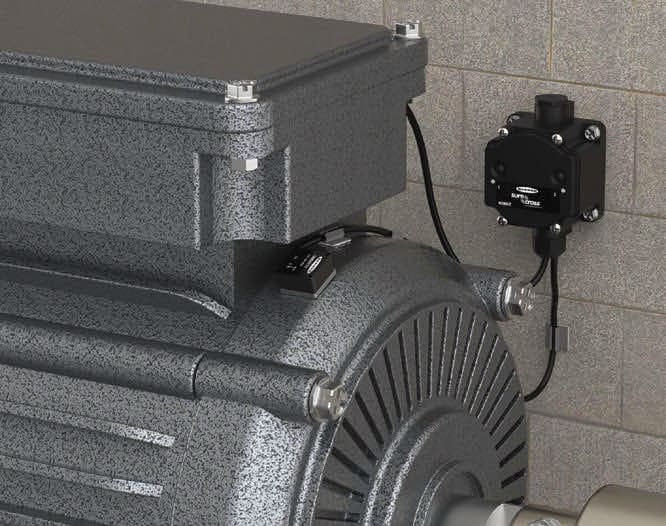
Third-party products allow data acquisition indirectly. A prime example is a snap-on or magnet-based device that measures and records characteristics such as vibration and temperature (Figure 2). This data is then compiled into a database that serves as a reference point, allowing AI to monitor for anomalies outside the learned normal operating conditions. For instance, if a vibration increase is detected, the AI system can alert a designated individual to a potential bearing failure or other mechanical issues. We have collaborated with many OEMs and end users to minimize downtime and costly unexpected repairs by offering direct and third-party preventive maintenance products that use AI. A deep understanding of AI is invaluable for selecting the right products tailored for specific applications.
AI Benefits Abound
In servo control, AI brings many other benefits, including energy efficiency, predictive control, and full autonomous systems. Let’s explore how each of these categories optimizes operations.
Energy efficiency is a significant advantage of employing AI in servo tuning. When a servo is optimally tuned, it consumes less energy. This efficiency can also stem from hardware improvements, such as component technology advances or using non-round wire in motor windings to eliminate gaps between coil wires, resulting in a denser, more compact build. Additionally, energy efficiency is achieved through software innovations assisted by AI.
Predictive moves are learned by motion path patterns and can be altered to conserve energy. With a predictive move profile, AI learns from motor feedback and adjusts its speed accordingly for a smoother transition. Consider the analogy of a new driver on an unfamiliar road. The first time driving around a sharp corner may have been risky. But after learning from this experience, the driver anticipates the corner and knows when to slow down and use caution.
Similarly, AI does this but at a faster rate with minute details that we may overlook to make move profile predictions. For instance, if a move consistently and aggressively accelerates then immediately decelerates due to gravity, load shift or other factors, AI can recognize this pattern and anticipate a slowdown. Adjusting acceleration before reaching the typical deceleration zone can reduce the motor’s energy consumption.
The beauty of AI is that the learning algorithm is not set in stone; it constantly performs checks and balances. What was normal in the year’s first quarter may not be typical for the year’s last quarter. AI can check an unfathomable amount of data compared to humans and effectively determine ways to improve performance.
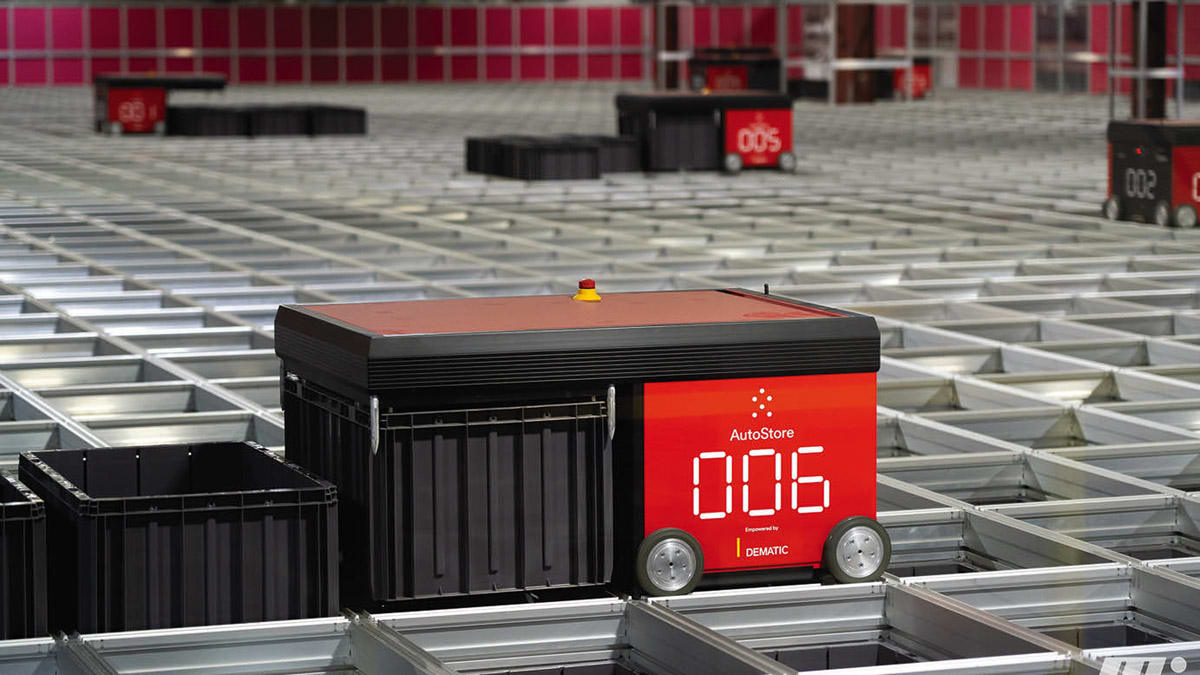
Full autonomy is an advanced version of simple machine learning algorithms we previously discussed. Our team fully embraces the autonomy of inventory storage and management, leveraging AI to streamline our processes and better serve our customers. For example, a swarm of mobile vehicles can communicate with each other to determine optimal paths for retrieving orders while avoiding collisions and interference (Figure 3). This AI technology significantly reduces search time in our vast warehouses and helps eliminate human error from picking the wrong part or manual labor mishaps.
As technology advances, complex tasks are becoming simpler. We, as workers, consumers, or everyday individuals, must have at least a basic understanding of how things operate. AI is just one piece of the Industry 4.0 package. Now that we are moving into Industry 5.0, we need to educate ourselves as much as possible on technology that continually enhances our work and home lives.
The easiest way to begin is by contacting your local qualified specialists. Schedule a meeting — nothing beats face-to-face interaction over a meal when our world is already so digital and impersonal. As technology evolves, it is vital to find a balance between digital innovations and maintaining personal interactions. Make the most of both for success, and stay informed and engaged.
This article was written by Sean Overmyer, Electrical Account Specialist, Motion (Birmingham, AL). For more information, visit here .











