
-1
300
30
Application Briefs: Weapons Systems
Using mPOD, “adversary” pilots can emulate enemy jamming techniques accurately, conditioning aircrews to evolving threat scenarios and better preparing them for real combat.

Blog: Green Design & Manufacturing
The EU has already declared that the nonbiodegradable microplastics must be eliminated by 2025, but a team of MIT scientists has perhaps expedited that timeline.

Blog: Power
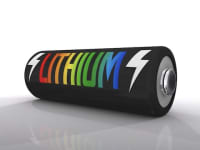
MIT researchers have developed a new kind of battery, made entirely from abundant, inexpensive materials.

Blog: Energy
A treatment for floc sludge transforms it to an electrode material usable for high-performance capacitors.

Blog: Imaging
These latest nanostructured components, integrated on image sensor chips, are most likely to have the biggest impact in multimodal imaging.

Blog: Defense
KnightShield covers medium ranges in ports and detects hostile divers – whether using closed or open breathing apparatus – as well as AUVs, SDVs, DPVs, and UUVs.

Blog: Robotics, Automation & Control
A magnetically controlled medical device to remove blood accumulating in the brain during a stroke.

Blog: Sensors/Data Acquisition
A researcher at MU College of Engineering at the University of Missouri is developing a smart mask that could monitor someone’s physiological status based on the nature of the person’s cough.

Application Briefs: Unmanned Systems
The Trojan Unmanned Hover Plane (UHP) is a one-of-a-kind system that bridges the gap between the need to hover and the need to reach long ranges, giving it the ability to perform aerial missions with pinpoint precision.

Blog: Nanotechnology
We can learn a lot about innovation in technology by looking to the past.

Blog: Information Technology
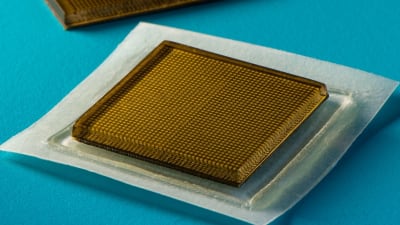
The stamp-sized ultrasound sticker technology produces higher-resolution images over a longer duration.
Blog: AR/AI
A designer’s job gets much more complicated when artificial intelligence is part of the system.

Blog: Robotics, Automation & Control
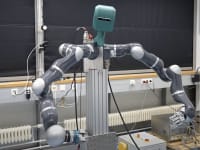
A number of the engineers I’ve interviewed have taken their inspirations from nature. As one said to me, nature has been evolving and perfecting its designs over thousands of years — we should take...

Blog: Energy
As I was scrolling through research lab press releases for a Q&A column, one caught my eye: “Remote High-Voltage Sensor Unveiled at Sandia Gamma Ray Lab.” High voltage is not the sexiest of technology...

Blog: Automotive
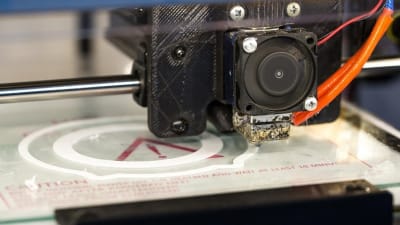
More “talking across industries” can drive growth in additive manufacturing, says an industry expert.
Blog: Energy
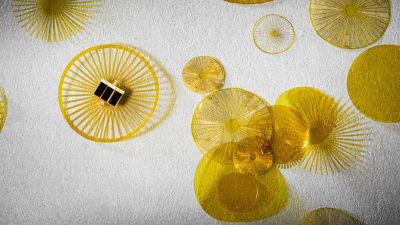
Dropped by a drone, the battery-free devices hover 100 meters in the air.
Blog: RF & Microwave Electronics
A reader asks an expert how self-driving cars can operate without LiDAR.

Blog: AR/AI
See what Ed Brown’s early days as a high-voltage power supplies designer tell him about today’s efforts with A.I.

Blog: Packaging & Sterilization
Tiny manufactured nanopillars slice and dice bacteria, cicada-style.

Blog: Materials
1 Year? 5 years? 10? A reader wants an industry expert to predict when 3D printing will truly catch on in automotive manufacturing.

Blog: Wearables
The future of computing is in fabrics, says Prof, Yoel Fink from MIT.

Blog: Sensors/Data Acquisition
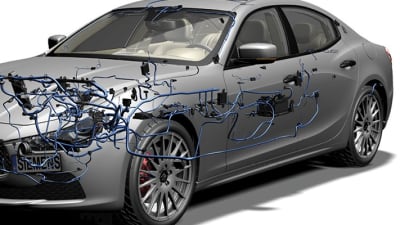
The wire harness is changing as vehicles become “computers on wheels.” A reader asks how electrification impacts the wiring harness.
Blog: Design
You can design something special when you begin with a blank piece of paper on a wall. Editor Ed Brown shares a lesson learned from his early days as an engineer.

Blog: Software
A reader asks about the role of simulation when automakers like Toyota have a more “model-based” design approach.

Blog: Energy
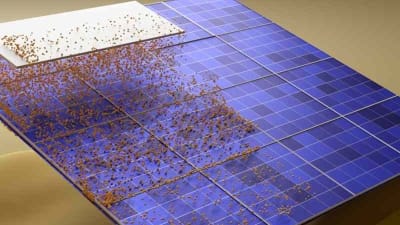
An MIT team has a water-free way to charge up dust on solar panels and repel it away.
Blog: Power
A reader asks how to check the longevity and capacity of vehicle batteries.

Blog: Electronics & Computers
Makers of a brain-computer interface recall a memorable achievement in prosthetics: A presidential handshake.

Blog: Power
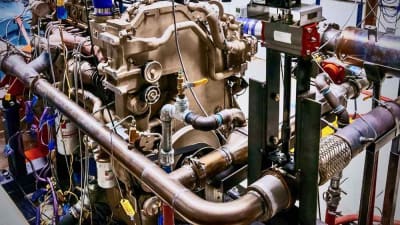
An industry expert supports a “diesel engine without the diesel fuel.”
Blog: Materials
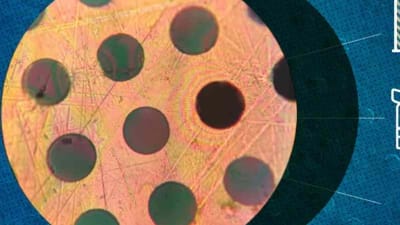
A plastic known as 2DPA-1 is super-strong and super-light.
Top Stories
 Blog: Design
Aerial Microrobots That Can Match a Bumblebee's Speed
 Blog: Energy

My Opinion: We Need More Power Soon — Is Nuclear the Answer?
 Blog: Electronics & Computers

Turning Edible Fungi into Organic Memristors
 Blog: Semiconductors & ICs

Revolutionizing the Production of Semiconductor Chips
 Blog: Robotics, Automation & Control

Microscopic Swimming Machines that Can Sense, Respond to Surroundings
 Quiz: Energy

Webcasts
 Upcoming Webinars: Power

Hydrogen Engines Are Heating Up for Heavy Duty
 Upcoming Webinars: Transportation

Advantages of Smart Power Distribution Unit Design for Automotive...
 Upcoming Webinars: Unmanned Systems

Quiet, Please: NVH Improvement Opportunities in the Early Design...
 Upcoming Webinars: Power

A FREE Two-Day Event Dedicated to Connected Mobility
 On-Demand Webinars: Automotive

E/E Architecture Redefined: Building Smarter, Safer, and Scalable Vehicles
 Podcasts: Unmanned Systems

How Sift's Unified Observability Platform Accelerates Drone Innovation