
-1
120
30
Blog: Materials
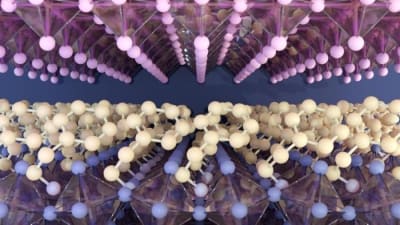
Perovskite materials may degrade quickly, and in order to know how best to apply these materials, a deeper understanding is required of why this happens and how the material functions. Researchers have gained new insights into the matter. Read on to learn more.
Blog: Connectivity
MIT researchers have developed a security protocol that leverages the quantum properties of light to guarantee that data sent to and from a cloud server remain secure during deep-learning computations.

Blog: Connectivity
The U.S. power grid is like the body’s central circulatory system — it provides the energy without which virtually nothing functions. Read on to learn more about what SAE Media Group's Ed Brown has to say on the matter.

Blog: Energy
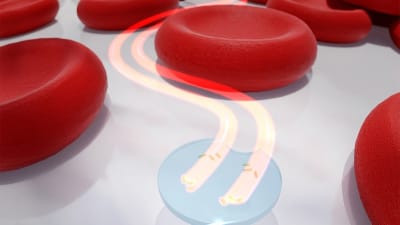
A tiny battery could enable the deployment of cell-sized, autonomous robots for drug delivery within in the human body, as well as other applications.

Blog: Energy
UW researchers have developed a flexible, durable electronic prototype that can harvest energy from body heat and turn it into electricity that can be used to power small electronics.

Blog: Imaging
Researchers have demonstrated that their smartphone-based digital holographic microscope can capture, reconstruct, and display holograms in almost real time.

Blog: Robotics, Automation & Control
By harnessing mycelia’s innate electrical signals, the researchers discovered a new way of controlling “biohybrid” robots that can potentially react to their environment better than their purely synthetic counterparts.

Blog: Robotics, Automation & Control
My opinion: There is much to learn that is useful, practical, and important by studying swarms.
Blog: Electronics & Computers
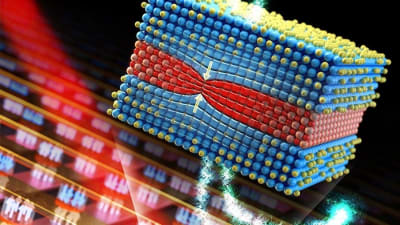
A new study led by researchers at the University of Minnesota Twin Cities is providing new insights into how next-generation electronics, including memory components in computers, breakdown or degrade over time.
Blog: Materials
The chemical process can essentially vaporize plastics that currently dominate the waste stream and turn them into hydrocarbon building blocks for new plastics.

Blog: Mechanical & Fluid Systems
NASA engineers partnered with digital manufacturer Protolabs for a generative design experiment at the recent PowerSource Global Summit, a technology conference held in Orlando. Read on to learn more about the space-ready parts that came out of it.

Blog: Robotics, Automation & Control
UCLA researchers have developed a new type of metamaterial, a material engineered to possess properties with applications for soft robotics, reconfigurable architectures, and space engineering.

Blog: Materials
A research team has developed a new generation of lithium metal batteries, representing a significant advancement in the field. Their innovation centers on microcrack-free polymer electrolytes which promise extended lifespan and enhanced safety at elevated temperatures.

Blog: Imaging
URDFormer takes images of real environments from the internet and quickly creates physically realistic simulation environments where robots can train.

Blog: Imaging
A team developed a pinhole compound vision system by adopting new materials and structures. This system features several key characteristics, including an inherent hemispherical perovskite nanowire array imager with high pixel density to enlarge the imaging field and a 3D-printed lens-free pinhole array.

Blog: Green Design & Manufacturing
A research team at Rice University is tackling the environmental issue of efficiently recycling Li-ion batteries amid their increasing use.

Blog: Robotics, Automation & Control
Researchers have demonstrated miniature soft hydraulic actuators that can be used to control the deformation and motion of soft robots that are less than a millimeter thick.

Blog: AR/AI
My opinion: AI can be a great tool to solve urgent problems, but we must be careful to minimize its negative impacts.

Blog: Design
To address the needs of wheelchair accessible vehicle (WAV) users in the U.K.’s transition to electric, Motability Operations has revealed eVITA. It’s an accessible and versatile concept electric wheelchair accessible vehicle (eWAV), designed in collaboration with CALLUM.

Blog: Energy
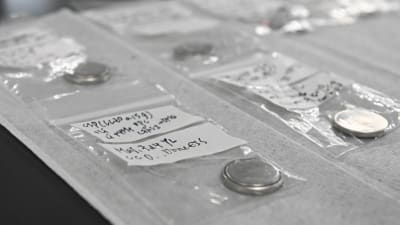
Rechargeable solid-state lithium batteries are an emerging technology that could someday power cell phones and laptops for days with a single charge, but they are not environmentally friendly. A team of Penn State researchers may have solved this issue.
Blog: Design
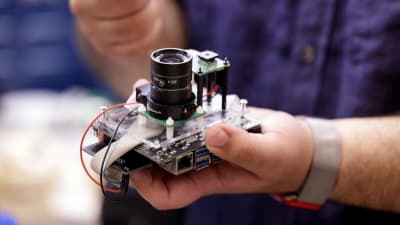
A new camera could prevent companies from collecting embarrassing and identifiable photos and videos from devices like smart home cameras and robotic vacuums.
Blog: Data Acquisition
A new tool makes it easier for database users to perform complicated statistical analyses of tabular data without the need to know what is going on behind the scenes.

Blog: Manufacturing & Prototyping
To demonstrate their new device, an actuator, the researchers used it to create a cylindrical, worm-like soft robot and an artificial bicep. In experiments, it navigated tight curves and was able to lift a 500-gram weight 5,000 times in a row.

Blog: Information Technology
My opinion: Some last-minute, posthumous nominations for the Tech Briefs Rising Star Award for Women in Engineering.

Blog: Photonics/Optics
Researchers have developed a technique that allows artificial intelligence (AI) programs to better map three-dimensional (3D) spaces using two-dimensional (2D) images captured by multiple cameras.

Blog: Photonics/Optics
Researchers have leveraged deep learning techniques to enhance the image quality of a metalens camera. The new approach uses AI to turn low-quality images into high-quality ones.

Blog: Robotics, Automation & Control
Researchers have demonstrated a new method that leverages artificial intelligence (AI) and computer simulations to train robotic exoskeletons to autonomously help users save energy while walking, running, and climbing stairs.

Blog: Materials
A University of Pennsylvania team demonstrated memory technology capable of enduring temperatures as high as 600 °C — more than twice the tolerance of any commercial drives on the market — and these characteristics were maintained for more than 60 hours.
Blog: Sensors/Data Acquisition
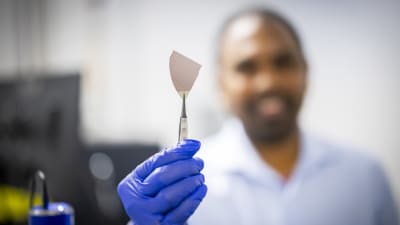
Researchers have developed a method to make adaptive and eco-friendly sensors that can be directly and imperceptibly printed onto a wide range of biological surfaces.

Top Stories
 Blog: Design
Aerial Microrobots That Can Match a Bumblebee's Speed
 Blog: Energy

My Opinion: We Need More Power Soon — Is Nuclear the Answer?
 Blog: Electronics & Computers

Turning Edible Fungi into Organic Memristors
 Blog: Semiconductors & ICs

Revolutionizing the Production of Semiconductor Chips
 Blog: Robotics, Automation & Control

Microscopic Swimming Machines that Can Sense, Respond to Surroundings
 Quiz: Energy

Webcasts
 Upcoming Webinars: Power

Hydrogen Engines Are Heating Up for Heavy Duty
 Upcoming Webinars: Transportation

Advantages of Smart Power Distribution Unit Design for Automotive...
 Upcoming Webinars: Unmanned Systems

Quiet, Please: NVH Improvement Opportunities in the Early Design...
 Upcoming Webinars: Power

A FREE Two-Day Event Dedicated to Connected Mobility
 On-Demand Webinars: Automotive

E/E Architecture Redefined: Building Smarter, Safer, and Scalable Vehicles
 Podcasts: Unmanned Systems

How Sift's Unified Observability Platform Accelerates Drone Innovation