-1
1440
30
Blog: Energy
An energy breakthrough from the City University of Hong Kong finds power in a single drop of water – up to 140 volts, in fact.

Question of the Week: Materials
Will Cooling Coatings Catch On?
This month’s Tech Briefs featured a potential alternative to the air conditioner: A painted-on polymer coating that can cool down a building.
Blog: Test & Measurement
See what the SuperCam will do when it arrives on Mars in 2021.

Question of the Week: Connectivity
Do the 5G Benefits Outweigh the Risks?
A feature article in this month’s Tech Briefs explored how the fifth-generation mobile network known as 5G will support the creation of increasingly “smart” factories – ones that allow manufacturers to further improve factory automation, human/machine interfaces, and mobility.
Blog: Aerospace
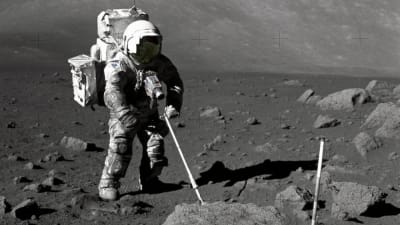
“We’re analyzing rocks from space, atom by atom,” says researcher Jennika Greer.
INSIDER: Manufacturing & Prototyping
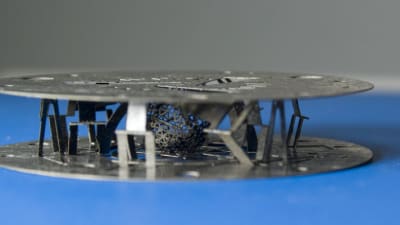
A bulk-machined “Pop-Up” MEMS process was developed for creating mesoscale machines up to several centimeters in dimension.
INSIDER: Robotics, Automation & Control
Rutgers University engineers have developed an automated way to produce polymers, making it much easier to create advanced materials aimed at improving human health. While a human researcher may...
Blog: Photonics/Optics
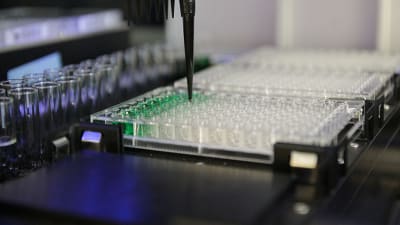
Editor Bruce A. Bennett shares his observations from SPIE Photonics West, including the emergence of LiDAR.
Blog: Automotive
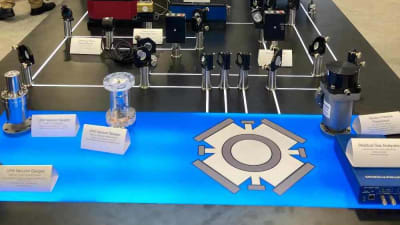
See what caught Bruce A. Bennett's eye during Day 1 of Photonics West 2020 in San Francisco.
Question of the Week: Electronics & Computers
In the Near Future, Will Computers Use Light Instead of Electricity?
This month in Tech Briefs: Researchers from the National Institute of Standards and Technology have developed an optical switch that routes light from one computer chip to another in just 20 billionths of a second — faster than any other similar device.
Blog: Transportation
Researchers from the University of Illinois are looking at all the different ways to create a non-pneumatic automotive tire.

INSIDER: Communications
A team of engineers at University of Illinois at Urbana-Champaign has boosted the performance of its previously developed 3D inductor technology by adding as much as three orders...

INSIDER: Sensors/Data Acquisition
Nagoya University scientists have succeeded in designing a laser diode that emits deep-ultraviolet light. It emits the world's shortest lasing wavelength, at 271.8 nanometers, under pulsed electric current...

INSIDER: Electronics & Computers
Scientists at Linköping University (Linköping, Sweden) have described a method to manufacture transistors using gallium nitride and aluminum nitride that have the ability to withstand voltages as high...

INSIDER: Semiconductors & ICs
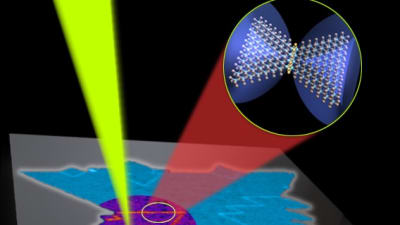
To further shrink electronic devices and to lower energy consumption, the semiconductor industry is interested in using 2D materials, but manufacturers need a quick...
Blog: Materials
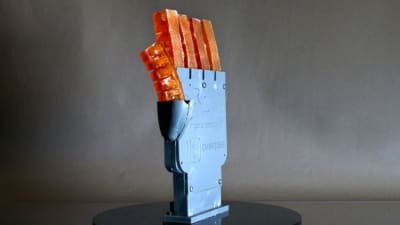
Cornell researcher T.J. Wallin explains what's so cool about a robot that sweats.
INSIDER: Robotics, Automation & Control
An engineering model of the VIPER lunar rover is being tested at NASA’s Glenn Research Center. About the size of a golf cart, VIPER is a mobile robot that will roam around the Moon’s South Pole looking...

INSIDER: Motion Control
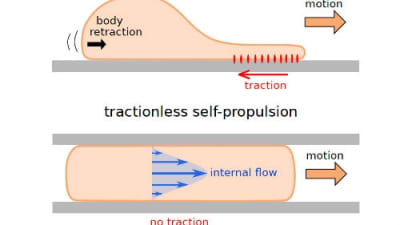
Cells are observed to “crawl” by attaching themselves to a surface and using these anchor points to push themselves forward (like crawling on the ground). Scientists have identified a different propulsion...
Question of the Week: Green Design & Manufacturing
Do you Like the Idea of Fungi-Inspired Design?
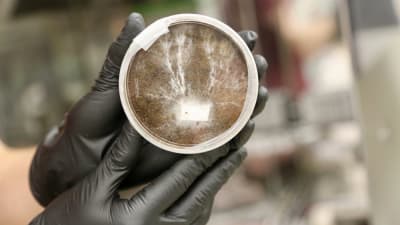
Our lead INSIDER story today demonstrated the potential of fungi as a building material. Aside from supporting theoretical space habitats, fungal mycelia have been used to create actual chairs and 2x4 structures. What do you think? Do you Like the Idea of Fungi-Inspired Design?
Blog: Materials
When astronauts arrive on the Moon, their habitat may be one made out of fungi.
INSIDER: Photonics/Optics
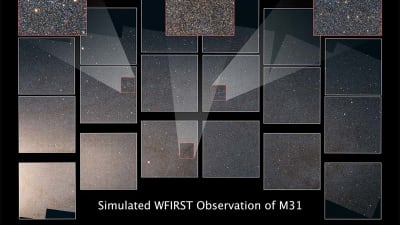
Imagine a fleet of 100 Hubble Space Telescopes, deployed in a strategic space-invader-shaped array a million miles from Earth, scanning the universe at warp...
INSIDER: Photonics/Optics
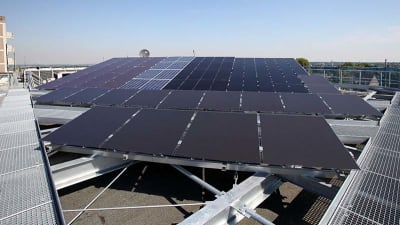
Photovoltaics used in solar panels are sensitive to environmental factors and often suffer degradation over time. International Electrotechnical Commission standards for...
INSIDER: Photonics/Optics
Researchers have demonstrated a new all-optical technique for creating robust second-order nonlinear effects in materials that don’t normally support them. Using a...
Blog: Materials
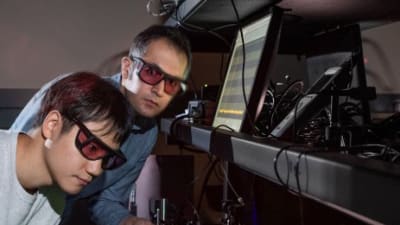
"View it as an infrared privacy shield," says Professor Mikhail Kats.

Question of the Week: Manufacturing & Prototyping
Would You Cook with ‘Julia?’
Last week, we highlighted five CES 2020 technologies that are adding intelligence to everyday aspects of the home. One featured “Smart Home” technology included “Julia,” an all-in-one cooker that performs a variety of kitchen tasks: chopping, whisking, steaming, weighing ingredients, and even kneading...
Blog: Electronics & Computers
To improve the aqueous lithium-ion battery, RPI researchers tried out niobium tungsten oxide.

Blog: Materials
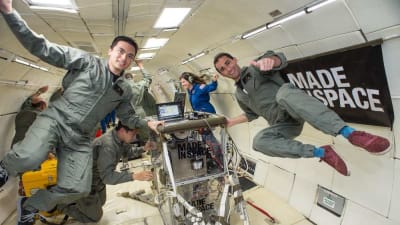
NASA is using the International Space Station as a testbed for 3D printing.
Question of the Week: Transportation
Would You Ride in a Flying Car?
A flying car, also known as a rotable aircraft, is something that inventors have been dreaming about for a very long time. Stuck in traffic? Just take-off and get out of there.
Blog: Mechanical & Fluid Systems
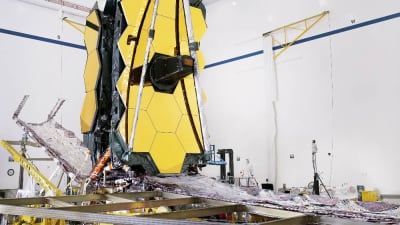
NASA came to CES with a message: We're going back to the Moon, and we'll need help from industry to do it.
Top Stories
 Blog: Lighting

A Stretchable OLED that Can Maintain Most of Its Luminescence
 Blog: Energy

Batteries that Can Withstand the Cold
 INSIDER: Energy

Advancing All-Solid-State Batteries
 Blog: Power

My Opinion: We Need More Power Soon — Is Nuclear the Answer?
 Quiz: Power

 Blog: Data Acquisition

Webcasts
 Upcoming Webinars: Test & Measurement

From Spreadsheets to Insights: Fast Data Analysis Without Complex...
 Upcoming Webinars: Aerospace

Cooling a New Generation of Aerospace and Defense Embedded...
 Upcoming Webinars: Sensors/Data Acquisition

Beyond AI-Copy-Paste Engineering: Advanced AI-Integration Success...
 Upcoming Webinars: Energy

Battery Abuse Testing: Pushing to Failure
 Upcoming Webinars: Power

A FREE Two-Day Event Dedicated to Connected Mobility
 Upcoming Webinars: RF & Microwave Electronics

Choosing the Right N-Port Strategy: Multiport VNAs vs. Switch...