-1
900
30
Blog: Design
A designer’s job gets much more complicated when artificial intelligence is part of the system.
INSIDER: Transportation
An autonomous spacecraft exploring the far-flung regions of the universe descends through the atmosphere of a remote exoplanet. The vehicle, and the researchers who programmed...

INSIDER: Robotics, Automation & Control
Mimicking the human body, specifically the actuators that control muscle movement, is of immense interest around the globe. In recent years, it has led to many innovations to improve...
INSIDER: Design
If you’ve ever made an origami paper crane, using folds and creases to transform a square piece of craft paper into the delicate long-necked bird, it may seem odd that those...

INSIDER: Manufacturing & Prototyping
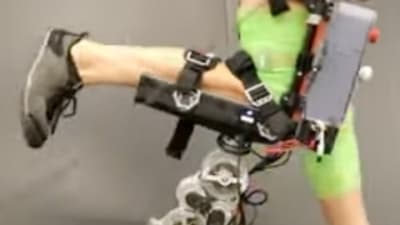
A new method of generating gaits for robotic assistive devices aims to guarantee stability and achieve more natural locomotion for different users. The method is being developed by a team at...
Question of the Week: Medical
Exoskeleton Device Helps Stroke Victims Regain Hand Function
Many of our daily activities involve our hands’ prehensile abilities. While able-bodied people don’t think twice when using a spoon or lifting a glass, these actions are nearly impossible for someone unable to grasp things with their fingers.
Quiz: Mechanical & Fluid Systems
NASA plans to retire the International Space Station by 2030; its operations will be transitioned to commercial low-Earth orbit destinations. Take this quiz to test your knowledge of the ISS.

Question of the Week: Photonics/Optics
Next-Generation High-Performance Lasers
NASA’s Deep Space Network (DSN), a sort of GPS system for space, relies on atomic clocks for extreme accuracy. Any modern navigation system must accurately time radio signals to triangulate a location. But the need for accuracy is even higher in space, where great distances can compound even tiny errors.
Question of the Week: Robotics, Automation & Control
Tiny Robotic Crab Is Smallest-Ever Remote-Controlled Walking Robot
Northwestern University engineers have developed the smallest-ever remote-controlled walking robot — and it comes in the form of a tiny peekytoe crab.
Question of the Week: Robotics, Automation & Control
Implant Allows Amputees to Use Mind to Control Robotic Arm
A more accurate, less-invasive technology allows amputees to move a robotic arm using their brain signals instead of their muscles. Researchers have created a small, implantable device that attaches to the peripheral nerve in a person’s arm. When combined with an artificial intelligence...
Quiz: Aerospace
Supersonic flight over land could soon be reality. Take this quiz to prep and test your knowledge about supersonic travel.

INSIDER: Data Acquisition
Researchers from Carnegie Mellon University took an all-terrain vehicle on wild rides through tall grass, loose gravel, and mud to gather data about how the ATV...

INSIDER: Propulsion
Northwestern University engineers have developed the smallest-ever remote-controlled walking robot — and it comes in the form of a tiny peekytoe crab.

INSIDER: Robotics, Automation & Control
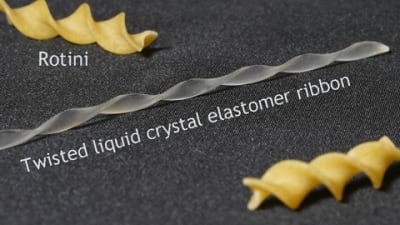
Researchers from North Carolina State University and the University of Pennsylvania have developed soft robots that are capable of navigating complex environments, such...
INSIDER: Robotics, Automation & Control
Fireflies that light up dusky backyards on warm summer evenings use their luminescence for communication — to attract a mate, ward off predators, or lure prey.

Question of the Week: Electronics & Computers
LEGO-Like Artificial Intelligence Chip
Imagine a more sustainable future, where cellphones, smartwatches, and other wearable devices don’t have to be shelved or discarded for a newer model. Instead, they could be upgraded with the latest sensors and processors that would snap onto a device’s internal chip — like LEGO bricks incorporated into...
Blog: Robotics, Automation & Control
A number of the engineers I’ve interviewed have taken their inspirations from nature. As one said to me, nature has been evolving and perfecting its designs over thousands of years — we should take...
Question of the Week: Electronics & Computers
Smart Molecules Act as Computer Transistors
Researchers have discovered a single-molecule switch that can act like a transistor and store binary information. The molecule is around five square nanometers in size — more than one billion of them would fit onto the cross-section of a human hair.
INSIDER: Electronics & Computers
Scientists at Berkeley Lab have discovered a physical phenomenon that is the basis for a new material that has 150% better thermal conductivity than conventional materials used in...

INSIDER: Sensors/Data Acquisition
Imagine a more sustainable future, where cellphones, smartwatches, and other wearable devices don’t have to be shelved or discarded for a newer model. Instead, they could be upgraded with the latest...

INSIDER: Physical Sciences
A team from the Tulane University School of Science and Engineering has developed a new family of two-dimensional materials that researchers say has promising applications, including in advanced...

Question of the Week: Electronics & Computers
EV Managed Charging Improves Vehicle-Grid Integration
It is 5 p.m., and you arrive home from work when it is peak demand for the grid. Your electric vehicle (EV) is 50% charged — you could either plug it in and charge right away or, if it works for your plans, schedule the vehicle to charge at a better time for the grid.
Blog: Sensors/Data Acquisition
As I was scrolling through research lab press releases for a Q&A column, one caught my eye: “Remote High-Voltage Sensor Unveiled at Sandia Gamma Ray Lab.” High voltage is not the sexiest of technology...

Question of the Week: Motion Control
Lessons from How Dragonflies Right Themselves While They're Falling
A group led by Jane Wang, Professor of Mechanical and Aerospace Engineering in the Cornell University College of Engineering, has untangled the intricate physics and neural controls that enable dragonflies to right themselves while they're falling.
INSIDER: Test & Measurement
Specialists in fluid dynamics at Rice University and Waseda University in Tokyo have developed their computer simulation methods to the point where it’s possible to accurately model moving...

INSIDER: Motion Control
A mechanical jumper developed by University of California Santa Barbara engineering professor Elliot Hawkes and collaborators is capable of achieving the tallest height — roughly 100 feet (30 meters)...
INSIDER: Physical Sciences
With their stretched bodies, immense wingspan and iridescent coloring, dragonflies are a unique sight. But their originality doesn’t end with their looks: As one of the...

Question of the Week: Imaging
Will inserting lenses inside blood vessels become a practical tool for diagnosing disease?
Researchers have developed a camera-like imaging device that can be inserted into blood vessels to provide high-quality 3D images to help scientists better understand the causes of heart attack and heart disease progression and could lead to improved...
Question of the Week: Robotics, Automation & Control
Are soft machines an important technology for the future?
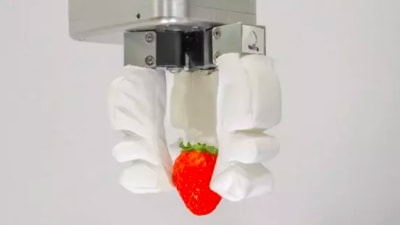
Soft machines — a subcategory of robotics that uses deformable materials instead of rigid links — are an emerging technology commonly used in wearable robotics and biomimetics (e.g., prosthetic limbs).
Top Stories
 Blog: Lighting

A Stretchable OLED that Can Maintain Most of Its Luminescence
 Blog: Energy

Batteries that Can Withstand the Cold
 INSIDER: Energy

Advancing All-Solid-State Batteries
 Blog: Power

My Opinion: We Need More Power Soon — Is Nuclear the Answer?
 Quiz: Power

 Blog: Data Acquisition

Webcasts
 Upcoming Webinars: Test & Measurement

From Spreadsheets to Insights: Fast Data Analysis Without Complex...
 Upcoming Webinars: Aerospace

Cooling a New Generation of Aerospace and Defense Embedded...
 Upcoming Webinars: Sensors/Data Acquisition

Beyond AI-Copy-Paste Engineering: Advanced AI-Integration Success...
 Upcoming Webinars: Energy

Battery Abuse Testing: Pushing to Failure
 Upcoming Webinars: Power

A FREE Two-Day Event Dedicated to Connected Mobility
 Upcoming Webinars: RF & Microwave Electronics

Choosing the Right N-Port Strategy: Multiport VNAs vs. Switch...