47
-1
0
30
Briefs: RF & Microwave Electronics
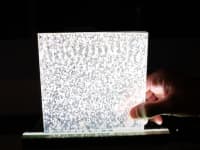
A research team has designed a passive metasurface-based filtering system that breaks free from LTI constraints through an innovative time-varying interlocking mechanism. The design incorporates metasurface panels with internally coupled circuit elements, including metal-oxide-semiconductor field-effect transistors (MOSFETs). Read on to learn more.
Briefs: Photonics/Optics
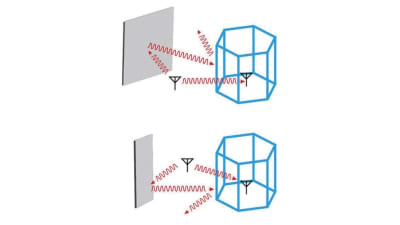
The technique promises immediate impact not only on high-capacity optical communications but also on real-time endoscopic imaging, vibration-tolerant fiber sensors, and any application that demands fast, energyefficient phase retrieval. Read on to learn more.
Briefs: Sensors/Data Acquisition
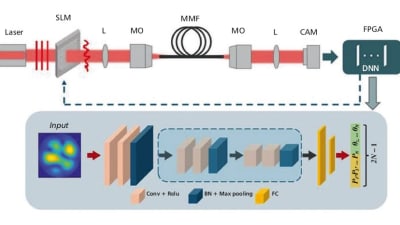
A new Microelectromechanical system (MEMS) grating modulator has been developed, offering significant advancements in optical efficiency and scalability for communication systems. By integrating a tunable sinusoidal grating with broadside-constrained continuous ribbons, a large-scale aperture of 30 × 30 mm is achieved and supports high-speed modulation up to 250 kHz. Read on to learn more.
Briefs: Communications
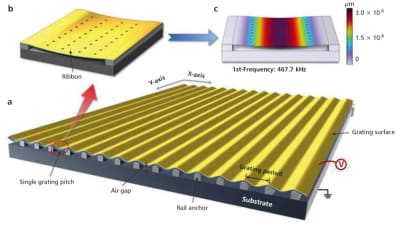
NASA's Glenn Research Center has developed a method of using entangled-photon pairs to produce highly secure mobile communications that require mere milliwatts of power. Read on to learn more.
Briefs: RF & Microwave Electronics
Researchers from Sandia National Laboratories and Ohio State University are taking experimental navigation technology to the skies, pioneering a backup system to keep an airplane on course when it cannot rely on global positioning system satellites. Read on to learn more.

Briefs: Information Technology
Cornell researchers have developed a low-power microchip they call a “microwave brain,” the first processor to compute on both ultrafast data signals and wireless communication signals by harnessing the physics of microwaves. Read on to learn more about it.

Briefs: Photonics/Optics
Researchers have successfully demonstrated the U.K.’s first long-distance ultra-secure transfer of data over a quantum communications network, including the U.K.’s first long-distance quantum-secured video call. Read on to learn more.

Briefs: Communications
Animals like bats, whales, and insects have long used acoustic signals for communication and navigation. Now, an international team of scientists have taken a page from nature’s playbook to model micro-sized robots that use sound waves to coordinate into large swarms that exhibit intelligent-like behavior. Read on to learn more.

Briefs: Connectivity
A research team led by Rice University’s Edward Knightly has uncovered an eavesdropping security vulnerability in high-frequency and high-speed wireless backhaul links, widely employed in critical applications such as 5G wireless cell phone signals and low-latency financial trading on Wall Street. Read on to learn more.

Briefs: Communications
In a paper published in the journal Nature Nanotechnology, a team of Caltech engineers reports building a metasurface patterned with miniscule tunable antennas capable of reflecting an incoming beam of optical light to create many sidebands, or channels, of different optical frequencies. Read on to learn more.

Briefs: Connectivity
A group of University of Arizona researchers has developed a wearable monitoring device system that can send health data up to 15 miles without any significant infrastructure. Their device, they hope, will help make digital health access more equitable. Read on to learn more.

Briefs: Data Acquisition
Researchers have developed a new method for predicting what data wireless computing users will need before they need it, making wireless networks faster and more reliable. The new method makes use of a technique called a “digital twin,” which effectively clones the network it is supporting. Read on to learn more.

Briefs: RF & Microwave Electronics
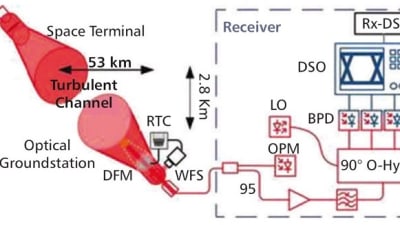
Researchers have achieved data rates as high as 424Gbit/s across a 53-km turbulent free-space optical link using plasmonic modulators — devices that uses special light waves called surface plasmon polaritons to control and change optical signals. The new research lays the groundwork for high-speed optical communication links that transmit data over open air or space. Read on to learn more.
Briefs: RF & Microwave Electronics
The researchers anticipate that with multiplexing techniques (where more than one channel can be used) and more sensitive receivers, the data rate can be increased to 1 terabit per second, ushering in a new era of near-instantaneous global communication. Read on to learn more.
Briefs: Robotics, Automation & Control
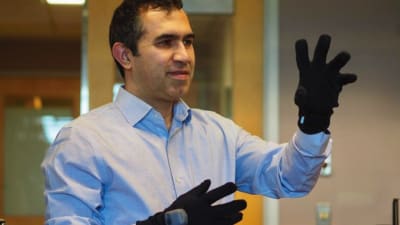
A new groundbreaking “smart glove” is capable of tracking the hand and finger movements of stroke victims during rehabilitation exercises. The glove incorporates a sophisticated network of highly sensitive sensor yarns and pressure sensors that are woven into a comfortable stretchy fabric. Read on to learn more about the smart glove.
Briefs: RF & Microwave Electronics
With a goal to revolutionize cellular communications, Penn engineers have developed an adjustable filter that can successfully prevent interference, even in higher-frequency bands of the electromagnetic spectrum. Read on to learn more about the matter.

Briefs: Software
Scientists have pioneered a method for using semiconductor technology to manufacture processors that significantly enhance the efficiency of transmitting vast amounts of data across the globe. The innovation is poised to transform the landscape of wireless communication. Read on to learn more.

Briefs: Electronics & Computers
After announcing a ferroelectric semiconductor at the nanoscale thinness required for modern computing components, a University of Michigan team has demonstrated a reconfigurable transistor using that material. Read on to learn more.

Briefs: Photonics/Optics
Researchers at Chalmers University of Technology have developed an optical amplifier that they expect will revolutionize both space and fiber communication.

Briefs: RF & Microwave Electronics
Innovators have developed a method and apparatus to multiplex Radio Frequency Identification (RFID) signals efficiently. The resulting Hyper-Distributed RFID Antenna (HYDRA) system enhances distribution of the RFID reader signal, providing improved coverage for large areas as well as for small, fixed regions requiring a high density of reader antennas.

Briefs: Electronics & Computers
MIT researchers have developed a quantum computing architecture that aims to enable extensible, high-fidelity communication between superconducting quantum processors.

Briefs: RF & Microwave Electronics
Researchers at the University of Birmingham have developed a new type of high-performance “phase shifter” using a liquid gallium alloy — which varies the phase angle of microwave and millimeter-wave radio signals — for use in advanced phase array antenna systems.

Briefs: Photonics/Optics
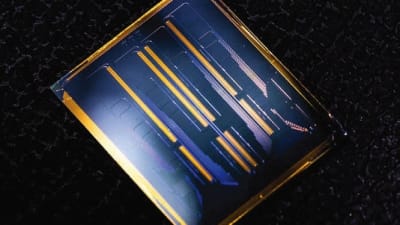
RMIT University’s Arnan Mitchell and University of Adelaide’s Dr. Andy Boes led an international team to review lithium niobate’s capabilities and potential applications in the journal Science. The team is working to make navigation systems that help rovers drive on the Moon — where GPS is unable to work — later this decade.
Briefs: Robotics, Automation & Control
This new technology — developed by engineers at Delft University of Technology, Vrije Universiteit Amsterdam, and VSL, and which can achieve an accuracy of 10 centimeters — is important for the implementation of a range of location-based applications, such as automated vehicles, quantum communication, and next-generation mobile communication systems.

Briefs: Communications
Intrigued to see if many limbs could be helpful for locomotion in this world, a team at the Georgia Institute of Technology is using a centipede's style of movement to its advantage. They developed a new theory of multilegged locomotion and created many-legged robotic models.

Briefs: Photonics/Optics
Researchers have created a device that enables them to electronically steer and focus a beam of terahertz electromagnetic energy with extreme precision. This opens the door to high-resolution, real-time imaging devices that are hundredths the size of other radar systems and more robust than other optical systems.
Briefs: Energy
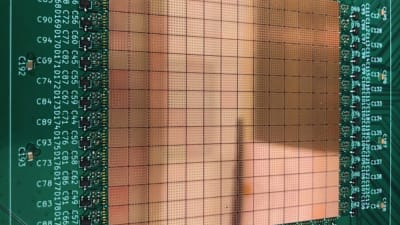
Wireless power transfer was recently demonstrated by MAPLE — Microwave Array for Power-transfer Low-orbit Experiment — one of three key technologies being tested by the Space Solar Power Demonstrator (SSPD-1), the first space-borne prototype from Caltech’s Space Solar Power Project (SSPP), which aims to harvest solar power in space and transmit it to the Earth’s surface.

Briefs: Photonics/Optics
Making Satellite, Ground Communication More Effective
Rensselaer Polytechnic Institute’s Moussa N’Gom has devised a method to make communications between satellites and the ground more effective — regardless of the weather.
Briefs: Communications
Devices of all types are becoming more intelligent and may include native Ethernet. However, there are many opportunities where proven serial communications will remain the best choice for cost-effective communications.

Top Stories
 Blog: Lighting

A Stretchable OLED that Can Maintain Most of Its Luminescence
 Blog: Energy

Batteries that Can Withstand the Cold
 INSIDER: Energy

Advancing All-Solid-State Batteries
 Quiz: Energy

 Blog: Physical Sciences

 Blog: Materials

Webcasts
 Upcoming Webinars: Test & Measurement

From Spreadsheets to Insights: Fast Data Analysis Without Complex...
 Upcoming Webinars: Electronics & Computers

Cooling a New Generation of Aerospace and Defense Embedded...
 Upcoming Webinars: Test & Measurement

Beyond AI-Copy-Paste Engineering: Advanced AI-Integration Success...
 Upcoming Webinars: Automotive

Battery Abuse Testing: Pushing to Failure
 Upcoming Webinars: Internet of Things

A FREE Two-Day Event Dedicated to Connected Mobility
 Upcoming Webinars: Test & Measurement

Choosing the Right N-Port Strategy: Multiport VNAs vs. Switch...