44
-1
60
30
Briefs: Power
A PNNL research team used a simple mixed-salt water-based solution and their knowledge of metal properties to separate valuable minerals in continuously flowing reaction chambers. Read on to learn more.

Briefs: Energy
Researchers have developed a strategy to design luminescent polymers with high light-emitting efficiencies from the start that are both biodegradable and recyclable. Read on to learn more.

Briefs: Energy
NASA Ames Research Center presents a novel, patent-pending adjustable-autonomous intelligent systems approach for developing sustainable, small-scale reproductions of subsets of the Earths biosphere that can be distributed both on and beyond Earth, for improving the quality of life for all life, expanding the diversity of life, studying and protecting life, as well as enabling life to permanently extend beyond Earth. Read on to learn more.

Briefs: Mechanical & Fluid Systems
NASA engineers have developed a new approach to mitigating unwanted motion in floating structures. Ideally suited to applications including offshore wind energy platforms and barges, the innovation uses water ballast as a motion damping fluid.

Briefs: Energy
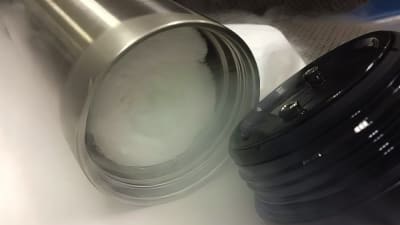
NASA’s Cryogenic Flux Capacitor capitalizes on the energy storage capacity of liquefied gases. By exploiting a unique attribute of nano-porous materials, aerogel in this case, fluid commodities such as oxygen, hydrogen, methane, etc. can be stored in a molecular surface-adsorbed state. Read on to learn more.
Briefs: Electronics & Computers
Researchers have fabricated the world’s highest-performing HTS wire segment while making the price-performance metric significantly more favorable. Read on to learn more.

Briefs: Materials
A PNNL research team used a simple mixed-salt water-based solution and their knowledge of metal properties to separate valuable minerals in continuously flowing reaction chambers. Read on to learn more.

Briefs: Energy
In a study published in Joule, researchers at the SLAC-Stanford Battery Center report that giving batteries a first charge at unusually high currents increased their average lifespan by 50 percent while decreasing the initial charging time from 10 hours to just 20 minutes. Read on to learn more.

Briefs: Manufacturing & Prototyping
Researchers have developed a pioneering technique for producing large-scale graphene current collectors. This breakthrough promises to significantly enhance the safety and performance of lithium-ion batteries (LIBs), addressing a critical challenge in energy storage technology. Read on to learn more.

Briefs: Energy
A multi-institutional research team led by Hailong Chen has developed a new, low-cost cathode that could radically improve lithium-ion batteries (LIBs) — potentially transforming the electric vehicle (EV) market and large-scale energy storage systems. Read on to learn more.

Briefs: Energy
Using transmission electron microscopes, Researchers at Graz University of Technology were able to systematically track lithium ions as they traveled through battery material, map their arrangement in the crystal lattice of an iron phosphate cathode with unprecedented resolution, and precisely quantify their distribution in the crystal. Read on to learn more.

Briefs: Energy
The global use of lithium-ion batteries has doubled in just the past four years, generating alarming amounts of battery waste containing many hazardous substances. The need for effective recycling methods for spent lithium-ion batteries is becoming increasingly critical. Scientists from various Polish research institutions presented a promising solution to this issue. Read on to learn more about it.

Briefs: Energy
To address stability and safety issues, researchers have designed a lithium-sulfur battery that features an improved iron sulfide cathode. One prototype remains highly stable over 300 charge-discharge cycles, and another provides power even after being folded or cut. Read on to learn more.

Briefs: Energy
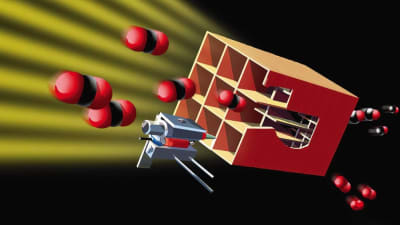
In recent years, engineers at ETH Zurich have developed the technology to produce liquid fuels from sunlight and air. In 2019, they demonstrated the entire thermochemical process chain under real conditions for the first time, in the middle of Zurich, on the roof of ETH Machine Laboratory. Two ETH spin-offs, Climeworks and Synhelion, are further developing and commercializing the technologies. Read on to learn more.
Briefs: Materials
A silicone membrane for wearable devices is more comfortable and breathable thanks to better-sized pores made with the help of citric acid crystals. The new preparation technique fabricates thin, silicone-based patches that rapidly wick water away from the skin. The technique could reduce the redness and itching caused by wearable biosensors that trap sweat beneath them. Read on to learn more.

Briefs: Energy
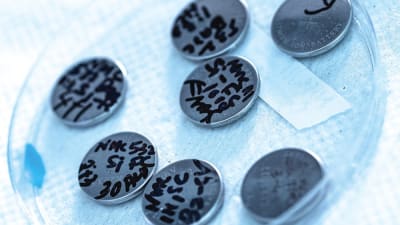
Researchers have developed better rechargeable batteries by applying silicon to the batteries’ cathodes. Read on to learn more about it.
Briefs: Materials
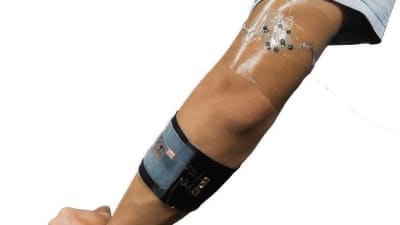
A flexible and stretchable cell has been developed for wearable electronic devices that require a reliable and efficient energy source that can easily be integrated into the human body. Read on to learn more about it.
Briefs: Semiconductors & ICs
It's time to rethink battery technology. Compared to other existing or developing technologies, a new lithium metal-based solid-state battery brings some significant advantages: It can be charged and discharged within one minute, lasts about 10 times as long as a Li-ion battery, and is insensitive to temperature fluctuations. Read on to learn more about it.
Briefs: Energy
New fuel cells could increase hydrogen’s application in vehicles, especially in extreme temperatures like cold winters. Read on to learn more about it.

Briefs: Power
All-in-One, High-Power Microwave System
A device was developed that uses composite-based nonlinear transmission lines (NLTLs) for a complete high-power microwave system, eliminating the need for multiple auxiliary systems. Read on to learn more.
Briefs: Energy
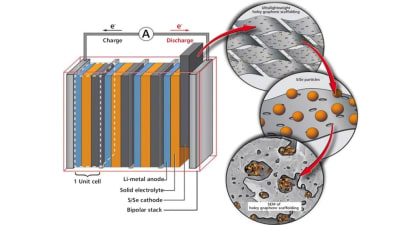
Whether for large electric vehicle systems or small electronic devices, SABERS can potentially set new benchmarks in energy density and power, all while offering the utmost in safety and reliability. Read on to learn more.
Briefs: Energy
Leveraging Machine Learning and AI to Automate Wearable Tech Design
Defying engineering challenges in record time, researchers at the University of Maryland developed a machine learning model that eliminates hassles in materials design to yield green technologies used in wearable heaters. Read on to learn more.
Briefs: Materials
The novel solar concentrators can be applied to textile fibers without the textile becoming brittle and susceptible to cracking or accumulating water vapor in the form of sweat. Read on to learn more.
Briefs: Materials
The Korea Research Institute of Standards and Science has developed a metamaterial that traps and amplifies micro-vibrations in small areas. This innovation is expected to increase the power output of energy harvesting, which converts wasted vibration energy into electricity, and accelerate its commercialization. Read on to learn more.
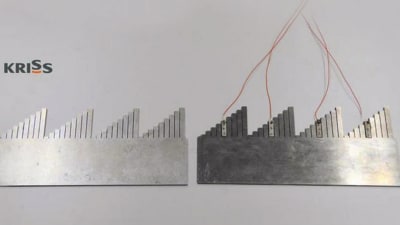
Briefs: Robotics, Automation & Control
The “nanoswimmers” could be used to remediate contaminated soil, improve water filtration, or even deliver drugs to targeted areas of the body.
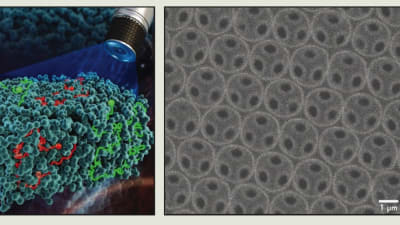
Briefs: Semiconductors & ICs
Researchers at the University of California, Davis, have developed a proof-of-concept sensor that may usher in a new era for millimeter wave radars. They call its design a “mission impossible” made possible. Read on to learn more.

Briefs: Energy
The data collected from cameras and vibration sensors continue to inform next steps in research. The goal is to make this technology commercially available for land-based and offshore wind turbines to ensure a harmonic relationship between wind energy and surrounding wildlife. Read on to learn more.

Briefs: Manufacturing & Prototyping
Engineers at NASAs Stennis Space Center have developed the HYdrocarbon Propellants Enabling Reproduction of Flows in Rocket Engines (HYPERFIRE), a sub-scale, non-reacting flow test system. HYPERFIRE uses heated ethane to enable physical simulation of rocket engines powered by a broad range of propellants in an inexpensive, accurate, and simple fashion. Read on to learn more.
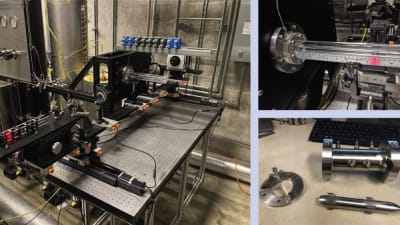
Briefs: Energy
American drivers have long been accustomed to quickly filling up at a gas station with plenty of fuel available, and electric vehicle drivers want their pit stops to mimic this experience. Researchers are working to make EV charging more resilient. Read on to learn more about it.

Top Stories
 Blog: Lighting

A Stretchable OLED that Can Maintain Most of Its Luminescence
 Blog: Energy

Batteries that Can Withstand the Cold
 INSIDER: Energy

Advancing All-Solid-State Batteries
 Quiz: Energy

 Blog: Physical Sciences

 Blog: Materials

Webcasts
 Upcoming Webinars: Test & Measurement

From Spreadsheets to Insights: Fast Data Analysis Without Complex...
 Upcoming Webinars: Electronics & Computers

Cooling a New Generation of Aerospace and Defense Embedded...
 Upcoming Webinars: Test & Measurement

Beyond AI-Copy-Paste Engineering: Advanced AI-Integration Success...
 Upcoming Webinars: Automotive

Battery Abuse Testing: Pushing to Failure
 Upcoming Webinars: Internet of Things

A FREE Two-Day Event Dedicated to Connected Mobility
 Upcoming Webinars: Test & Measurement

Choosing the Right N-Port Strategy: Multiport VNAs vs. Switch...