45
-1
0
30
Briefs: Photonics/Optics
As fast as modern electronics have become, they could be much faster if their operations were based on light, rather than electricity. Fiber optic cables already transport information at the speed of light, but to do computations on that information without translating it back to electric signals will require a host of new optical components. Researchers have now developed such a device. Read on to learn more.
Briefs: Electronics & Computers
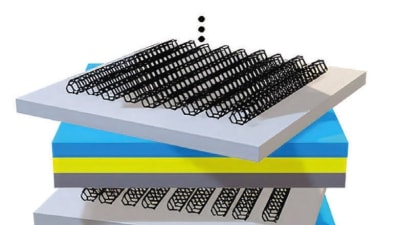
Engineers at NASA Langley Research Center have developed a cutting-edge thermal inspection technology that enhances defect detection on low-emissivity surfaces by eliminating false readings caused by infrared reflections. Read on to learn more.

Briefs: Semiconductors & ICs
A new computer vision technique developed by MIT engineers significantly speeds up the characterization of newly synthesized electronic materials. The technique automatically analyzes images of printed semiconducting samples and quickly estimates two key electronic properties for each sample. Read on to learn more.

Briefs: Photonics/Optics
With this groundbreaking discovery of time-dependent changes in networked nanodomains, developers are on the path to building adaptive networks for information storage and processing. Read on to learn more.

Briefs: Materials
Researchers have designed and synthesized a unique material with controllable capabilities that make it promising for future electronics including cellphones and computers. Read on to learn more.

Briefs: Software
A new type of organic light emitting diode (OLED) could replace bulky night vision goggles with lightweight glasses, making them cheaper and more practical for prolonged use, according to University of Michigan researchers. Read on to learn more.
Briefs: Lighting
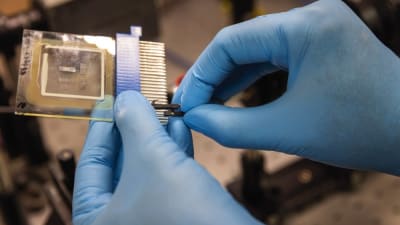
Now, a team from the Max Planck Institute for Polymer Research has developed a new material concept that could allow efficient blue OLEDs with a strongly simplified structure. Read on to learn more.

Briefs: Imaging
This innovative camera technology represents a significant advance in object detection, offering numerous potential applications across various industries. Read on to learn more.
Briefs: Lighting
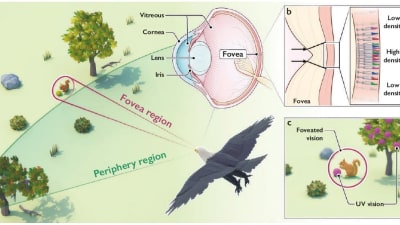
Penn Engineers have developed a new chip that uses light waves, rather than electricity, to perform the complex math essential to training AI. The chip has the potential to radically accelerate the processing speed of computers while also reducing their energy consumption. Read on to learn more.

Briefs: Manufacturing & Prototyping
A research team led by Lawrence Berkeley National Laboratory (Berkeley Lab) has developed “supramolecular ink,” a new technology for use in OLED (organic light-emitting diode) displays or other electronic devices.

Briefs: Design
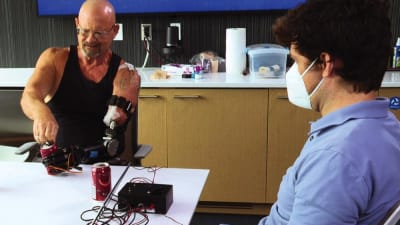
This advancement, one of the first of its kind, enables a useful new capability for a variety of applications, including improved prostheses, haptics for new modalities in augmented reality (AR), and thermally modulated therapeutics for applications such as pain management. The technology also has a variety of potential industrial and research applications.
Briefs: Imaging
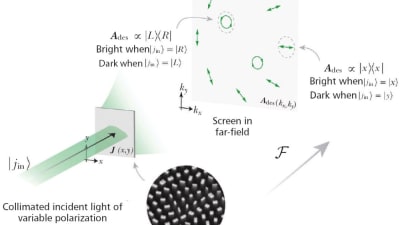
Researchers at SEAS have uncovered hidden potential in metasurfaces and demonstrated optical devices that manipulate light’s polarization state with an unprecedented degree of control. Read on to learn more.
Briefs: Lighting
The optical concentration sensor has been demonstrated to effectively measure pretreat concentrations in both still and flowing liquid conditions and is resistant to contamination issues as necessitated by the UWMS.

Briefs: Lighting
With a new microscopy technique that uses blue light to measure electrons in semiconductors and other nanoscale materials, a team of researchers is opening a new realm of possibilities in the study of these critical components, which can help power devices like mobile phones and laptops.
Briefs: Lighting
Researchers at the University of California San Diego have developed soft devices containing algae that glow in the dark when experiencing mechanical stress, such as being squished, stretched, twisted, or bent.

Briefs: Photonics/Optics
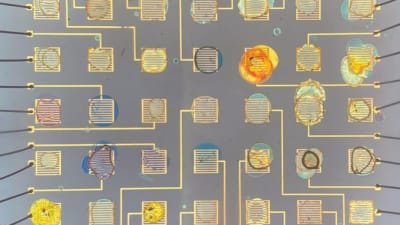
A team of researchers demonstrated the first light-emitting array with 49 different colors on a single chip. This novel optoelectronic device is built on metal-oxide semiconductor capacitors.
Briefs: Design
Touchless switches are an ideal solution for industries such as food, beverage, pharmaceuticals, medical, and chemicals where sanitary design is important. They are also useful for protecting the well-being of users in everyday commercial applications.

Briefs: Manufacturing & Prototyping
Imagine a thin, digital display so flexible that you can wrap it around your wrist, fold it in any direction, or even curve it over your car’s steering wheel. Well, imagine no more — researchers at the Pritzker School of Molecular Engineering at the University of Chicago have designed such a material.

Briefs: Imaging
A research team has developed a 3D imaging sensor that has an extremely high angular resolution — it can distinguish points of an object separated by an angular distance, of as little as 0.0018°. The sensor operates on a unique angle-to-color conversion principle.

Briefs: Lighting
Engineers have created full-motion video technology that could potentially be used to make cameras that peer through fog, smoke, driving rain, murky water, skin, bone, and other media that reflect scattered light and obscure objects from view.

Briefs: Manufacturing & Prototyping
A team at Delft University of Technology has built a new technology on a microchip by combining two Nobel Prize-winning techniques for the first time. This microchip could measure distances in materials at high precision — e.g., underwater or for medical imaging.
Briefs: Photonics/Optics
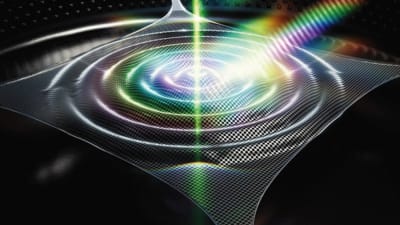
Researchers have developed a colloidal synthesis method for alkaline earth chalcogenides. This method allows them to control the size of the nanocrystals in the material.

Briefs: Lighting
A wavelength of visible light is about 1,000 times larger than an electron, so the way the two affect each other is limited by that disparity. Now, researchers have come up with a way to make...

Briefs: Lighting
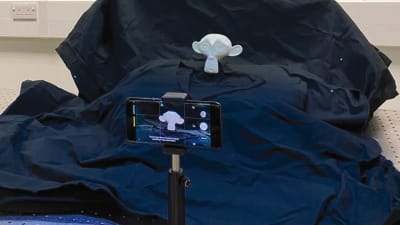
Researchers are tapping into dynamically controlled LEDs to create a simple illumination system for 3D imaging.
Briefs: Robotics, Automation & Control
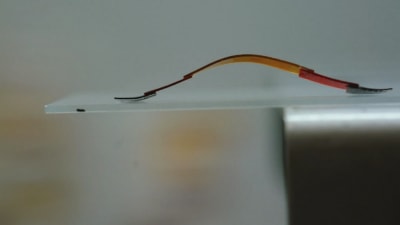
The new robot, developed by engineers at the University of Waterloo, uses ultraviolet (UV) light and magnetic force to move on any surface, even up walls and across ceilings.
Briefs: Photonics/Optics
The ability to control light using a semiconductor device could allow low-power, relatively inexpensive sources like LEDs or flashlight bulbs to replace more powerful laser beams in new technologies.

Briefs: Lighting
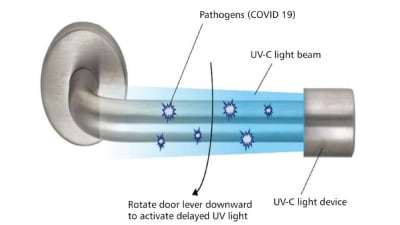
To overcome the limitations of using cleaning agents, sprays, or bulky high-cost sterilizing systems, NASA developed the Ultraviolet Germicidal Door Handle.
Briefs: Lighting
The imaging system tested in NASA wind tunnels can reduce or eliminate shadows that occur when using many existing BOS and photogrammetric measurement systems.

Briefs: Lighting
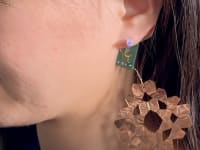
The OLEDs are fabricated onto temporary tattoo paper and transferred to a new surface by being pressed onto it and dabbed with water.

Top Stories
 Blog: Lighting

A Stretchable OLED that Can Maintain Most of Its Luminescence
 Blog: Energy

Batteries that Can Withstand the Cold
 INSIDER: Energy

Advancing All-Solid-State Batteries
 Quiz: Energy

 Blog: Physical Sciences

 Blog: Materials

Webcasts
 Upcoming Webinars: Test & Measurement

From Spreadsheets to Insights: Fast Data Analysis Without Complex...
 Upcoming Webinars: Electronics & Computers

Cooling a New Generation of Aerospace and Defense Embedded...
 Upcoming Webinars: Test & Measurement

Beyond AI-Copy-Paste Engineering: Advanced AI-Integration Success...
 Upcoming Webinars: Automotive

Battery Abuse Testing: Pushing to Failure
 Upcoming Webinars: Internet of Things

A FREE Two-Day Event Dedicated to Connected Mobility
 Upcoming Webinars: Test & Measurement

Choosing the Right N-Port Strategy: Multiport VNAs vs. Switch...