-1
30
30
Briefs: Unmanned Systems
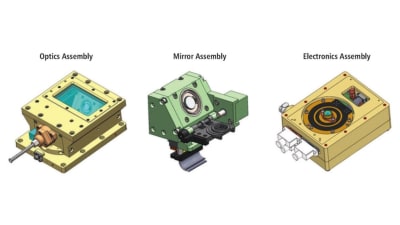
NASA Goddard Space Flight Center has developed a Space Qualified Rover LiDAR (SQRLi) system that will improve rover sensing capabilities in a small, lightweight package. The new SQRLi package is developed to survive the hazardous space environment and provide valuable image data during planetary and lunar rover exploration. Read on to learn more about it.
Briefs: RF & Microwave Electronics
Researchers from Sandia National Laboratories and Ohio State University are taking experimental navigation technology to the skies, pioneering a backup system to keep an airplane on course when it cannot rely on global positioning system satellites. Read on to learn more.

Briefs: Information Technology
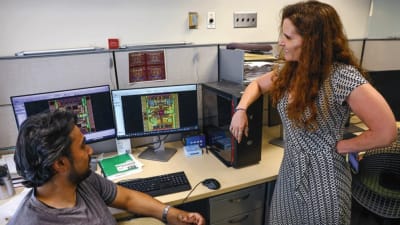
Cornell researchers have developed a low-power microchip they call a “microwave brain,” the first processor to compute on both ultrafast data signals and wireless communication signals by harnessing the physics of microwaves. Read on to learn more about it.
Briefs: Communications
Researchers have successfully demonstrated the U.K.’s first long-distance ultra-secure transfer of data over a quantum communications network, including the U.K.’s first long-distance quantum-secured video call. Read on to learn more.

Briefs: Medical
A collaborative multidisciplinary team of researchers from the Perelman School of Medicine at the University of Pennsylvania and the Tandon School of Engineering at New York University has developed a miniature device that could transform how blood cancer treatments are tested and tailored for patients. Read on to learn more.

Briefs: Medical
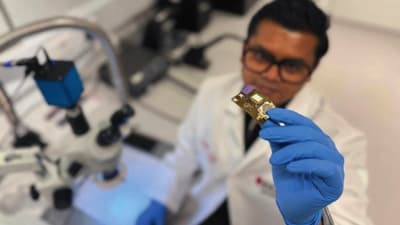
Researchers from RMIT University have developed a wearable wound monitoring device with integrated sensors that could reduce infection risks by minimizing the need for frequent physical contact. Read on to learn more about it.
Briefs: Medical
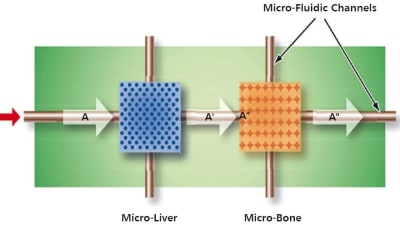
NASA Johnson Space Center has developed the Micro-Organ Device (MOD) platform technology that serves as a drug screening system with human or animal cell micro-organs to supplement and reduce animal studies while potentially increasing the success of clinical trials. Read on to learn more.
Briefs: Materials
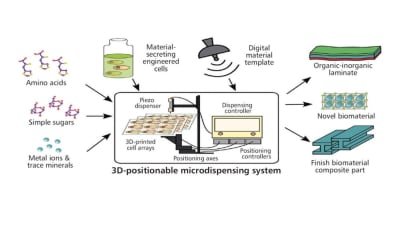
NASA has developed a novel approach for macroscale biomaterial production by combining synthetic biology with 3D printing. This innovation provides modern design and fabrication techniques for custom-designed organic or organic-inorganic composite biomaterials produced from limited resources. Read on to learn more.
Briefs: Software
Researchers have created a simulation model to analyze how coastal management activities meant to protect barrier islands from sea-level rise can disrupt the natural processes that are keeping barrier islands above water. Read on to learn more about it.

Briefs: Energy
As countries race to expand renewable energy infrastructure, balancing clean electricity production with land use for food remains a pressing challenge — especially in Japan, where mountainous terrain limits space. A recent study led by researchers from the University of Tokyo explores a promising solution: integrating solar panels with traditional rice farming in a practice known as agrivoltaics. Read on to learn more.

Briefs: Manufacturing & Prototyping
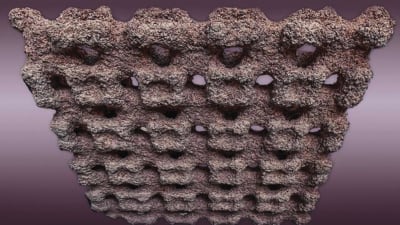
A team of researchers from ETH Zurich investigated a new approach to passive dehumidification of indoor spaces. Read on to learn more about it.
Briefs: Energy
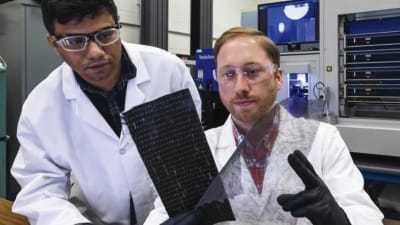
The Korea Institute of Energy Research has successfully developed ultra-lightweight flexible perovskite/ CIGS (copper indium gallium selenide) tandem solar cells and achieved a power conversion efficiency of 23.64 percent, which is the world’s highest efficiency for flexible perovskite/CIGS tandem solar cells reported to date. Read on to learn more.

Briefs: Energy
Researchers from the National University of Singapore have developed a novel triple-junction perovskite/Si tandem solar cell that can achieve a certified world-record power conversion efficiency of 27.1 percent across a solar energy absorption area of 1 sq cm, representing the best-performing triple-junction perovskite/Si tandem solar cell thus far. Read on to learn more.

Briefs: Materials
Soft robots, medical devices and implants, and next-generation drug delivery methods could soon be guided with magnetism — thanks to a metal-free magnetic gel developed by researchers at the University of Michigan and the Max Planck Institute for Intelligent Systems in Stuttgart, Germany. Read on to learn more about it.

Briefs: Electronics & Computers
Innovators at NASA Johnson Space Center have developed additively manufactured thermal protection system (AMTPS) comprised of two printable heat shield material formulations. This technology could significantly decrease heat shield or thermal protection system (TPS) fabrication cost and time. Read on to learn more.

Briefs: Materials
Researchers at the U.S. Department of Energy (DOE)’s Oak Ridge National Laboratory (ORNL) have developed an innovative new technique using carbon nanofibers to enhance binding in carbon fiber and other fiber-reinforced polymer composites — an advance likely to improve structural materials for automobiles, airplanes and other applications that require lightweight and strong materials.
Briefs: Medical
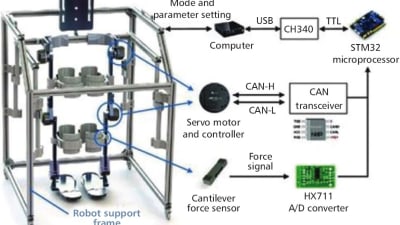
A study conducted by Fuyang Yu and his colleagues introduces an innovative approach to lower limb rehabilitation. Their research outlines the development of a lower limb rehabilitation robot designed to significantly improve the safety and effectiveness of gait training through a novel method based on human-robot interaction force measurement. Read on to learn more.
Briefs: Data Acquisition
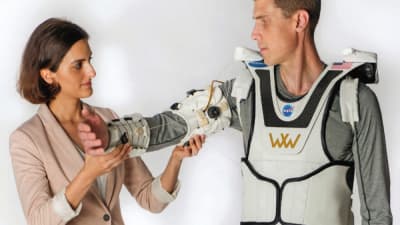
This lightweight, portable garment is designed for active shoulder and elbow positioning.
Briefs: Robotics, Automation & Control
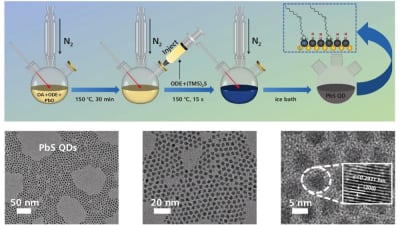
Researchers at Fuzhou University in China created a machine vision sensor that uses quantum dots to adapt to extreme changes in light far faster than the human eye can — in about 40 seconds — by mimicking eyes’ key behaviors. Their results could be a game changer for robotic vision and autonomous vehicle safety. Read on to learn more.
Briefs: Manufacturing & Prototyping
Finding the next groundbreaking polymer is always a challenge, but now Georgia Tech researchers are using artificial intelligence (AI) to shape and transform the future of the field. Read on to learn more.

Briefs: Information Technology
NASA has developed a new technology to track the status of, and changes to, enterprise level programmatic operations. Read on to learn more about it.

Briefs: Energy
New smart sensors can help detect dangerous internal failures in lithium-ion batteries before they escalate into fires or explosions, say researchers from the University of Surrey. Read on to learn more.

Briefs: Green Design & Manufacturing
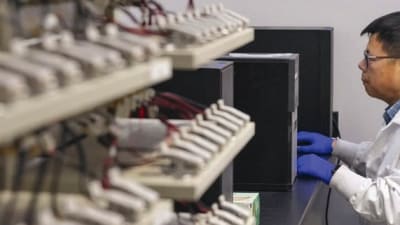
In a major step forward for sustainable energy technology, researchers at Worcester Polytechnic Institute, led by Professor Yan Wang, William B. Smith Professor of Mechanical and Materials Engineering, have developed a new, scalable method to recycle lithium-ion batteries in a way that is both efficient and environmentally friendly. Read on to learn more.
Briefs: Energy
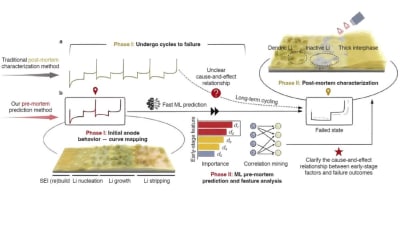
In a groundbreaking study, researchers at Tsinghua Shenzhen International Graduate School and the Shenzhen Institute of Advanced Technology, Chinese Academy of Sciences, have developed a predictive model that uses electrochemical data from the initial cycles of LMBs to forecast potential failures. Read on to learn more.
Briefs: Energy
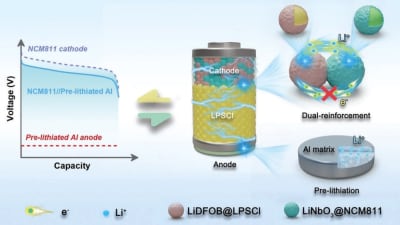
Researchers from Nanjing University, led by Professor Ping He and Professor Shaochun Tang, have published a comprehensive study in Nano-Micro Letters on the development of high-energy, stable all-solid-state lithium batteries using aluminum-based anodes and high-nickel cathodes. Read on to learn more about it.
Briefs: Energy
A team of Rice University researchers led by materials scientist Ming Tang showed that even if the materials used in thick battery electrodes have nearly identical structures, their internal chemistry impacts energy flow — and, hence, performance — differently. This finding goes against conventional wisdom in the field. Read on to learn more.

Briefs: Power
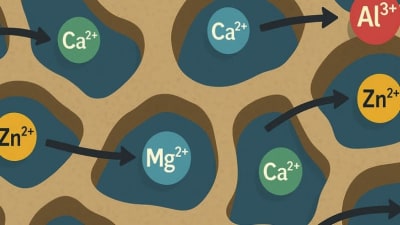
In research published in Cell Reports Physical Science, an NJIT team successfully applied generative AI techniques to rapidly discover new porous materials capable of revolutionizing multivalent-ion batteries. Read on to learn more.
Briefs: Energy
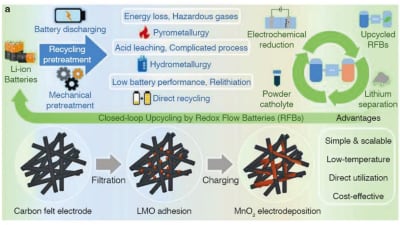
A research team led by Dr. Yosep Han at the Korea Institute of Geoscience and Mineral Resources has successfully developed an eco-friendly electrochemical process to upcycle lithium manganese oxide, a common cathode material in spent lithium-ion batteries. Read on to learn more.
Briefs: Software
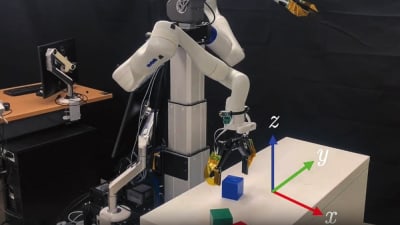
Researchers from MIT and NVIDIA Research have developed a novel algorithm that dramatically speeds up a robot’s planning process. Their approach enables a robot to “think ahead” by evaluating thousands of possible solutions in parallel and then refining the best ones to meet the constraints of the robot and its environment. Read on to learn more.
Top Stories
 Blog: Lighting

A Stretchable OLED that Can Maintain Most of Its Luminescence
 INSIDER: Energy

Advancing All-Solid-State Batteries
 Blog: Power

My Opinion: We Need More Power Soon — Is Nuclear the Answer?
 Quiz: Energy

 Blog: Lighting Technology

Microscopic Swimming Machines that Can Sense, Respond to Surroundings
 Blog: Data Acquisition

Webcasts
 On-Demand Webinars: Electronics & Computers

Advantages of Smart Power Distribution Unit Design for Automotive &...
 Upcoming Webinars: Automotive

Quiet, Please: NVH Improvement Opportunities in the Early Design...
 Upcoming Webinars: Test & Measurement

From Spreadsheets to Insights: Fast Data Analysis Without Complex...
 Upcoming Webinars: Defense

Cooling a New Generation of Aerospace and Defense Embedded...
 Upcoming Webinars: Sensors/Data Acquisition

Beyond AI-Copy-Paste Engineering: Advanced AI-Integration Success...
 Upcoming Webinars: Power