Tech Briefs

Photonics & Imaging

Access our comprehensive library of technical briefs on photonics and imaging, from engineering experts at NASA and major government, university, and commercial laboratories.
Latest Tech Briefs

34,35
-1
0
30
Briefs: Materials
Researchers successfully used laser-based 3D printing to make alloys from two different metals, Inconel 718 and René 41, without cracking. Read on to learn more.

Feature Image
Briefs: Communications
A new transceiver invented by electrical engineers at the University of California, Irvine boosts radio frequencies into 140-gigahertz territory, unlocking data speeds that rival those of physical fiber-optic cables and laying the groundwork for a transition to 6G and FutureG data transmission protocols. Read on to learn more about it.
Feature Image
Briefs: Automotive
Pilots, drivers, and automated safety systems in cars and airplanes could be alerted to icy hazards by a pair of sensors developed at the University of Michigan. Read on to learn more about it.
Feature Image
Briefs: Photonics/Optics
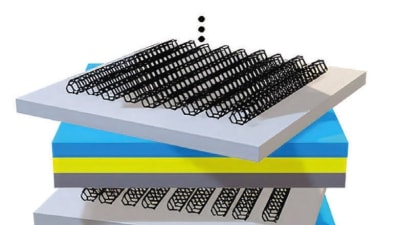
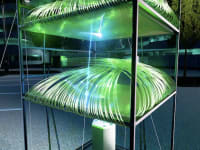
Researchers at Lawrence Livermore National Laboratory have optimized and 3D-printed helix structures as optical materials for Terahertz frequencies, a potential way to address a technology gap for next-generation telecommunications, non-destructive evaluation, chemical/biological sensing and more. Read on to learn more.
Feature Image
Briefs: Photonics/Optics
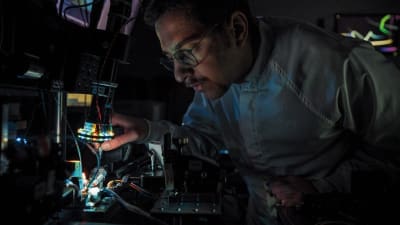
When materials function inside an operating device, they can behave as if they are dancing. This dynamic disorder is difficult to study because the clusters are not only so small and disordered, but they also fluctuate in time. Researchers report that they have developed a new kind of “camera” that can see the local disorder. Read on to learn more about it.
Feature Image
Briefs: Imaging
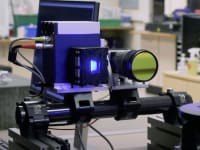
By folding AI algorithms into a camera’s sensor itself, researchers at the Department of Energy’s Lawrence Berkeley National Laboratory have now eliminated a data-processing bottleneck that has long plagued the performance of spectral imaging technology. The result is an intelligent sensor capable of identifying chemicals and characterizing materials quickly and efficiently. Read on to learn more.
Feature Image
Briefs: Imaging
Astronomers and amateurs alike know the bigger the telescope, the more powerful the imaging capability. To keep the power but streamline one of the bulkier components, a Penn State-led research team created the first ultrathin, compact metalens telescope capable of imaging faraway objects, including the Moon. Read on to learn more.
Feature Image
Briefs: Nanotechnology
In a new study, researchers at CU Boulder have used doughnut-shaped beams of light to take detailed images of objects too tiny to view with traditional microscopes. The new technique could help scientists improve the inner workings of a range of “nanoelectronics,” including the miniature semiconductors in computer chips. Read on to learn more.
Feature Image
Briefs: Energy
Improving energy conversion efficiency in power electronics is vital for a sustainable society. Wide-bandgap semiconductors like GaN and SiC power devices offer advantages due to their high-frequency capabilities. However, energy losses in passive components at high frequencies hinder efficiency and miniaturization. Find out what a research team from the School of Engineering, Institute of Science Tokyo, Japan, developed to help.
Feature Image
Briefs: Robotics, Automation & Control
A team of biomedical engineers at Georgia Tech has unveiled a breakthrough in adaptive optics: a bio-mimetic, light-powered soft lens that mimics the human eye’s ability to refocus and adjust to varying light conditions. Read on to learn more.
Feature Image
Briefs: Photonics/Optics
In a milestone for scalable quantum technologies, scientists from Boston University, UC Berkeley, and Northwestern University have reported the world’s first electronic–photonic–quantum system on a chip, according to a study published in Nature Electronics. Read on to learn more about it.
Feature Image
Briefs: Information Technology
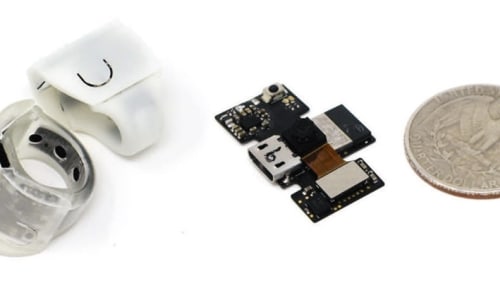
University of Washington researchers have developed IRIS, a smart ring that allows users to control smart devices by aiming the ring’s small camera at the device and clicking a built-in button. The prototype Bluetooth ring sends an image of the selected device to the user’s phone, which controls the device. Read on to learn more.
Feature Image
Briefs: AR/AI
Researchers at the University of Tokyo developed a framework to enable decentralized artificial intelligence-based building automation with a focus on privacy. The system enables AI-powered devices like cameras and interfaces to cooperate directly, using a new form of device-to-device communication. In doing so, it eliminates the need for central servers and thus the need for centralized data retention, often seen as a potential security weak point and risk to private data. Read on to learn more.
Feature Image
Briefs: AR/AI
The technique promises immediate impact not only on high-capacity optical communications but also on real-time endoscopic imaging, vibration-tolerant fiber sensors, and any application that demands fast, energyefficient phase retrieval. Read on to learn more.
Feature Image
Briefs: Communications
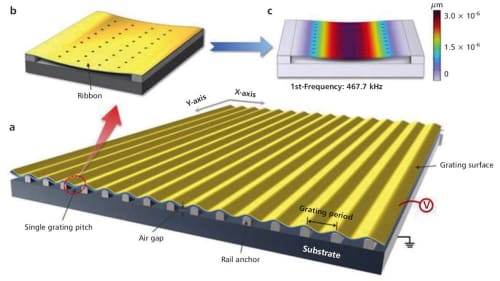
A new Microelectromechanical system (MEMS) grating modulator has been developed, offering significant advancements in optical efficiency and scalability for communication systems. By integrating a tunable sinusoidal grating with broadside-constrained continuous ribbons, a large-scale aperture of 30 × 30 mm is achieved and supports high-speed modulation up to 250 kHz. Read on to learn more.
Feature Image
Briefs: Imaging
NASA Goddard Space Flight Center has developed a Space Qualified Rover LiDAR (SQRLi) system that will improve rover sensing capabilities in a small, lightweight package. The new SQRLi package is developed to survive the hazardous space environment and provide valuable image data during planetary and lunar rover exploration. Read on to learn more about it.
Feature Image
Briefs: Physical Sciences
Researchers at the University of California San Diego have developed a soft robotic skin that enables vine robots that are just a few millimeters wide to navigate convoluted paths and fragile environments. Read on to learn more.
Feature Image
Briefs: Imaging
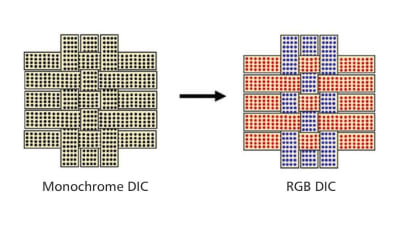
Innovators at NASA Johnson Space Center have developed a technology that can isolate a single direction of tensile strain in biaxially woven material. This is accomplished using traditional digital image correlation (DIC) techniques in combination with custom red-green-blue (RGB) color filtering software. Read on to learn more.
Feature Image
Briefs: Photonics/Optics
Optics researchers in the Harvard John A. Paulson School of Engineering and Applied Sciences created specially designed metasurfaces — flat devices etched with nanoscale light-manipulating patterns — to act as ultra-thin upgrades for quantum-optical chips and setups. Read on to learn more.
Feature Image
Briefs: Communications
NASA's Glenn Research Center has developed a method of using entangled-photon pairs to produce highly secure mobile communications that require mere milliwatts of power. Read on to learn more.
Feature Image
Briefs: Information Technology
Researchers have successfully demonstrated the U.K.’s first long-distance ultra-secure transfer of data over a quantum communications network, including the U.K.’s first long-distance quantum-secured video call. Read on to learn more.
Feature Image
Briefs: Imaging
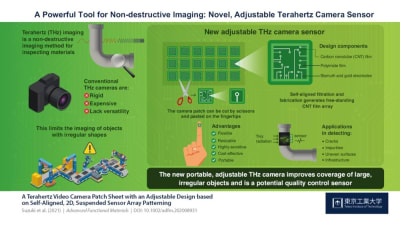
A team of researchers from Tokyo Tech, led by Associate Professor Yukio Kawano, has designed a flexible and free-standing THz sensor array that can be used to image blind ends of irregularly shaped objects. Read on to learn more about it.
Feature Image
Briefs: Imaging
Northwestern engineers have developed a new system for full-body motion capture — and it doesn’t require specialized rooms, expensive equipment, bulky cameras, or an array of sensors. Instead, it requires a simple mobile device. Read on to learn more.
Feature Image
Briefs: Electronics & Computers
Maksym Kovalenko and his team have proposed a novel solution that allows them to utilize every photon of light for color recognition. For nearly a decade, they have been researching perovskite-based image sensors. In a new study published in Nature, they show that their new technology works. Read on to learn more.
Feature Image
Briefs: Imaging
Plans are underway to create more powerful particle accelerators, whose collisions will unleash large subatomic storms. How will researchers sift through the chaos? Read on to find out.
Feature Image
Briefs: Software
Researchers have provided a new open-source algorithm called Conditional Variational Diffusion Model (CVDM). Based on generative AI, this model improves the quality of images by reconstructing them from randomness. In addition, the CVDM is computationally less expensive than established diffusion models — and it can be easily adapted for a variety of applications. Read on to learn more.
Feature Image
Briefs: Photonics/Optics
Known as FOSS (for fiber optic sensing system), NASA’s technology portfolio combines advanced sensors and innovative algorithms into a robust package that accurately and cost-effectively monitors a host of critical parameters in real time. Read on to learn more.
Feature Image
Briefs: Lighting
Engineers at NASA Langley Research Center have developed a cutting-edge thermal inspection technology that enhances defect detection on low-emissivity surfaces by eliminating false readings caused by infrared reflections. Read on to learn more.
Feature Image
Briefs: Lighting
A new computer vision technique developed by MIT engineers significantly speeds up the characterization of newly synthesized electronic materials. The technique automatically analyzes images of printed semiconducting samples and quickly estimates two key electronic properties for each sample. Read on to learn more.
Feature Image

Videos