-1
0
30
Briefs: AR/AI
For a robot, the real world is a lot to take in. Making sense of every data point in a scene can take a huge amount of computational effort and time. Using that information to then decide how to best help a human is an even thornier exercise. Now, MIT roboticists have a way to cut through the data noise, to help robots focus on the features in a scene that are most relevant for assisting humans. Read on to learn more.

Briefs: Robotics, Automation & Control
Bees, ants, and termites don’t need blueprints. They may have queens, but none of these species breed architects or construction managers. Each insect worker, or drone, simply responds to cues like warmth or the presence or absence of building material. Now, researchers at Penn Engineering have developed mathematical rules that allow virtual swarms of tiny robots to do the same. Read on to learn more.

Briefs: Robotics, Automation & Control
Researchers have created a light-powered soft robot that can carry loads through the air along established tracks, similar to cable cars or aerial trams. The soft robot operates autonomously, can climb slopes at angles of up to 80°, and can carry loads up to 12 times its weight. Read on to learn more.

Briefs: RF & Microwave Electronics
NASA has developed an innovative combination of a Magnetometer, low-powered ElectroMagnets, and Resonant Inductive Coupling (MEMRIC) to create and control relative positioning of nano satellites within a cluster. This is a game-changing approach to enable distributed nanosatellite (nanosat) clusters. Read on to learn more.

Briefs: Energy
University of Minnesota Twin Cities researchers have discovered a new method to move objects using ultrasound waves, which opens the door for using contactless manipulation in industries in which devices wouldn’t need a built-in power source to move. Read on to learn more.

Briefs: Medical
A major challenge in self-powered wearable sensors for health care monitoring is distinguishing different signals when they occur at the same time. Researchers from Penn State and China’s Hebei University of Technology addressed this issue by uncovering a new property of a sensor material, enabling the team to develop a new type of flexible sensor that can accurately measure both temperature and physical strain simultaneously but separately to more precisely pinpoint various signals.

Briefs: Electronics & Computers
When it comes to haptic feedback, most technologies are limited to simple vibrations. But our skin is loaded with tiny sensors that detect pressure, vibration, stretching and more. Now, Northwestern University engineers have unveiled a new technology that creates precise movements to mimic these complex sensations. Read on to learn more.

Briefs: Semiconductors & ICs
A new study from NC State University combines three-dimensional embroidery techniques with machine learning to create a fabric-based sensor that can control electronic devices through touch. Read on to learn more.

Briefs: Green Design & Manufacturing
Clean, safe water is vital for human health and well-being. However, detecting contamination quickly and accurately remains a major challenge in many parts of the world. A groundbreaking new device developed by researchers at the National University of Singapore has the potential to significantly advance water quality monitoring and management. Read on to learn more.

Briefs: Software
A new system that brings together real-world sensing and virtual reality would make it easier for building maintenance personnel to identify and fix issues in commercial buildings that are in operation. The system was developed by computer scientists at the University of California San Diego and Carnegie Mellon University. Read on to learn more.

Briefs: Materials
Researchers have developed five new ways to securely connect large concrete pieces. These connection methods are intended for a type of material called “precast concrete,” in which parts such as beams and columns are made in a factory and assembled later at a construction site. Read on to learn more.

Briefs: Physical Sciences
To help meet surging demand and possible supply chain problems, scientists at the U.S. Department of Energy’s Argonne National Laboratory have developed an innovative membrane technology that efficiently extracts lithium from water. Read on to learn more.

Briefs: Design
Dr. Mustafa Akbulut, Professor of Chemical engineering, has teamed up with Horticultural Science Professor Luis Cisneros-Zevallos to engineer longer-lasting, bacteria-free produce. Read on to learn more about it.

Briefs: Materials
Using mechanisms inspired by nature to create new technological innovations is a signature of one Virginia Tech research team. The group led by Associate Professor Michael Bartlett has created an octopus-inspired adhesive, inspired by the shape of octopus suckers, that can quickly grab and controllably release challenging underwater objects. Read on to learn more about it.

Briefs: Manufacturing & Prototyping
In two papers, one released in Nature Materials and a second in ACS Nano, researchers describe a new methodology for fabricating targeted 3D nanoscale structures via self-assembly that can find use in a variety of applications, and they provide a design algorithm for others to follow suit. And it’s all based on the most basic biomolecular building blocks: DNA. Read on to learn more.

Briefs: Wearables
MIT researchers have developed an autonomous programmable computer in the form of an elastic fiber, which could monitor health conditions and physical activity, alerting the wearer to potential health risks in real-time. Read on to learn more.

Briefs: Research Lab
Researchers in Korea have successfully developed a new material that significantly enhances the efficiency of green hydrogen production while reducing costs. Read on to learn more about it.
Briefs: Manufacturing & Prototyping
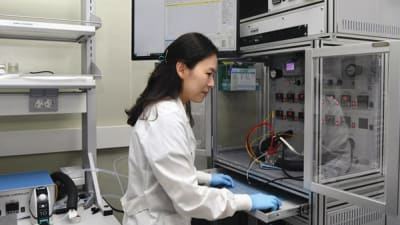
Researchers at NASA have developed new methods to manufacture carbon materials (e.g., nanotubes, graphene) with holes through the graphitic surface of the particles. The methods generate materials with increased accessible surface area, increased functional groups at damage sites, and improved through-surface molecular transport properties.

Briefs: Energy
Today’s electric vehicle boom is tomorrow’s mountain of electronic waste. And while myriad efforts are underway to improve battery recycling, many EV batteries still end up in landfills. A research team from MIT wants to help change that with a new kind of self-assembling battery material that quickly breaks apart when submerged in a simple organic liquid. Read on to learn more.

Briefs: Energy
Oak Ridge National Laboratory researchers have overcome a barrier to using a more affordable, dry process for manufacturing the Li-ion batteries used in vehicles and electronic devices. The resulting batteries provide greater electricity flow and reduced risk of overheating. Read on to learn more.

Briefs: Energy
Read on to learn about research that raises the benchmark for sodium-based all-solid-state batteries and demonstrates thick cathodes that retain performance at room temperature down to subzero conditions.
Briefs: Materials
By flipping a foundational belief in battery design, Hailong Chen and his team found that charging zinc-ion batteries at higher currents can make them last longer. Read on to learn more about this surprising result.

Briefs: Mechanical & Fluid Systems
Missions to the moon and other planets will require large-scale infrastructure that would benefit from autonomous assembly by robots without on-site human intervention. NASA Ames Research Center has developed a novel and efficient mobile bipedal robot system to construct low-mass, high precision, and largescale infrastructure. Read on to learn more.

Briefs: AR/AI
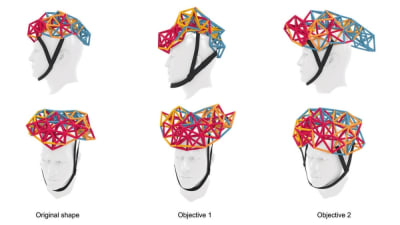
A team of UC Berkeley-led researchers has developed an AI-driven framework to optimize and automate the design of complex truss robots. This approach enables designers to create robots with extraordinary capabilities while maximizing control efficiency. Read on to learn more about it.
Briefs: Energy
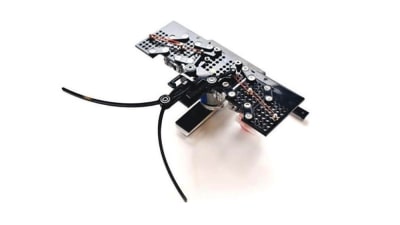
Mechanical engineering researchers in the Harvard John A. Paulson School of Engineering and Applied Sciences think there’s another way to design robots: Programming intended functions directly into a robot’s physical structure, allowing the robot to react to its surroundings without the need for extensive on-board electronics. Read on to learn more.
Briefs: Physical Sciences
Researchers at the University of California San Diego have developed a soft robotic skin that enables vine robots that are just a few millimeters wide to navigate convoluted paths and fragile environments. Read on to learn more.

Briefs: Robotics, Automation & Control
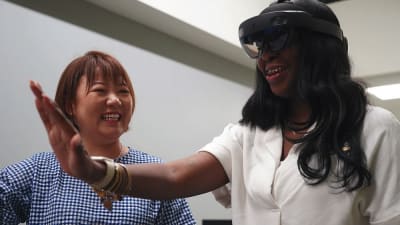
Robots may soon have a new way to communicate with people. Not through words or screens, but with light and images projected directly onto the world around them. University of South Florida's Zhao Han is developing technology that could transform how people interact with robots in both emergencies and everyday life. Read on to learn more.
Briefs: Semiconductors & ICs
Optics researchers in the Harvard John A. Paulson School of Engineering and Applied Sciences created specially designed metasurfaces — flat devices etched with nanoscale light-manipulating patterns — to act as ultra-thin upgrades for quantum-optical chips and setups. Read on to learn more.

Briefs: Software
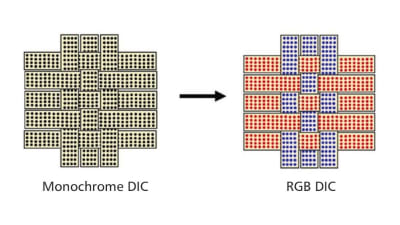
Innovators at NASA Johnson Space Center have developed a technology that can isolate a single direction of tensile strain in biaxially woven material. This is accomplished using traditional digital image correlation (DIC) techniques in combination with custom red-green-blue (RGB) color filtering software. Read on to learn more.
Top Stories
 Blog: Lighting

A Stretchable OLED that Can Maintain Most of Its Luminescence
 INSIDER: Energy

Advancing All-Solid-State Batteries
 Blog: Power

My Opinion: We Need More Power Soon — Is Nuclear the Answer?
 Quiz: Energy

 Blog: Lighting Technology

Microscopic Swimming Machines that Can Sense, Respond to Surroundings
 Blog: Data Acquisition

Webcasts
 On-Demand Webinars: Electronics & Computers

Advantages of Smart Power Distribution Unit Design for Automotive &...
 Upcoming Webinars: Automotive

Quiet, Please: NVH Improvement Opportunities in the Early Design...
 Upcoming Webinars: Test & Measurement

From Spreadsheets to Insights: Fast Data Analysis Without Complex...
 Upcoming Webinars: Defense

Cooling a New Generation of Aerospace and Defense Embedded...
 Upcoming Webinars: Sensors/Data Acquisition

Beyond AI-Copy-Paste Engineering: Advanced AI-Integration Success...
 Upcoming Webinars: Power