Stories
33
147
0
360
30
Blog: Electronics & Computers
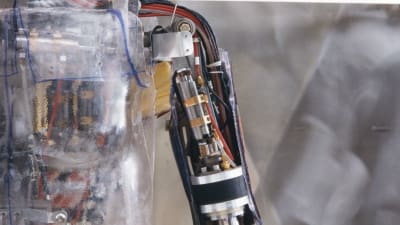
In 1988, a team at Pacific Northwest Laboratories built a mannequin robot. One of the original engineers talked with Tech Briefs about his time making "Manny."
Briefs: RF & Microwave Electronics
Remote Detection of Electronic Devices
Non-Linear Junction Detection is a well-known technique for detecting electronics that utilize semiconductor (solid-state) junctions. The current state of the art for finding hidden electronics — such as electronic eavesdropping devices — using this technology has a maximum range of about 2 m, and more...
Briefs: Materials
Computers use different kinds of memory technologies to store data. Long-term memory — typically a hard disk or flash drive — needs to be dense in order to store as much data as...
Briefs: Electronics & Computers
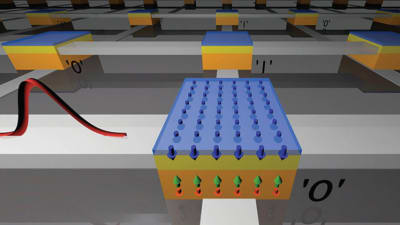
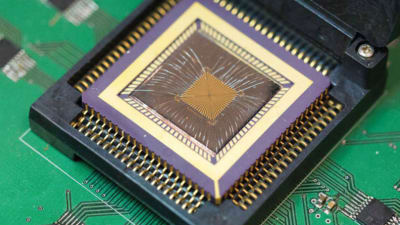
Inspired by brains, neural networks are composed of neurons (or nodes) and synapses, which are the connections between nodes. To train a neural network for a task, a neural network takes in a...
Articles: Motion Control
As contemporary electronics embrace light weight, increasing efficiency, and high speed, each link of the manufacturing process also conforms to this philosophy, including printed circuit...

Briefs: Electronics & Computers
The NiceC Programming Language
NiceC is an improved version of ANSI C. It attempts to clean up C as much as possible using syntax translation. A type checker for NiceC is under development. The NiceC programming language is translated to, and fully compatible with, ordinary C. Thus it can be used as a drop-in replacement for C. The main benefits of...
Briefs: Software
APT Web Tool
Project planning data collected by the Analysis, Planning, and Tracking (APT) system during the planning cycle previously was available to users via an email request to a data administrator who would pull data from the database, format as requested, and respond via email. Access to the data was limited by the availability of the data...
Briefs: Electronics & Computers
The efficiency of computer chips has increased by using caches — small, local memory banks that store frequently used data and cut down on time- and...

Briefs: Electronics & Computers
Infectious diseases remain the world’s top contributors to human death and disability, and with recent outbreaks of Zika virus infections, there is a keen need for simple,...

Briefs: Physical Sciences
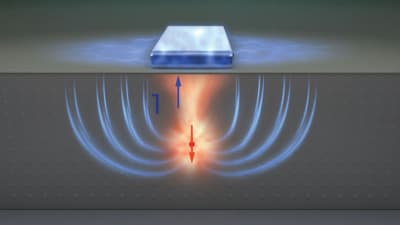
Engineers have invented a new architecture for quantum computing based on novel “flip-flop” qubits. The new chip design allows for a silicon quantum processor that can be scaled...
Articles: Electronics & Computers
Articles: Electronics & Computers
This column presents technologies that have applications in commercial areas, possibly creating the products of tomorrow. To learn more about each technology, see the contact information provided for that innovation.

Products: Electronics & Computers
WinSystems, Arlington, TX, released the PPC65B series IP65-rated panel PC in a thin, fanless design with an operating temperature range from -20 to +70 °C. The panel PC offers a rugged design for extreme environments and...

Briefs: Aerospace
A number of instruments have been built to obtain range images — a two-dimensional array of numbers that gives the depth of a scene along many directions from a central point in the instrument. Instead of measuring the...

Articles: Sensors/Data Acquisition
NASA Technology
“People told me, ‘You’re an idiot to work on this,’” Eric Fossum recalls of his early experiments with what was at the time an alternate form of digital image sensor at...

Question of the Week: Electronics & Computers
Is nine hours a day too much "screen time?"
This week's Question: A recent study from Common Sense Media found that parents spend more than nine hours (9:22) a day with screen media, with the vast majority of that time being spent with personal screen media (7:43) and only a little more than 90 minutes devoted to work screen media. Most parents...
INSIDER Product: Data Acquisition
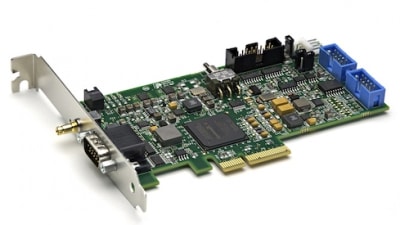
Responding to the need to create a cost-effective, high-speed interface to fully leverage CXP cameras, BitFlow (Woburn, MA) has introduced the Aon-CXP single link CoaXPress frame grabber. The Aon is powerful enough to...
INSIDER Product: Electronics & Computers
ADL Embedded Solutions Inc. (San Diego, CA) has announced its compact ADLE3800SEC SBC with Edge-Connect. This ultra-compact 75mm x 75mm form factor is a full-featured, standalone SBC for rugged, embedded applications. The...

INSIDER: Electronics & Computers
Computer chips in development at the University of Wisconsin–Madison could make future computers more efficient and powerful by combining tasks usually kept separate by...
INSIDER Product: Electronics & Computers
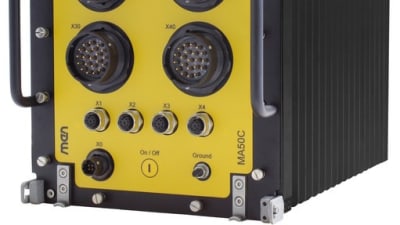
MEN Micro’s (Blue Bell, PA) MA50C is a modular system for safe train control that complies with AAR (Association of American Railroads) standards. The new controller unit features a mechanical design that meets AAR...
INSIDER: Electronics & Computers
By forcefully embedding two silicon atoms in a diamond matrix, Sandia researchers have demonstrated for the first time on a single chip all the components needed to create a quantum...

INSIDER: Electronics & Computers
For more than a decade, engineers have been eyeing the finish line in the race to shrink the size of components in integrated circuits. They knew that the laws of physics had set a 5-nanometer...

INSIDER: Electronics & Computers
Together with their colleagues from Germany and the Netherlands, scientists at the Moscow Institute of Physics and Technology (MIPT) have found a way to significantly improve...
INSIDER: Materials
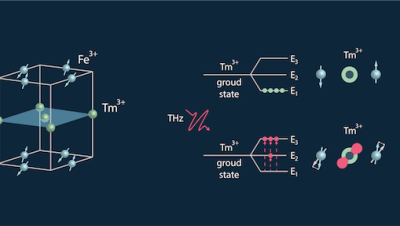
Researchers have created an exotic 3-D racetrack for electrons in ultrathin slices of a nanomaterial they fabricated at the Department of Energy’s Lawrence Berkeley...

INSIDER: Electronics & Computers
Researchers studying the behavior of nanoscale materials at the Department of Energy’s Oak Ridge National Laboratory have uncovered remarkable behavior that could advance microprocessors...

INSIDER: Electronics & Computers
Researchers at North Carolina State University have developed new, nonlinear, chaos-based integrated circuits that enable computer chips to perform multiple functions with...

INSIDER: Semiconductors & ICs
Engineers have devised a simple, reproducible, and less expensive approach to manufacturing computer chips using directed self-assembly, which can increase the density of circuit...
INSIDER: Electronics & Computers
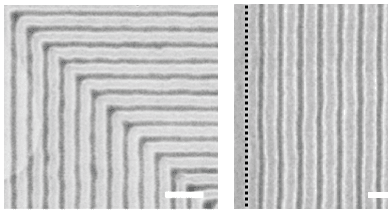
Technion researchers have developed a method for growing carbon nanotubes that could lead to the day when molecular electronics replace the ubiquitous silicon chip as the building...

INSIDER: Electronics & Computers
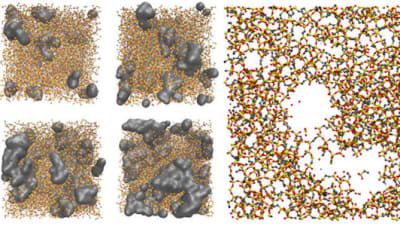
Deep inside the electronic devices that proliferate in our world, from cell phones to solar cells, layer upon layer of almost unimaginably small transistors and delicate circuitry shuttle...
Top Stories
 Blog: Power

My Opinion: We Need More Power Soon — Is Nuclear the Answer?
 Blog: AR/AI

Aerial Microrobots That Can Match a Bumblebee's Speed
 News: Energy

 Blog: Electronics & Computers

Turning Edible Fungi into Organic Memristors
 Blog: Robotics, Automation & Control

Microscopic Swimming Machines that Can Sense, Respond to Surroundings
 INSIDER: Sensors/Data Acquisition

Webcasts
 Upcoming Webinars: Power

Hydrogen Engines Are Heating Up for Heavy Duty
 Upcoming Webinars: Electronics & Computers

Advantages of Smart Power Distribution Unit Design for Automotive...
 Upcoming Webinars: Transportation

Quiet, Please: NVH Improvement Opportunities in the Early Design...
 Upcoming Webinars: Sensors/Data Acquisition

From Spreadsheets to Insights: Fast Data Analysis Without Complex...
 Upcoming Webinars: Energy

Battery Abuse Testing: Pushing to Failure
 Upcoming Webinars: AR/AI