Stories
33
113
0
540
30
Briefs: Transportation
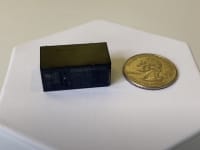
Applications include sensor signal conditioning in harsh conditions such as automotive, oil and gas operations, and firefighting.

Briefs: Electronics & Computers
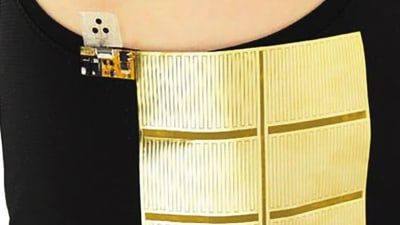
A triboelectric generator made of flexible circuit boards creates electricity when the wearer moves.
Briefs: Materials
The organic composite material is soft, stretchable, and has good thermoelectric properties for many wearable applications.
Briefs: Electronics & Computers
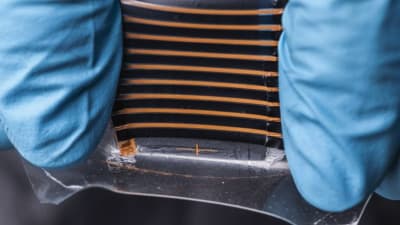
This new technique shields electronics from ionizing radiation in applications such as military and space exploration.

Briefs: Electronics & Computers
The microchips are about 100 times smaller than conventional microchips.
Briefs: Energy
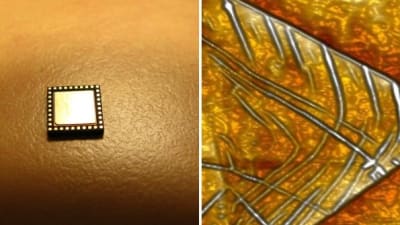
The circuitry uses race logic to solve complex problems with a minimum expenditure of energy.

Briefs: Materials
The technology potentially enables a new generation of miniaturized electronic and optoelectronic devices.

Briefs: Energy
By introducing defects to a common material, a highly efficient capacitor offers dramatically increased energy density.

Briefs: Materials
By capturing more cancer cells than blood draw screening, this device could help doctors understand a tumor’s biology and make decisions about treatment.
Blog: Mechanical & Fluid Systems
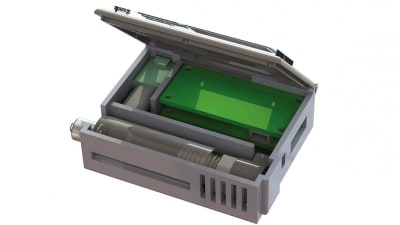
While soft robots hold promise in applications ranging from search-and-rescue efforts to wearable exoskeletons, the technologies are often held back by the electronics, says William Grover, a...
Blog: Software
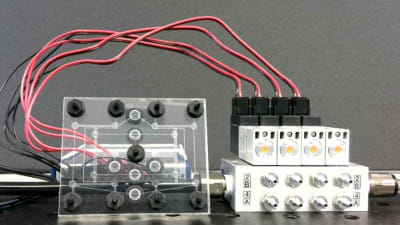
A reader asks our expert how to contain a "thermal runaway" explosion in a lithium-ion battery.

Special Reports: Software

Vehicle Electrification - July 2021
GM electrifies the new Corvette...a French nanomaterials company aims for a 5-minute EV recharge...Triumph unveils a radical new electric sportbike design. These are just a few of the innovations you'll read...Facility Focus: Electronics & Computers
Duke Engineering supports clinical ultrasound imaging, restoration of hearing by cochlear implant, megapixel photography, and metamaterials.

Briefs: Semiconductors & ICs
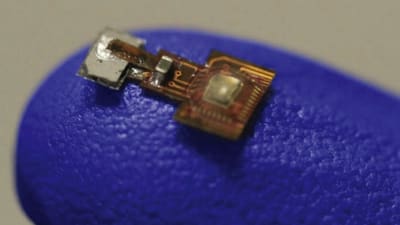
This could make possible embedded devices like a spinal cord-stimulating unit with a battery-powered magnetic transmitter on a wearable belt.
Briefs: Transportation
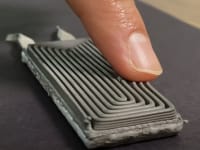
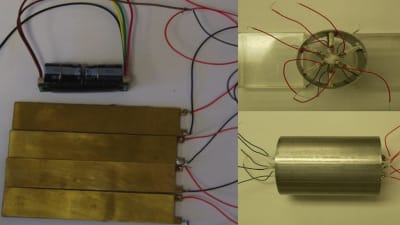
The technology harvests electrical energy from waste heat sources.
Briefs: Electronics & Computers
New cell chemistry utilizes less costly and more abundant materials than lithium-ion batteries.

INSIDER: Medical
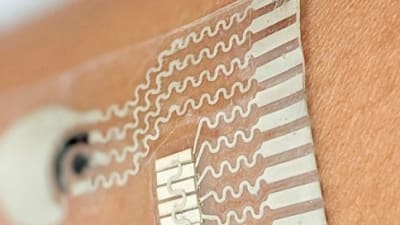
Engineers at the University of California San Diego have developed a soft, stretchy skin patch that can be worn on the neck to continuously track blood pressure and heart...
INSIDER: Electronics & Computers
After the optical frequency comb made its debut as a ruler for light, spinoffs followed, including the “astrocomb” to measure starlight and a radar-like comb system to detect...

INSIDER: Electronics & Computers
Atomically thin materials are a promising alternative to silicon-based transistors; now researchers can connect them more efficiently to other chip elements.
INSIDER: Internet of Things
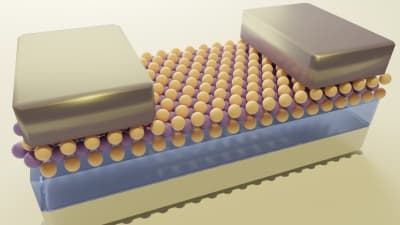
Physicists from the University of Sussex have developed an extremely thin, large-area semiconductor surface source of terahertz, composed of just a few...

INSIDER: Electronics & Computers
North Carolina State University engineers continue to improve the efficiency of a flexible device worn on the wrist that harvests heat energy from the human body to monitor health.
Question of the Week: Electronics & Computers
Will Recyclable Electronics Catch On?
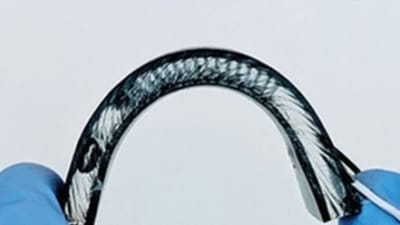
Our June issue of Tech Briefs features a completely recyclable transistor from Duke University. The fully functional semiconductor is made out of three carbon-based inks that can be easily printed onto paper or other flexible, environmentally friendly surfaces.
Articles: Imaging
Faster inline CT inspections makes it possible to inspect far greater numbers of circuit boards.

Products: Test & Measurement
High-precision medical sensors, battery-cell mappers, signal conditioners, and more.

Technology Leaders: Sensors/Data Acquisition
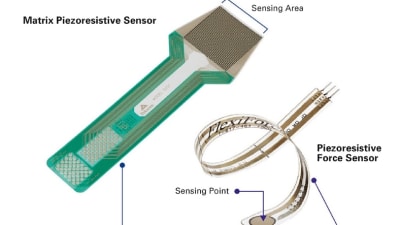
Ultra-thin piezoresistive sensors can be used in both R&D and as embedded components to develop safer, longer-lasting lithium-ion battery technologies.
Briefs: Electronics & Computers
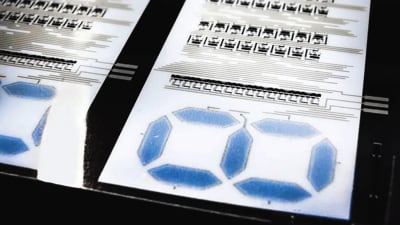
Complete integrated circuits with more than 1,000 organic electrochemical transistors can be screen-printed.
Briefs: Electronics & Computers
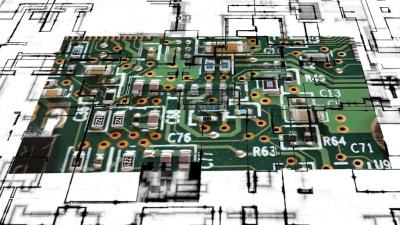
The new material could help put more power in smaller microchips.
Briefs: Transportation
The technology could help computers process visual information more like the human brain.

Briefs: Electronics & Computers
The inexpensive cameras are easy to produce.

Top Stories
 Blog: Lighting

A Stretchable OLED that Can Maintain Most of Its Luminescence
 News: Energy

 INSIDER: Energy

Advancing All-Solid-State Batteries
 Blog: Energy

My Opinion: We Need More Power Soon — Is Nuclear the Answer?
 Blog: Robotics, Automation & Control

Aerial Microrobots That Can Match a Bumblebee's Speed
 Blog: Communications

Microscopic Swimming Machines that Can Sense, Respond to Surroundings
Webcasts
 Upcoming Webinars: Semiconductors & ICs

Advantages of Smart Power Distribution Unit Design for Automotive...
 Upcoming Webinars: Unmanned Systems

Quiet, Please: NVH Improvement Opportunities in the Early Design...
 Upcoming Webinars: Test & Measurement

From Spreadsheets to Insights: Fast Data Analysis Without Complex...
 Upcoming Webinars: Defense

Cooling a New Generation of Aerospace and Defense Embedded...
 Upcoming Webinars: AR/AI

Beyond AI-Copy-Paste Engineering: Advanced AI-Integration Success...
 Upcoming Webinars: Power