
Stories
44
0
1080
30
Question of the Week: Energy
Will Indoor Light Someday Power Our Smart Devices?
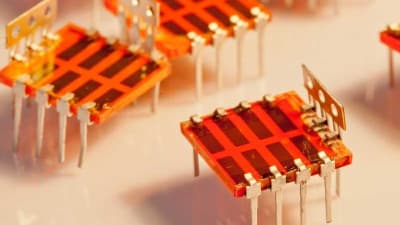
Our lead INSIDER story today looks at “perovskite-inspired” materials that can absorb indoor light at higher efficiencies than ever before.
Blog: Energy
A new material is especially effective at absorbing indoor light and converting it into usable energy.
News: Energy
Researchers in the Battery and Energy Storage Technology Center at Penn State University are searching for a reliable, quick-charging, cold-weather battery for automobiles. They say the...

News: Automotive
Scientists at Oak Ridge National Laboratory (ORNL) have used new techniques to create a composite that increases the electrical current capacity of copper wires, providing a material that...

News: Transportation
A new lithium-based electrolyte invented by Stanford University scientists could pave the way for the next generation of battery-powered electric vehicles (EVs). Their electrolyte design...
INSIDER: Wearables
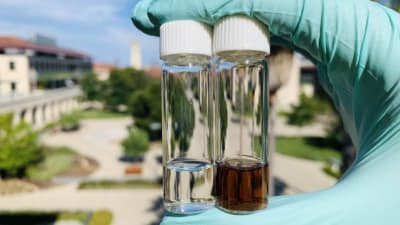
Researchers at Empa and ETH Zurich succeeded in developing a material that works like a luminescent solar concentrator and can even be applied to textiles. This opens up numerous possibilities for...

Blog: Energy
The soil microbial fuel cells produce energy to filter enough water for a person’s daily needs, with potential to increase scale.

Special Reports: Manufacturing & Prototyping

Medical Robotics - November 2020
From the operating room to the assembly line, robots are changing the medical industry. Check out the latest advances and amazing applications in this compendium of recent articles from the editors of Medical...Briefs: Energy
An environmentally friendly method upcycles carbon dioxide emissions into polymers and other materials.

Briefs: Energy
The system is effective in urban environments where there are tall buildings on all sides.
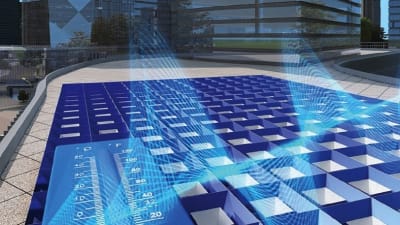
Briefs: Electronics & Computers
The material can be used in power electronics and power converters for solar energy power systems.

Briefs: Photonics/Optics
Adaptable automation reduces manufacturing time and costs.

Briefs: Data Acquisition
Printable organic photodiodes can distinguish wavelengths and enable data transmission by light.
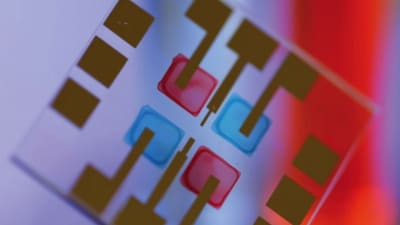
Briefs: Materials
Orange peels are used to extract and reuse metals from lithium-ion batteries to create new batteries.
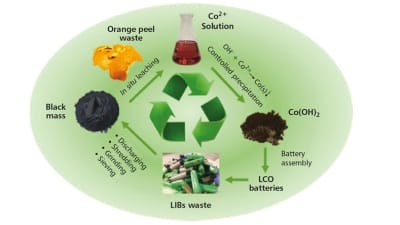
Briefs: Materials
The material can be scaled for use in ultra-efficient, power-dense, electric vehicle traction motors.
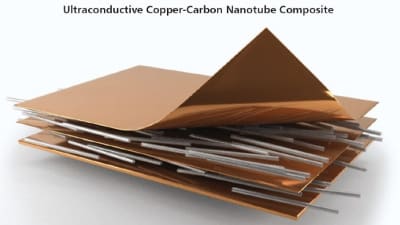
Briefs: Energy
A customizable smart window harnesses and manipulates solar power to save energy and cut costs.

5 Ws: Electronics & Computers
Users can take paper sheets from a notebook and turn them into a music player interface or make food packaging interactive.

Blog: Robotics, Automation & Control
Researcher Nina Mahmoudian is finding a new way for underwater robots to recharge and upload their data, and then go back out to continue exploring, without the need for human intervention.

Briefs: Electronics & Computers
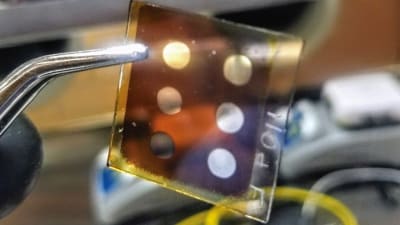
Perovskites could be the active ingredient that makes the next generation of low-cost, efficient, lightweight, and flexible solar cells.
Briefs: Energy
This battery would enable a 10-minute electrical vehicle recharge.

Briefs: Energy
Traditional spark plugs are replaced by an optical pumping source.

Briefs: Energy
Taking a cue from birds and insects, the wing design helps drones fly more efficiently and makes them more robust to atmospheric turbulence.

Briefs: Materials
The software assesses the quality of parts in real time, without the need for expensive characterization equipment.
Briefs: Electronics & Computers
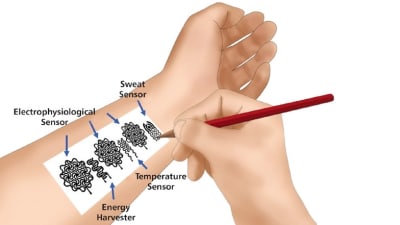
People could monitor their own health conditions by picking up a pencil and drawing a bioelectronic device on their skin.
Briefs: Materials
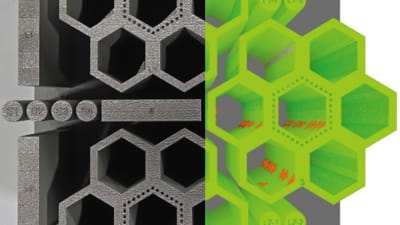
Applications include rapid prototyping, medical, aerospace, and automotive.
Briefs: Medical
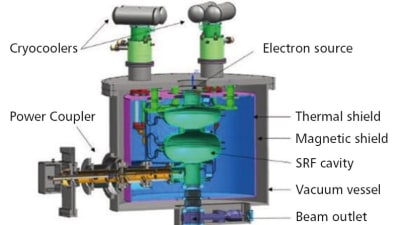
This method integrates 3D plasmonic nanoarrays onto stickers that adhere to any surface.
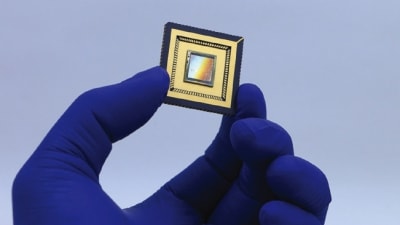
Briefs: Manufacturing & Prototyping
The technique could enable the printing of circuit boards, electromechanical components, and robots.

Briefs: Materials
This technology makes it possible to save extensive data in objects such as shirt buttons, water bottles, or the lenses of glasses and then retrieve it years later.

Briefs: Medical
This technique may enable speedy, on-demand design of softer, safer neural devices.
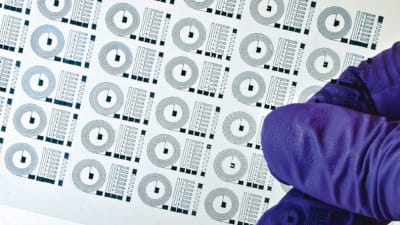
Top Stories
 Blog: Robotics, Automation & Control

Aerial Microrobots That Can Match a Bumblebee's Speed
 Blog: Electronics & Computers

Turning Edible Fungi into Organic Memristors
 Blog: Manufacturing & Prototyping

Revolutionizing the Production of Semiconductor Chips
 News: Energy

 INSIDER: Electronics & Computers

World’s Smallest Programmable, Autonomous Robots
 INSIDER: Manufacturing & Prototyping

Webcasts
 On-Demand Webinars: Power

E/E Architecture Redefined: Building Smarter, Safer, and Scalable Vehicles
 Upcoming Webinars: Energy

Hydrogen Engines Are Heating Up for Heavy Duty
 Upcoming Webinars: Electronics & Computers

Advantages of Smart Power Distribution Unit Design for Automotive...
 Upcoming Webinars: Automotive

Quiet, Please: NVH Improvement Opportunities in the Early Design...
 Upcoming Webinars: Power

A FREE Two-Day Event Dedicated to Connected Mobility
 Podcasts: Defense

How Sift's Unified Observability Platform Accelerates Drone Innovation