Stories
52
168
0
60
30
Articles: Aerospace
Nanotube fibers that turn heat to power; a NASA antenna system; and an antimicrobial coating.

Special Reports: Manufacturing & Prototyping

Space Technology - October 2021
A new era of space exploration is set to begin with Artemis 1, the first in a series of increasingly complex NASA missions that will take humans back to the moon and then on to Mars. Read all about it in this...Articles: Software
To find out about the impact of 5G mobile broadband service on the IoT/IIoT, I interviewed Jai Suri, Vice President, IoT and Blockchain Applications Development, Oracle, and Mike Anderson, Embedded Systems...

Articles: Test & Measurement
A tiny investment in system capital expenditures can lead to huge rewards in reduced capital and operating expenses.

Briefs: Communications
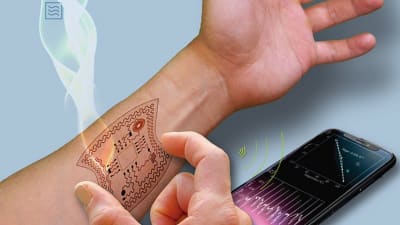
The electricity can be used to power wireless devices or to charge energy storage devices such as batteries and supercapacitors.
Briefs: RF & Microwave Electronics
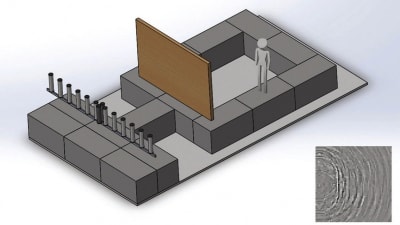
This method could help firefighters find victims inside buildings and could track hypersonic objects such as missiles and space debris.
Briefs: Electronics & Computers
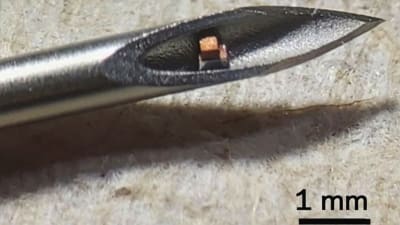
Implantable chips visible only in a microscope point the way to developing chips that can be injected into the body with a hypodermic needle to monitor medical conditions.
Facility Focus: RF & Microwave Electronics
Learn about the batteries, skin sensors, flexible antennas, and other cutting-edge research coming from Penn State Engineering.

Briefs: Communications
An atom-based sensor can determine the direction of an incoming radio signal.

Briefs: Imaging
These antennas dramatically increase the amount of information that can be simultaneously transmitted by a coherent light source.

Briefs: Electronics & Computers
The flexible antenna was designed for active aeronautical satellite communications.

Briefs: RF & Microwave Electronics
The wearable antenna bends, stretches, and compresses without compromising function.

Briefs: Photonics/Optics
To modernize optical storage, Purdue researchers are replacing Morse code with colored “digital characters.”

Blog: RF & Microwave Electronics
With the help of 12 antennas, Fabio da Silva's m-Widar can spot — and image — objects hidden behind a wall.

Application Briefs: Data Acquisition
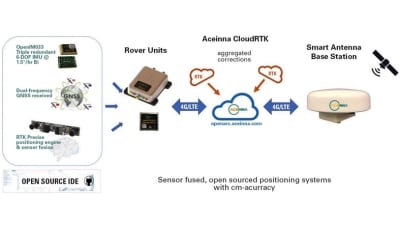
Editor Ed Brown explores what’s ahead for MEMS automobile navigation systems.
Briefs: Robotics, Automation & Control
The machines fold themselves within 100 milliseconds and can flatten and refold thousands of times.

Blog: Photonics/Optics
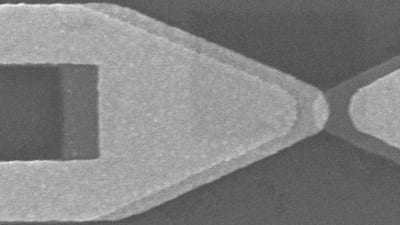
Researchers from CU Boulder gave their optical "rectennas" a ghost-like way to turn wasted heat into power.
Briefs: IoMT
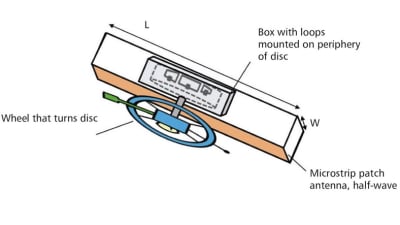
Innovators have developed an RFID-based system for sensing the angular position of rotating systems. The RFID-Based Rotary Position Sensor can be used as a position/orientation sensor or implemented in a...
Briefs: RF & Microwave Electronics
Using microwaves reduces the cost of launching rockets.

Special Reports: Weapons Systems

RF & Microwave Electronics - May 2021
In this compendium of recent articles from the editors of Aerospace & Defense Technology and Tech Briefs, read about how advances in RF electronics are enabling new applications in space and ground...Special Reports: Test & Measurement

Aerospace & Defense Sensing - April 2021
A microwave radiation sensor offers 100,000 times greater sensitivity...Nature-inspired sensors help autonomous machines to see better...New accelerometers aid the development of Electric Vertical...Briefs: Robotics, Automation & Control
This system enables battery-free ocean exploration with applications ranging from marine conservation to aquaculture.

Briefs: RF & Microwave Electronics
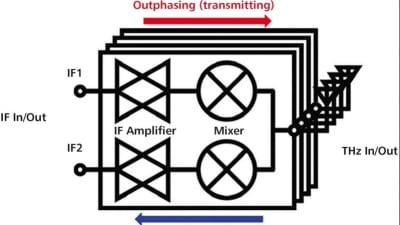
This transceiver for wireless communications at the 300-GHz band enables beyond-5G applications.
NASA Spinoff: Aerospace
Pilots and air traffic controllers no longer will rely solely on voice communications.

Briefs: Photonics/Optics
The improved rectennas could operate low-power devices such as temperature sensors.
Blog: RF & Microwave Electronics
The sensor is able to detect ice formation far before you can see it occurring on a surface.

Question of the Week: Robotics, Automation & Control
Could ‘Smellicopters’ Someday Support Search-and-Rescue?
Our second INSIDER story today highlights an innovative combination of autonomous drones and live moth antennae: The “Smellicopter.”
Blog: RF & Microwave Electronics
UW doctoral student Melanie Anderson explains how to make an autonomous 'Smellicopter' to navigate toward smells.

Briefs: RF & Microwave Electronics
While this technology was designed for CubeSats, it may be utilized in any technology that utilizes a structural frame, such as drones.
Top Stories
 Blog: Lighting

A Stretchable OLED that Can Maintain Most of Its Luminescence
 Blog: Energy

Batteries that Can Withstand the Cold
 INSIDER: Energy

Advancing All-Solid-State Batteries
 Blog: Power

My Opinion: We Need More Power Soon — Is Nuclear the Answer?
 Quiz: Power

 Blog: Data Acquisition

Webcasts
 Upcoming Webinars: Test & Measurement

From Spreadsheets to Insights: Fast Data Analysis Without Complex...
 Upcoming Webinars: Aerospace

Cooling a New Generation of Aerospace and Defense Embedded...
 Upcoming Webinars: Sensors/Data Acquisition

Beyond AI-Copy-Paste Engineering: Advanced AI-Integration Success...
 Upcoming Webinars: Energy

Battery Abuse Testing: Pushing to Failure
 Upcoming Webinars: Power

A FREE Two-Day Event Dedicated to Connected Mobility
 Upcoming Webinars: RF & Microwave Electronics

Choosing the Right N-Port Strategy: Multiport VNAs vs. Switch...