Stories
8,33,42,44,45,47,52,54,68
0
1920
30
Question of the Week: Sensors/Data Acquisition
Would You Wear a Microgrid?
Our April issue of Tech Briefs highlighted a wearable microgrid that powers electronics by harvesting energy from the wearer’s body. The wearable (shown here) has three components: sweat-powered biofuel cells, motion-powered devices called triboelectric generators, and energy-storing supercapacitors. All parts are...
Briefs: Photonics/Optics
3D nanometer-scale metamaterial structures hold promise for advanced optical isolators.

Blog: Energy
Dropped by a drone, the battery-free devices hover 100 meters in the air.

Application Briefs: Manned Systems
A platform makes space-bound systems quick, easy, and cost-effective to develop.

Blog: Unmanned Systems
A reader asks an expert how self-driving cars can operate without LiDAR.

Blog: AR/AI
See what Ed Brown’s early days as a high-voltage power supplies designer tell him about today’s efforts with A.I.

INSIDER: Electronics & Computers
Engineers at UC Berkeley have developed a new technique for making sensors for wearable technology that enables medical researchers to prototype-test new designs much faster and at a...

INSIDER: Manufacturing & Prototyping
The information age created over nearly 60 years has given the world the internet, smart phones, and lightning-fast computers. Making this possible has been the doubling of the number...
INSIDER: Materials
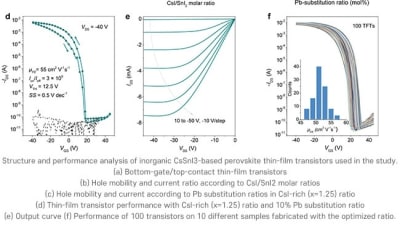
A Pohang University of Science and Technology (POSTECH) research team has improved the performance of a p-type semiconductor transistor using inorganic metal halide perovskite. One of...
5 Ws: Materials
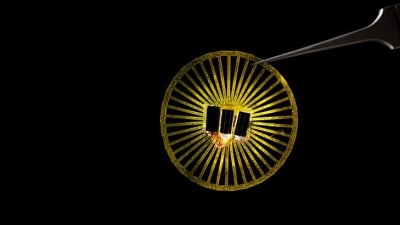
Wireless sensors inspired by Dandelions could be used to monitor climate change.
INSIDER: Sensors/Data Acquisition
A Penn State-led team of interdisciplinary researchers have developed a polymer with robust piezoelectric effectiveness, resulting in 60% more efficient electricity generation than previous iterations.
Briefs: Communications
Optical Signals can be retrieved from inherent background noise using Talbot effect to amplify them.

Question of the Week: Materials
Is the Future of Computing in Fabrics?
Fabric-based computing is the future, according to a researcher at the Massachusetts Institute of Technology.
Products: Mechanical & Fluid Systems
Modular robot platforms, automated crane systems, motion smoothing, and more.
Articles: Automotive
Increasingly powerful integrated circuit and system-on-chip devices are growing in importance to vehicle design.

Briefs: Nanotechnology
A hybrid method enables 3D printing of self-powered wearable devices.
Briefs: Communications
Metamaterials that manipulate microwave energy can be fabricated using low-cost inkjet printing.

Briefs: Electronics & Computers
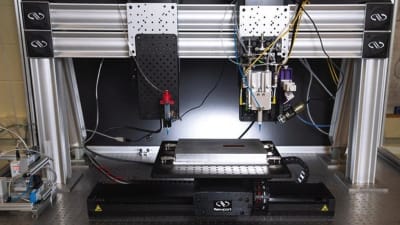
This method prints 3D structures made of metal and plastic, paving the way for 3D electronics.
Briefs: Manufacturing & Prototyping
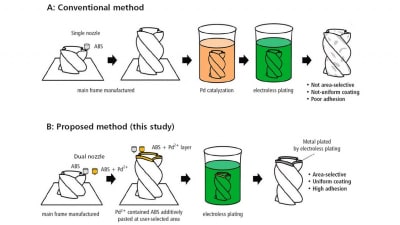
This method fabricates 3D nanostructures for electronics, manufacturing, and healthcare.

Briefs: Energy
The method enhances the battery's safety while it is being used, without opening the battery cell.

Briefs: Energy
Pyroelectric energy generates energy from heat that would otherwise be wasted in a catalytic chemical reaction.
Briefs: Materials
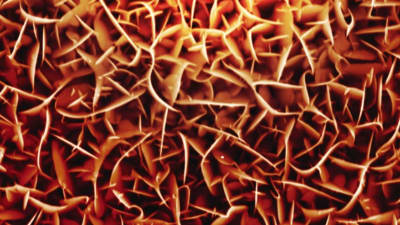
The battery is smaller than a traditional lithium-ion battery due to the elimination of dendrites.
Briefs: Energy
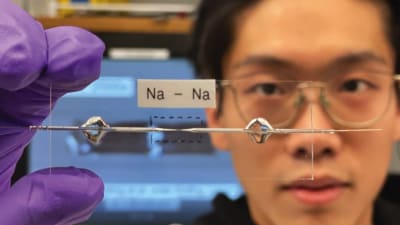
The material enables lithium-ion batteries to be safely recharged within minutes for thousands of cycles.

Briefs: Energy
The flexible, washable microgrid uses the human body to sustainably power small electronics.

Briefs: Semiconductors & ICs
The material improves connectivity while maintaining recyclability and low cost.

Briefs: Sensors/Data Acquisition
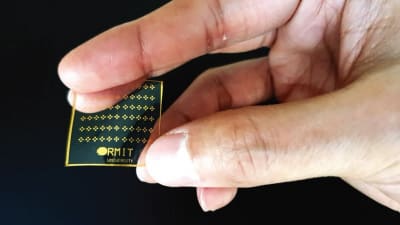
Artificial skin reacts to pain just like real skin, paving the way to better prosthetics, robotics, and noninvasive alternatives to skin grafts.
Briefs: Wearables
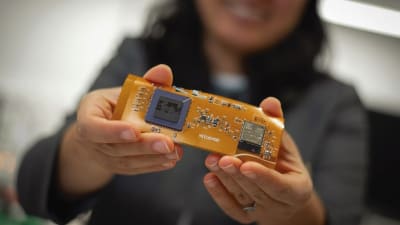
The mobile, wearable device could allow babies to leave the hospital and be monitored from home.
Briefs: Imaging
The high-bandwidth, high-resolution ISAR technology can be used to study subsurface structures.

Briefs: Electronics & Computers
The device combines with body power to treat tendon disease and damage, and sports injuries.

Top Stories
 Blog: Power

My Opinion: We Need More Power Soon — Is Nuclear the Answer?
 Blog: AR/AI
Aerial Microrobots That Can Match a Bumblebee's Speed
 News: Energy

 Blog: Electronics & Computers

Turning Edible Fungi into Organic Memristors
 Blog: Robotics, Automation & Control

Microscopic Swimming Machines that Can Sense, Respond to Surroundings
 INSIDER: Sensors/Data Acquisition

Webcasts
 Upcoming Webinars: Energy

Hydrogen Engines Are Heating Up for Heavy Duty
 Upcoming Webinars: Transportation

Advantages of Smart Power Distribution Unit Design for Automotive...
 Upcoming Webinars: Automotive

Quiet, Please: NVH Improvement Opportunities in the Early Design...
 Upcoming Webinars: Test & Measurement

From Spreadsheets to Insights: Fast Data Analysis Without Complex...
 Upcoming Webinars: Power

Battery Abuse Testing: Pushing to Failure
 Upcoming Webinars: Internet of Things