Stories
8,33,42,44,45,47,52,54,68
0
2430
30
INSIDER: Sensors/Data Acquisition
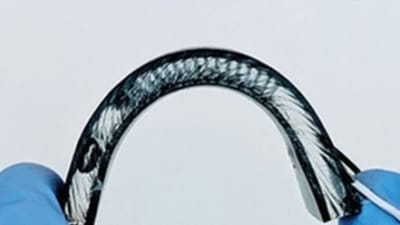
North Carolina State University engineers continue to improve the efficiency of a flexible device worn on the wrist that harvests heat energy from the human body to monitor health.
INSIDER: Electronics & Computers
Scientists at the U.S. Department of Energy’s Pacific Northwest National Laboratory (Richland, WA) have shown that low-cost organic compounds hold promise for...

INSIDER: Energy
A collaboration led by Cornell University (Ithaca, NY) used X-ray nanoimaging to gain an unprecedented view into solid-state electrolytes, revealing previously undetected crystal...

Question of the Week: Electronics & Computers
Will Recyclable Electronics Catch On?
Our June issue of Tech Briefs features a completely recyclable transistor from Duke University. The fully functional semiconductor is made out of three carbon-based inks that can be easily printed onto paper or other flexible, environmentally friendly surfaces.
Blog: Sensors/Data Acquisition
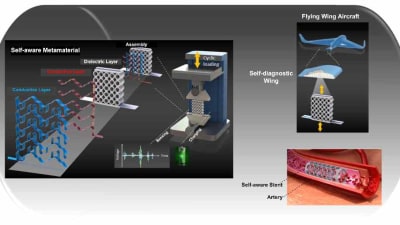
A "self-aware," self-powering material can be used in heart stents, bridges, and even space.
Briefs: Imaging
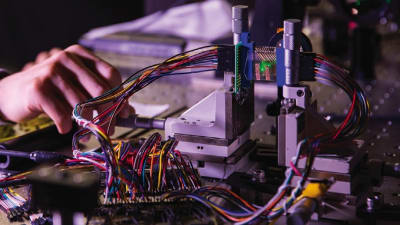
The system could one day replace LiDAR and cameras in automated manufacturing, biomedical imaging, and autonomous driving.
Articles: Semiconductors & ICs
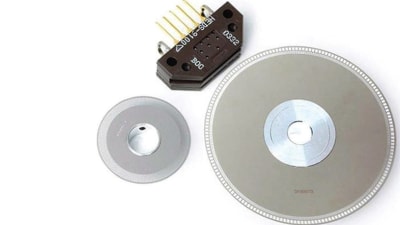
Designers who must sense motor position, speed, or acceleration have a lot of choices, including resolvers, optical encoders, and Hall-effect devices.
Articles: Imaging
Faster inline CT inspections makes it possible to inspect far greater numbers of circuit boards.

Briefs: Mechanical & Fluid Systems
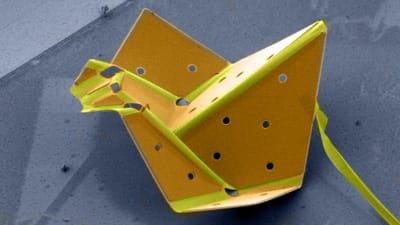
The machines fold themselves within 100 milliseconds and can flatten and refold thousands of times.
Briefs: Electronics & Computers
The walking quadruped is controlled and powered by pressurized air.

Application Briefs: Sensors/Data Acquisition
Editor Ed Brown explores what’s ahead for MEMS automobile navigation systems.

Briefs: Transportation
One of the final hurdles to hydrogen power is securing a safe method for detecting hydrogen leaks.

Products: Electronics & Computers
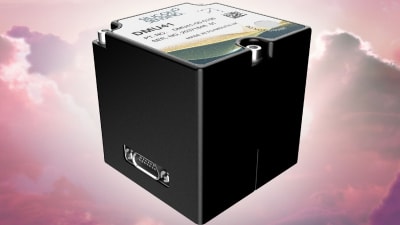
High-precision medical sensors, battery-cell mappers, signal conditioners, and more.
Technology Leaders: Connectivity
AI will only reach its full potential when it can be fed with a constant stream of data from a plentitude of diverse sources.

Technology Leaders: Energy
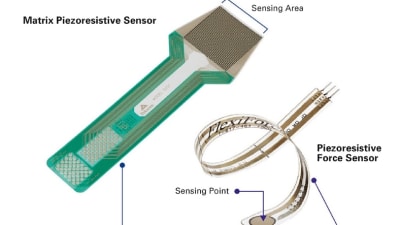
Ultra-thin piezoresistive sensors can be used in both R&D and as embedded components to develop safer, longer-lasting lithium-ion battery technologies.
Briefs: RF & Microwave Electronics
The LiDAR-based system could “see through” objects to warn of potential hazards without distracting the driver.

Briefs: Test & Measurement
Applications include remote sensing, laser spectroscopy, and gas analysis.

Briefs: Sensors/Data Acquisition
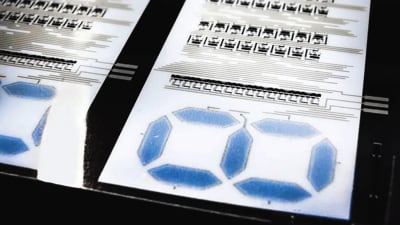
Complete integrated circuits with more than 1,000 organic electrochemical transistors can be screen-printed.
Briefs: AR/AI
The algorithm identified a new compound potentially useful for photonic devices and biologically inspired computers.
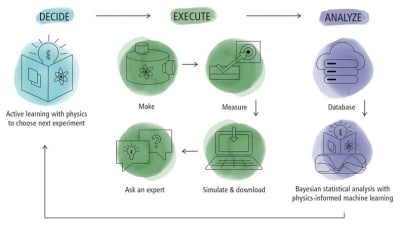
Briefs: Electronics & Computers
The transistors enable power converters to perform at substantially improved efficiencies, especially in high-power applications.
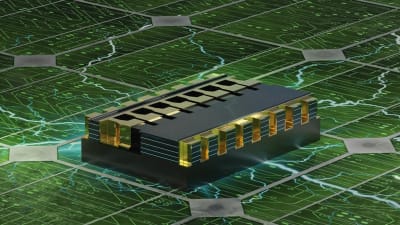
Technology Leaders: Transportation
You may not be able to see them, but power anomalies that originate within your automated control system are costing you expensive downtime.

Briefs: Software
The software could help reduce cost and waste for companies using additive manufacturing to mass-produce parts in factories.

Products: Test & Measurement
Vision systems, signal generators, AC-DC converters, and more.

Briefs: Semiconductors & ICs
The new material could help put more power in smaller microchips.
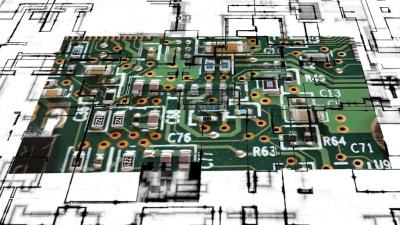
Briefs: Materials
Thanks to its flexibility and adhesion, the biodegradable display can be worn directly on the hand.
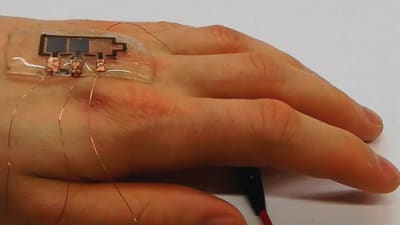
Briefs: Electronics & Computers
The technology could boost quantum computers and other superconducting electronics.

Briefs: Electronics & Computers
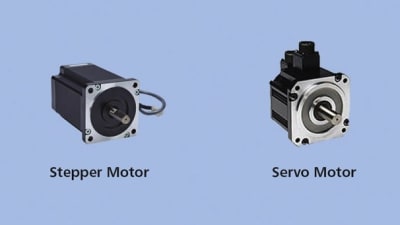
New high bus voltage stepper motor systems avoid the complexity and expense of servo motors.
Briefs: Mechanical & Fluid Systems
This work could lead to much more robust devices that continue to operate in spite of damage.


Top Stories
 Blog: Power

My Opinion: We Need More Power Soon — Is Nuclear the Answer?
 Blog: AR/AI
Aerial Microrobots That Can Match a Bumblebee's Speed
 News: Energy

 Blog: Electronics & Computers

Turning Edible Fungi into Organic Memristors
 Blog: Robotics, Automation & Control

Microscopic Swimming Machines that Can Sense, Respond to Surroundings
 INSIDER: Sensors/Data Acquisition

Webcasts
 Upcoming Webinars: Automotive

Hydrogen Engines Are Heating Up for Heavy Duty
 Upcoming Webinars: Semiconductors & ICs

Advantages of Smart Power Distribution Unit Design for Automotive...
 Upcoming Webinars: Transportation

Quiet, Please: NVH Improvement Opportunities in the Early Design...
 Upcoming Webinars: AR/AI

From Spreadsheets to Insights: Fast Data Analysis Without Complex...
 Upcoming Webinars: Power

Battery Abuse Testing: Pushing to Failure
 Upcoming Webinars: AR/AI