
Stories
38
49
0
300
30
Briefs: Medical
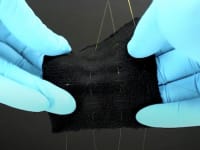
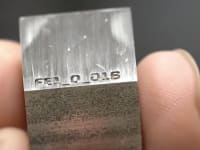
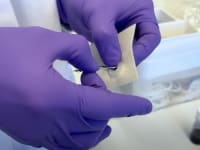
University of Waterloo Chemical Engineering Researcher Dr. Elisabeth Prince teamed up with researchers from the University of Toronto and Duke University to design the synthetic material made using cellulose nanocrystals, which are derived from wood pulp. The material is engineered to replicate the fibrous nanostructures and properties of human tissues. Read on to learn more.

Briefs: Test & Measurement
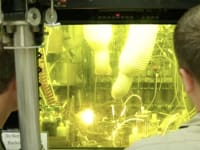
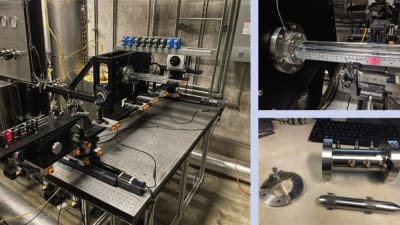
Engineers at NASAs Stennis Space Center have developed the HYdrocarbon Propellants Enabling Reproduction of Flows in Rocket Engines (HYPERFIRE), a sub-scale, non-reacting flow test system. HYPERFIRE uses heated ethane to enable physical simulation of rocket engines powered by a broad range of propellants in an inexpensive, accurate, and simple fashion. Read on to learn more.
Briefs: Electronics & Computers
Now, a team from the Max Planck Institute for Polymer Research has developed a new material concept that could allow efficient blue OLEDs with a strongly simplified structure. Read on to learn more.

Briefs: Wearables
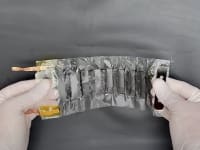
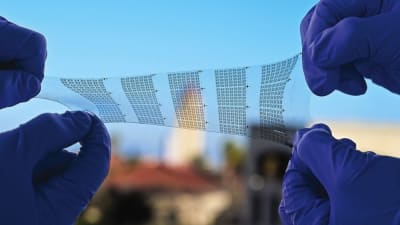
Researchers at Stanford have been working on skin-like, stretchable electronic devices for over a decade. Recently, they presented a new design and fabrication process for skin-like integrated circuits that are five times smaller and operate at one thousand times higher speeds than earlier versions. Read on to learn more about it.
Briefs: Sensors/Data Acquisition
Engineers have developed an ultra-sensitive sensor made with graphene that can detect extraordinarily low concentrations of lead ions in water. The device achieves a record limit of detection of lead down to the femtomolar range, which is one million times more sensitive than previous sensing technologies. Read on to learn more.

Articles: Materials
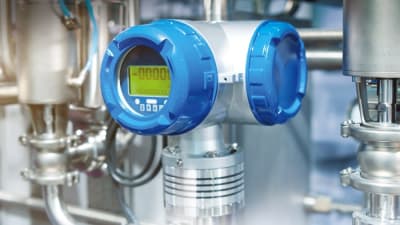
When processing pharmaceutical products, how do you tell if a fluid is of high quality? If you are working with crude oil, how do you know how much you are extracting? If you are transporting water, how do you know the flow rate? Such questions, which impact confidence and bottom lines for water, food, life sciences, and oil and gas companies, are addressed by the manufacturers of flowmeters that are installed in pipelines and other equipment. Read on to learn more.
Briefs: Materials
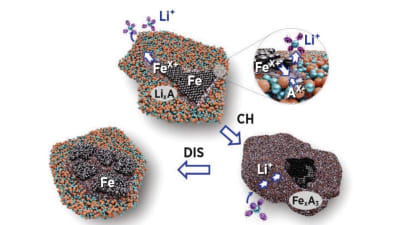
Researchers are hoping to spark a green battery revolution by showing that iron instead of cobalt and nickel can be used as a cathode material in lithium-ion batteries. Read on to learn more.
Special Reports: Manned Systems

Aerospace Manufacturing - September 2024
In‐space manufacturing of self‐replicating machines…how freeform injection molding lowers weight and cost…overcoming challenges in composite manufacturing. Read about these and other advances in...INSIDER: Robotics, Automation & Control
Researchers have developed an artificial motor at the supramolecular level that can develop impressive power. The wind-up motor is a tiny ribbon made of special molecules. When energy is applied, the...

Blog: Robotics, Automation & Control
By harnessing mycelia’s innate electrical signals, the researchers discovered a new way of controlling “biohybrid” robots that can potentially react to their environment better than their purely synthetic counterparts.

Blog: Materials
The chemical process can essentially vaporize plastics that currently dominate the waste stream and turn them into hydrocarbon building blocks for new plastics.

INSIDER: Energy
When cars, planes, ships, or computers are built from a material that functions as both a battery and a load-bearing structure, the weight and energy consumption are...

Blog: Robotics, Automation & Control
UCLA researchers have developed a new type of metamaterial, a material engineered to possess properties with applications for soft robotics, reconfigurable architectures, and space engineering.

Blog: Green Design & Manufacturing
A research team has developed a new generation of lithium metal batteries, representing a significant advancement in the field. Their innovation centers on microcrack-free polymer electrolytes which promise extended lifespan and enhanced safety at elevated temperatures.
INSIDER: Materials
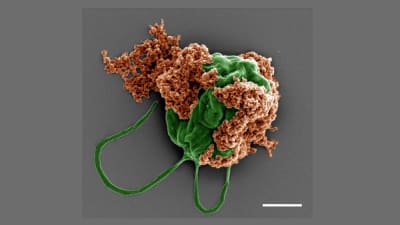
Engineers at the University of California San Diego have developed microscopic robots, known as microrobots, capable of swimming through the lungs to deliver...
5 Ws: Motion Control
A novel fabrication approach enables lightweight, untethered operation of soft robots with advanced biomimetic locomotion capabilities.

Articles: Photonics/Optics
See the products of tomorrow, including a new type of glass with unique and even contradictory properties, a novel approach for actively controlling Dutch-roll oscillations of an eVTOL aircraft by using existing outboard propellers to dampen oscillations, and the world’s first practical titanium-sapphire laser on a chip.
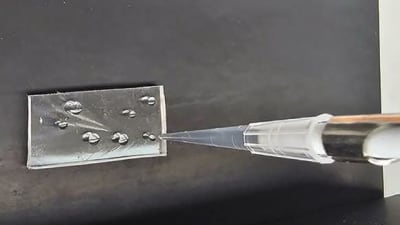
Briefs: Materials
Researchers have developed a new way to produce and shape large, high-quality mirrors that are much thinner than conventional space-telescope mirrors. The final product is even flexible enough to be rolled up and stored compactly inside a launch vehicle. Read on to learn more.

Briefs: Photonics/Optics
Researchers have developed standards and calibrations for optical microscopes that allow quantum dots to be aligned with the center of a photonic component to within an error of 10 to 20 nanometers (about one-thousandth the thickness of a sheet of paper). Such alignment is critical for chip-scale devices that employ the radiation emitted by quantum dots to store and transmit quantum information. Read on to learn more.

Briefs: Manufacturing & Prototyping
This research could help to reduce the environmental impact of additive manufacturing, which typically relies on nonrecyclable polymers and resins derived from fossil fuels. Read on to learn more.
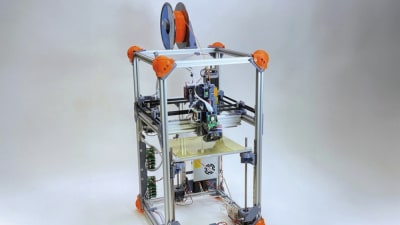
Briefs: Materials
The RTV sealing method may benefit terrestrial applications that may demand cure-in-place internal seals. The method could also innovate manufacturing processes for components by enhancing the speed of assembly while increasing seal integrity. Read on to learn more.
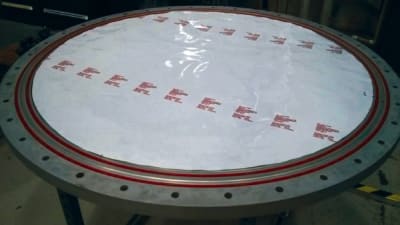
Briefs: Materials
After announcing a ferroelectric semiconductor at the nanoscale thinness required for modern computing components, a University of Michigan team has demonstrated a reconfigurable transistor using that material. Read on to learn more.

Briefs: Manufacturing & Prototyping
Engineers have developed a new technique for making wearable sensors that enables medical researchers to prototype and test new designs much faster and at a far lower cost than existing methods. Read on to learn more.

Application Briefs: Manufacturing & Prototyping
Enclosed robotic laser parts cleaning systems are poised to safely remove rust and contamination as well as condition surfaces at dramatically higher volumes and at lower cost than conventional methods. Read on to learn more about the process.

Blog: Design
Rechargeable solid-state lithium batteries are an emerging technology that could someday power cell phones and laptops for days with a single charge, but they are not environmentally friendly. A team of Penn State researchers may have solved this issue.
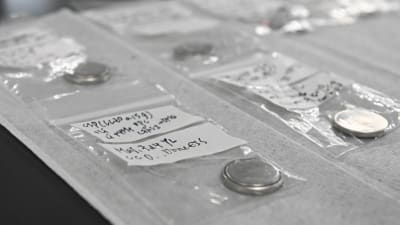
Briefs: Materials
Advancing Chemical Recycling of Waste Plastics
New research from the lab of Giannis Mpoumpakis, Associate Professor of Chemical and Petroleum Engineering at the University of Pittsburgh, focuses on optimizing a promising technology called pyrolysis, which can chemically recycle waste plastics into more valuable chemicals.
Briefs: Energy
According to the researchers, this proof-of-concept system could be adapted to help produce precursors for plastics or other chemical feedstocks, as well as scaled up to produce larger amounts of sustainable biofuels.

Briefs: Energy
The team plans to integrate such CO2-capturing materials with its earlier porous sponge platform, which has been developed to remove environmental toxins including oil, phosphates, and microplastics.

Briefs: Materials
Innovators at NASA’s Glenn Research Center have made several breakthroughs in treating hexagonal boron nitride (hBN) nanomaterials, improving their properties to supplant carbon nanotubes in many applications.

Top Stories
 Blog: Robotics, Automation & Control

Aerial Microrobots That Can Match a Bumblebee's Speed
 Blog: Electronics & Computers

Turning Edible Fungi into Organic Memristors
 Blog: Manufacturing & Prototyping

Revolutionizing the Production of Semiconductor Chips
 News: Energy

 INSIDER: Electronics & Computers

World’s Smallest Programmable, Autonomous Robots
 INSIDER: Manufacturing & Prototyping

Webcasts
 On-Demand Webinars: Power

E/E Architecture Redefined: Building Smarter, Safer, and Scalable Vehicles
 Upcoming Webinars: Energy

Hydrogen Engines Are Heating Up for Heavy Duty
 Upcoming Webinars: Electronics & Computers

Advantages of Smart Power Distribution Unit Design for Automotive...
 Upcoming Webinars: Automotive

Quiet, Please: NVH Improvement Opportunities in the Early Design...
 Upcoming Webinars: Power

A FREE Two-Day Event Dedicated to Connected Mobility
 Podcasts: Defense

How Sift's Unified Observability Platform Accelerates Drone Innovation