
Stories
38
54
0
120
30
Briefs: Manufacturing & Prototyping
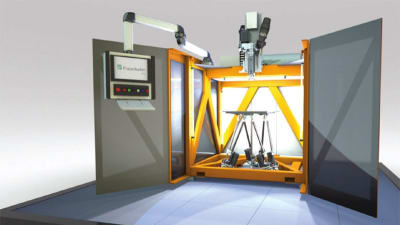
3D printers that build small parts layer by layer from melted plastic can take up to an hour to produce a pocket-sized piece. This process is far too slow for the mass-production of components...
Question of the Week: Materials
Are You Lightweighting with Plastics and Composites?
A Tech Briefs webinar this month focused on the idea of lightweighting – or replacing traditionally metal parts, like engine components, with plastics and composites.
Blog: Defense
How do thermoplastic composites compare to the thermoset composites already in use for several decades? A Tech Briefs reader asks.

Articles: Manufacturing & Prototyping
Your new industrial electronic product has been designed and the board components specified. It has been prototyped, either on a development board to check functionality...

Briefs: Materials
Magnetic resonance imaging (MRI) uses magnetic fields and radio waves to create images of organs and tissues in the human body, helping doctors diagnose potential problems or diseases. Doctors use MRI to...

Articles: Nanotechnology
Semi-Liquid Metal Anode for Next-Generation Batteries
Researchers from Carnegie Mellon University have developed a semi-liquid lithium metal-based anode. Lithium batteries made using this new electrode type could have a...

Briefs: Manufacturing & Prototyping
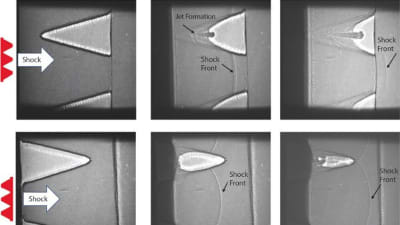
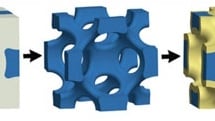
A 3D-printed polymer-based foam structure was developed that responds to the force of a shock wave to act as a oneway switch, a long sought-after goal in shock research. The...
Briefs: Electronics & Computers
While different approaches have been used to create artificial muscles — including hydraulic systems, servomotors, shape-memory metals, and polymers that respond to stimuli — they all have limitations such as...

Briefs: Manufacturing & Prototyping
Researchers have created 3D-printed flexible mesh structures that can be controlled with applied magnetic fields while floating on water. The structures can grab small objects and carry water droplets, giving them...

Briefs: Nanotechnology
Organic semiconductors (OSCs) have emerged as a new class of electronic materials promising a wide range of applications including organic field-effect transistors (OFET),...
Briefs: Materials
Fire-Retardant Coating Uses Renewable, Nontoxic Materials
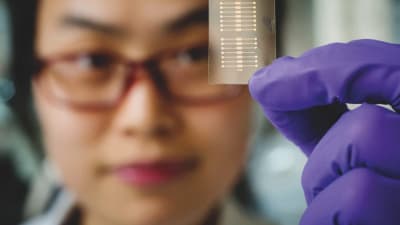
Researchers developed a new kind of flame-retardant coating using renewable, nontoxic materials readily found in nature. The coating could provide more effective fire protection for several widely used materials. The coatings offer the opportunity to reduce the flammability of polyurethane...
Articles: Materials
The critical angle lens reflector has commercial applications that supersede ordinary mirrored reflectors. The physics of the critical angle lens reflector are based on the optics...

Briefs: Sensors/Data Acquisition
Smartphone Test Spots Poisoned Water Risk
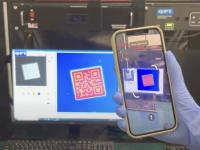
Researchers have developed a biosensor that attaches to a smartphone and uses bacteria to detect unsafe arsenic levels. The device generates easy-to-interpret patterns similar to volume-bars that display the level of contamination.
5 Ws: Automotive
Who
Anyone who uses products made of plastic. The new recyclable plastic could be a good alternative to many nonrecyclable plastics in use today.

Briefs: Manufacturing & Prototyping
Multistep Self-Assembly for Reconfigurable Materials
Self-assembling synthetic materials come together when tiny, uniform building blocks interact and form a structure; however, nature lets materials like proteins of varying size and shape assemble, allowing for complex architectures that can handle multiple tasks.
Question of the Week: Materials
Would You Use a Device That Bonds Metal and Plastic in Seconds?
The connection of plastics and metals poses a challenge due to the different physical properties of the two materials. A joining gun from Fraunhofer Institute bonds metal and plastic in seconds.
Briefs: Materials
The connection of plastics and metals poses a challenge due to the different physical properties of the two materials. All conventional joining options, such as bonds using adhesives or rivets,...

Application Briefs: Transportation
For wheelchair users, the feeling of uneven ground can seem all too familiar. Determined to make ride discomfort a thing of the past, Israel-based SoftWheel has completely reinvented the wheel for a...

Briefs: Wearables
Self-Powered, Washable, Wearable Displays
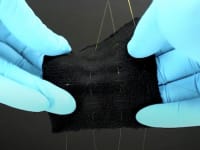
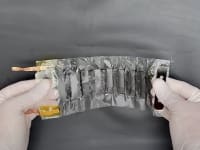
Clothing usually is formed with textiles and has to be both wearable and washable for daily use; however, smart clothing has had a problem with its power sources and moisture permeability, which causes the devices to malfunction. To solve this problem, a textile-based, wearable display module technology was...
Briefs: Manufacturing & Prototyping
Anew material was developed that can extract the key ingredient in the most common form of plastic from a mixture of other chemicals while consuming far less energy than usual. The...

Blog: Transportation
Researchers created transparent polythene sheets that have a strength greater than aluminum – at a fraction of the weight.

Briefs: Mechanical & Fluid Systems
Fast-response, stiffness-tunable (FRST) soft actuators — or movable machine elements — were developed that could be used in soft robots.

Briefs: Green Design & Manufacturing
Plastic-Degrading Enzyme
Eight million metric tons of plastic waste, including polyethylene terephthalate (PET) bottles, enter the oceans each year, creating huge manmade islands of garbage. Experts estimate that by 2050, there will be as much waste plastic in the ocean by mass as there are fish. A bacterium, Ideonella sakaiensis 201-F6, can...
Briefs: Aerospace
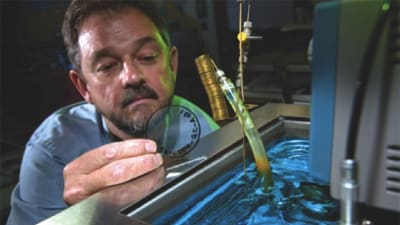
Many applications in science and industry require an apparatus that creates a controlled amount of a fluid introduced into another fluid. For instance, some material corrosion testing applications require...
Briefs: Transportation
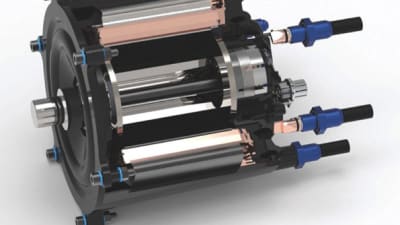
Making electric cars lighter also involves reducing the weight of the motor. One way to do that is by constructing it from fiber-reinforced polymer materials. A new cooling concept was...
Briefs: Photonics/Optics
Optical range measurements, already used in manufacturing and other fields, may help overcome practical challenges posed by structural fires, which are too hot to measure with conventional...

Briefs: Manufacturing & Prototyping
Composite Advances Lignin as Renewable 3D Printing Material
Lignin is the material left over from the processing of biomass. It gives plants rigidity and also makes biomass resistant to being broken down into useful products. Researchers combined a melt-stable hardwood lignin with conventional plastic, a low-melting nylon, and carbon fiber to...
Briefs: Aerospace
Most electronics only function within a certain temperature range but blending two organic materials together creates electronics that withstand extreme heat. The new plastic material could reliably conduct...

Briefs: Materials
Titanium is as strong as steel but about twice as light. These properties depend on the way a metal's atoms are stacked, but random defects that arise in the...
Top Stories
 Blog: Robotics, Automation & Control

Aerial Microrobots That Can Match a Bumblebee's Speed
 Blog: Electronics & Computers

Turning Edible Fungi into Organic Memristors
 Blog: Manufacturing & Prototyping

Revolutionizing the Production of Semiconductor Chips
 News: Energy

 INSIDER: Electronics & Computers

World’s Smallest Programmable, Autonomous Robots
 INSIDER: Manufacturing & Prototyping

Webcasts
 On-Demand Webinars: Power

E/E Architecture Redefined: Building Smarter, Safer, and Scalable Vehicles
 Upcoming Webinars: Energy

Hydrogen Engines Are Heating Up for Heavy Duty
 Upcoming Webinars: Electronics & Computers

Advantages of Smart Power Distribution Unit Design for Automotive...
 Upcoming Webinars: Automotive

Quiet, Please: NVH Improvement Opportunities in the Early Design...
 Upcoming Webinars: Power

A FREE Two-Day Event Dedicated to Connected Mobility
 Podcasts: Defense

How Sift's Unified Observability Platform Accelerates Drone Innovation