
Stories
38
0
2310
30
News: Materials
A new compressed form of glassy carbon opens up possibilities for applications requiring low weight and high strength — from aerospace parts to football helmets.

INSIDER: Medical
A team from Northwestern University created bioprosthetic ovaries that ultimately led to the restoration of hormone production and fertility in mice.

Who's Who: Materials
Thermal Protection Systems (TPS) — heatshields — form the outer surface of spacecraft and provide protection as the vehicle plunges through planetary...

Articles: Materials
This column presents technologies that have applications in commercial areas, possibly creating the products of tomorrow. To learn more about each technology, see the contact information provided for that innovation.
Briefs: Materials
NASA's Langley Research Center has developed a system that provides both structural support and protection attributes in a failsafe manner. This innovation incorporates the use of a...

Briefs: Materials
NASA's Langley Research Center has developed a new class of polyimide composite electrical insulation materials for wires, cable, and bus pipe. These new insulation materials have been shown to withstand a 12-hour...
Briefs: Materials
To comply with the Restriction of Hazardous Substances (RoHS) directive, pure tin is replacing lead-tin alloys in commercial electronic devices. Unfortunately, tin can grow whiskers...

Briefs: Materials
Electrically Conductive, Optically Transparent Polymer/Carbon Nanotube Composites
NASA's Langley Research Center researchers have developed a novel method for making carbon nanotubes that are very uniform in size. A template is used to guide the carbon nanotube growth so that all nanotubes are uniform in size. The carbon nanotubes can be used...
Briefs: Materials
An alternate heat shield concept for the Orion space vehicle is to use interlocking blocks of Phenolic Impregnated Carbon Ablator (PICA). The blocks are independent from one...

Briefs: Materials
NASA's Langley Research Center has developed a method for producing multifunctional, structural, thermally stable...

Briefs: Materials
At high temperatures, currently available cast stainless steel alloys used for engine component applications do not have the long-term stability of their original castings, and are lacking in their ability...

INSIDER: Mechanical & Fluid Systems
Extreme temperatures can severely strain a mechanical component because its material may have trouble enduring the heat without degrading. To address the problem, researchers at MIT developed...
INSIDER: Robotics, Automation & Control
Traditional robots often feature isolated mechanical joints. These discrete components limit a rover’s ability to traverse sand, stone, and other challenging environments.
A team at the...

Question of the Week: Materials
This week’s Question: Today’s lead INSIDER story described a potentially new way of building Mars habitats. What do you think? Will Mars habitats be built from Martian soil?
INSIDER: Manufacturing & Prototyping
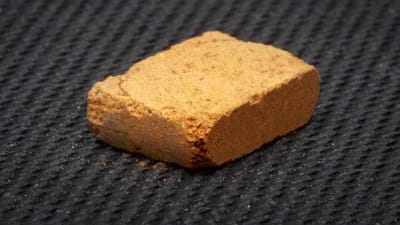
Researchers from the University of California, San Diego demonstrated a compaction technique that may someday be used to turn Mars soil into building blocks for the Red Planet. The scientists' new...
Briefs: Materials
Nanotubular Toughening Inclusions
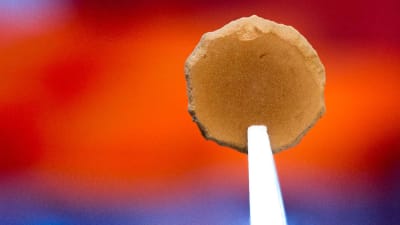
NASA's Langley Research Center has developed an extensive technology portfolio on novel methods for effective dispersion of carbon nanotubes (CNTs) in polymers. The technology portfolio extends from making stable dispersions of CNTs in polymer resins to processes for making composite CNT/polymer films and articles....

Briefs: Materials
NASA's Glenn Research Center (GRC) has developed and produced ultra-lightweight polymer cross-linked aerogels (X-Aerogels). These mechanically robust, highly porous, low-density...

Briefs: Materials
This electronic active material converts a voltage input to a mechanical force and mechanical displacement output. As compared to prior dielectric elastomer (DE) systems, the material has...

Briefs: Materials
NASA Langley Research Center has developed a novel thermoelectric (TE) material utilizing micro-scale silver telluride grains covered with bismuth...

Briefs: Materials
Polyimides Derived from Novel Asymmetric Benzophenone Dianhydrides
NASA's Glenn Research Center invites companies to license or establish partnerships to develop its patented high-temperature, low-melt imide resins for fabrication of automotive components. Produced by a solvent-free melt process, these resins exhibit high glass transition...
Question of the Week: Materials
Will shape memory polymers play a prominent role in non-aerospace applications?
This week's Question: A featured Tech Brief in today's INSIDER highlighted a shape memory polymer from Langley Research Center. Designed initially for morphing spacecraft, the material changes shape when temperature shifts; the thermosetting polymer than returns to its...
Briefs: Materials
NASA’s Langley Research Center has developed a novel shape memory polymer (SMP) made from composite materials for use in morphing structures. In response to an external stimulus such as...
Briefs: Materials
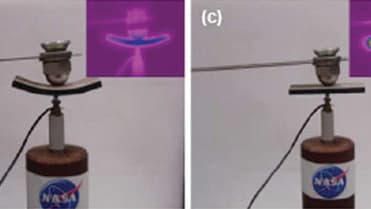
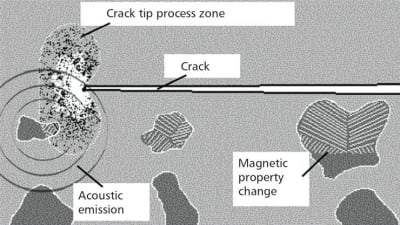
NASA Langley Research Center has developed a metallic material that can be embedded into structural alloys to enhance nondestructive evaluation (NDE) of a structure. Current NDE tools, such as eddy current...
Briefs: Materials
NASA's Glenn Research Center has developed high-temperature solid lubricant materials suitable for foil gas bearings that enable the...

Briefs: Materials
NASA's Langley Research Center has created a new class of materials based on depositing nanometer-sized metal particles onto carbon allotropes. The method is scalable and relatively...

Briefs: Materials
In Situ Mechanical Property Measurements of Amorphous Carbon-Boron Nitride Nanotube Nanostructures
Utilizing the full mechanical capabilities of individual nanotubes is a primary research goal in nanotube reinforced nanocomposite materials. Practical use of these nanomaterials requires creating stable and strong linkages between nanotubes without...
Briefs: Materials
Negative Dielectric Constant Material Based on Ion Conducting Materials
NASA Langley Research Center has developed a novel negative dielectric constant material based on ion-conducting materials. A negative dielectric constant material is an essential key for creating metamaterials, or artificial negative index materials (NIMs). NIMs have generated...
INSIDER: Sensors/Data Acquisition
Non-Toxic Material Generates Electricity Through Heat, Cold Air
Imagine a body sensor powered by one's jewelry, or a cooking pan that charges a cell phone in a few hours.
Using a combination of the chemical elements calcium, cobalt, and terbium, University of Utah researchers created an efficient, inexpensive and bio-friendly material that...
Top Stories
 Blog: Robotics, Automation & Control

Aerial Microrobots That Can Match a Bumblebee's Speed
 Blog: Electronics & Computers

Turning Edible Fungi into Organic Memristors
 Blog: Manufacturing & Prototyping

Revolutionizing the Production of Semiconductor Chips
 News: Energy

 INSIDER: Electronics & Computers

World’s Smallest Programmable, Autonomous Robots
 INSIDER: Manufacturing & Prototyping

Webcasts
 On-Demand Webinars: Power

E/E Architecture Redefined: Building Smarter, Safer, and Scalable Vehicles
 Upcoming Webinars: Energy

Hydrogen Engines Are Heating Up for Heavy Duty
 Upcoming Webinars: Electronics & Computers

Advantages of Smart Power Distribution Unit Design for Automotive...
 Upcoming Webinars: Automotive

Quiet, Please: NVH Improvement Opportunities in the Early Design...
 Upcoming Webinars: Power

A FREE Two-Day Event Dedicated to Connected Mobility
 Podcasts: Defense

How Sift's Unified Observability Platform Accelerates Drone Innovation