
Stories
38
0
450
30
Articles: Sensors/Data Acquisition
See the products of tomorrow, including the University of Maryland's "cooling glass"; the Reconfigurable Robotics Lab's sensor that can perceive combinations of bending, stretching, compression, and temperature changes using color; Tufts' tiny biological robots; and more.

Briefs: Wearables
A stretchable system that can harvest energy from human breathing and motion for use in wearable health-monitoring devices may be possible, according to an international team of researchers.

Briefs: Energy
Scientists at the U.S. Department of Energy’s (DOE) Argonne National Laboratory are researching solutions to these Li-ion battery issues by testing new materials in battery construction. One such material is sulfur.

Briefs: Materials
A team from Chalmers University of Technology has succeeded in observing how the lithium metal in the cell behaves as it charges and discharges. The new method may contribute to batteries with higher capacity and increased safety in our future cars and devices.

Briefs: Energy
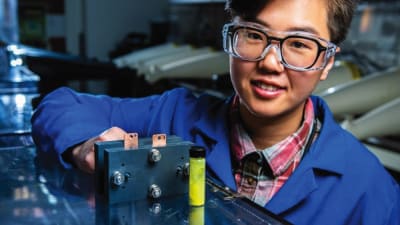
A research team from the Department of Energy’s Pacific Northwest National Laboratory reports that the flow battery, a design optimized for electrical grid energy storage, maintained its capacity to store and release energy for more than a year of continuous charge and discharge.
Briefs: Materials
Researchers at the U.S. Department of Energy’s (DOE) Argonne National Laboratory have developed an autonomous, or self-driving, microscopy technique. It uses AI to selectively target points of interest for scanning. Read on to learn more.

Briefs: Materials
An international team of researchers reports on a compact high-brightness mid-IR-driven source combining a gas-filled anti-resonant-ring photonic crystal fiber with a novel nonlinear-crystal. The tabletop source provides a seven-octave coherent spectrum from 340 nm–40,000 nm with spectral brightness 2–5 orders of magnitude higher than one of the brightest synchrotron facilities.

Briefs: Materials
Researchers have unveiled a remarkable new material with potential to impact the world of material science: amorphous silicon carbide (a-SiC). Beyond its exceptional strength, this material demonstrates mechanical properties crucial for vibration isolation on a microchip. It is therefore particularly suitable for making ultra-sensitive microchip sensors.

Briefs: Manufacturing & Prototyping
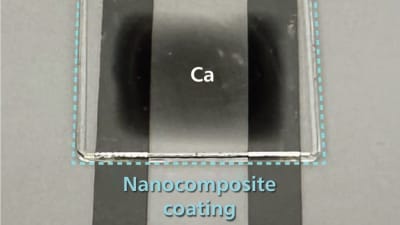
Developed by a team led by Lawrence Berkeley National Laboratory, a self-assembling nanosheet could significantly extend the shelf life of consumer products. And because the new material is recyclable, it could also enable a sustainable manufacturing approach that keeps single-use packaging and electronics out of landfills.
Briefs: Physical Sciences
A series of buzzing “loop-currents” could explain a recently discovered, never-before-seen phenomenon in a type of quantum material. The quantum material is known by the chemical formula Mn 3Si2Te6, but it’s safe to call it “honeycomb.” Read on to learn more.

Briefs: Materials
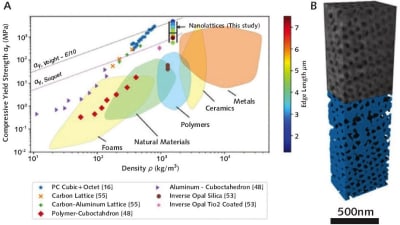
Scientists at the Columbia University, University of Connecticut, and the U.S. Department of Energy’s (DOE) Brookhaven National Laboratory were able to fabricate a pure form of glass and coat specialized pieces of DNA with it to create a material that was not only stronger than steel, but incredibly lightweight.
Briefs: Manufacturing & Prototyping
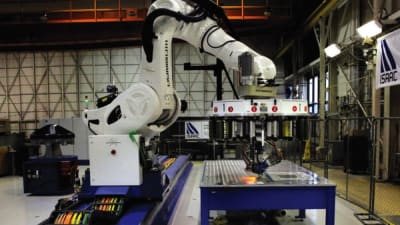
NASA’s Langley Research Center has developed a simplified, tool-less automated tow/tape placement (ATP) system. This invention enables several benefits that mitigate limitations associated with conventional ATP systems. Read on to learn more.
Briefs: Materials
A new method for metal 3D printing aims to make more efficient use of resources by allowing structural modifications to be “programmed” into metal alloys during 3D printing, fine-tuning their properties without the “heating and beating” process that’s been in use for thousands of years.

Briefs: Manufacturing & Prototyping
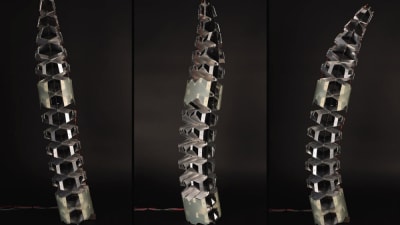
Using kirigami, the ancient Japanese art of folding and cutting paper, MIT researchers have now manufactured a type of high-performance architected material known as a plate lattice, on a much larger scale than scientists have previously been able to achieve by additive fabrication.
INSIDER: Wearables
An international research group has engineered a novel high-strength flexible device by combining piezoelectric composites with unidirectional carbon fiber (UDCF), an anisotropic...

INSIDER: Semiconductors & ICs
Researchers at the Georgia Institute of Technology have created the world’s first functional semiconductor made from graphene, a single sheet of carbon atoms held...
Blog: Materials
Researchers constructed an electrocrystallization strategy to induce zinc texture growth. The adsorption of DMA induces Zn (002) texture growth and inhibits harmful side reactions.

Blog: Green Design & Manufacturing
A research team from the University of Virginia has found a way to extract lithium from geothermal brines. The team’s method is called Targeted Extraction of Lithium with Electroactive Particles for Recovery Technology (TELEPORT).

Q&A: Materials
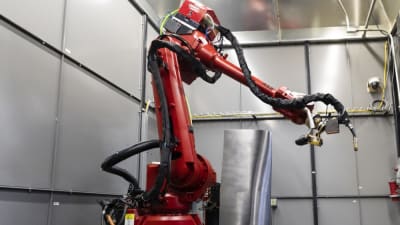
Michael Kirka and a team of researchers at the Department of Energy’s Oak Ridge National Laboratory are the first to 3D print large rotating steam turbine blades. They achieved it with robot-controlled wire arc additive manufacturing.
Technology & Society: Design
A team at Drexel University has engineered a grid of BioFibers that can be embedded within a concrete structure to improve its durability, prevent cracks from growing, and even enable self-healing.
Special Reports: Photonics/Optics

Space Technology - January 2024
NASA is making progress in solving some of the most daunting challenges of future space exploration – how to survive the extreme cold of the lunar night, generate oxygen for Mars colonies, and create artificial...Briefs: Green Design & Manufacturing
Recent discoveries by MIT engineers have revealed that introducing new materials into existing concrete manufacturing processes could significantly reduce their carbon footprint without altering concrete's bulk mechanical properties.

Briefs: Green Design & Manufacturing
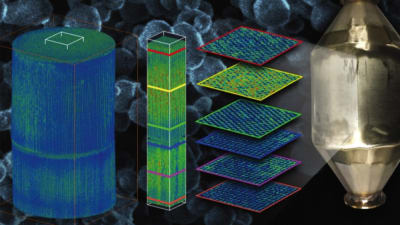
Scientists at the Department of Energy's Oak Ridge National Laboratory have developed an affordable add-on technology that removes more than 99.9 percent of acidic gases and other emissions to produce an ultraclean natural gas furnace.
Briefs: Green Design & Manufacturing
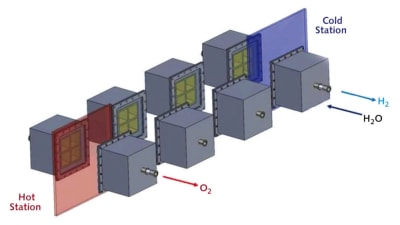
The system harnesses the sun's heat to directly split water and generate hydrogen — a clean fuel that can power long-distance trucks, ships, and planes, while in the process emitting no greenhouse gas emissions.
Briefs: Mechanical & Fluid Systems
A team at ETH Zurich has developed an ultrasonically actuated glass needle that can be attached to a robotic arm. This lets them pump and mix minuscule amounts of liquid and trap particles.

Briefs: Robotics, Automation & Control
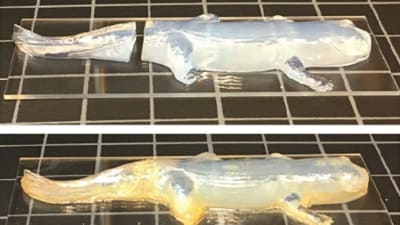
Using a new type of dual-polymer material capable of responding dynamically to its environment, researchers have developed a set of modular hydrogel components that could be useful in a variety of soft robotic and biomedical applications.
Briefs: Sensors/Data Acquisition
A Molecular-Sized, More Efficient Electronic Sensor
Australian researchers have developed a molecular-sized, more efficient version of a widely used electronic sensor, in a breakthrough that could bring widespread benefits.
Briefs: Green Design & Manufacturing
Macquarie University engineers have developed a new technique to make the manufacturing of nanosensors far less carbon-intensive, much cheaper, more efficient, and more versatile — substantially improving a key process in this trillion-dollar global industry.

Briefs: Lighting
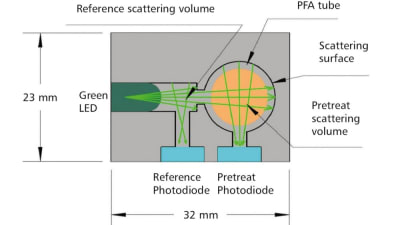
The optical concentration sensor has been demonstrated to effectively measure pretreat concentrations in both still and flowing liquid conditions and is resistant to contamination issues as necessitated by the UWMS.
Top Stories
 Blog: Robotics, Automation & Control

Aerial Microrobots That Can Match a Bumblebee's Speed
 Blog: Electronics & Computers

Turning Edible Fungi into Organic Memristors
 Blog: Manufacturing & Prototyping

Revolutionizing the Production of Semiconductor Chips
 News: Energy

 INSIDER: Electronics & Computers

World’s Smallest Programmable, Autonomous Robots
 INSIDER: Manufacturing & Prototyping

Webcasts
 On-Demand Webinars: Power

E/E Architecture Redefined: Building Smarter, Safer, and Scalable Vehicles
 Upcoming Webinars: Energy

Hydrogen Engines Are Heating Up for Heavy Duty
 Upcoming Webinars: Electronics & Computers

Advantages of Smart Power Distribution Unit Design for Automotive...
 Upcoming Webinars: Automotive

Quiet, Please: NVH Improvement Opportunities in the Early Design...
 Upcoming Webinars: Power

A FREE Two-Day Event Dedicated to Connected Mobility
 Podcasts: Defense

How Sift's Unified Observability Platform Accelerates Drone Innovation