
Stories
36,38
0
3420
30
Briefs: Materials
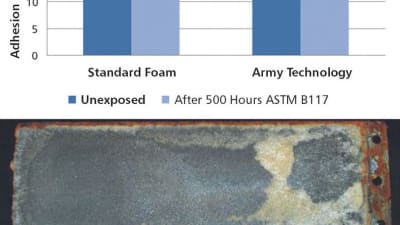
Surfaces such as metal and other corrodible surfaces are often exposed to extreme weathering, temperatures, moisture, impurities, and otherwise damaging external forces that accelerate corrosion....
Briefs: Materials
When the Deepwater Horizon drilling pipe blew out seven years ago, beginning the worst oil spill in U.S. history, those in charge of the recovery discovered that the millions of gallons of...

Briefs: Materials
Aqueous Solution Dispersement of Carbon Nanotubes
NASA’s Langley Research Center researchers have developed a novel method to disperse carbon nanotubes in aqueous solutions using chemical buffers. By avoiding the common use of surfactants to achieve dispersion, the researchers have provided a means to maintain biocompatibility of the carbon...
Articles: Sensors/Data Acquisition
This column presents technologies that have applications in commercial areas, possibly creating the products of tomorrow. To learn more about each technology, see the contact information provided for that innovation.

INSIDER: Mechanical & Fluid Systems
A team of researchers from the Georgia Institute of Technology has developed a way to use 3D printers to create objects capable of shape change. The objects use tensegrity, a structural system...

INSIDER: Materials
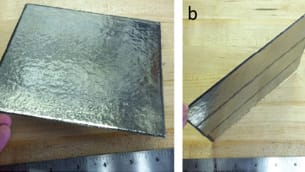
Using an off-the-shelf camera flash, researchers at Jilin University, China, turned an ordinary sheet of graphene oxide into a material that bends when exposed to moisture. They then used this material...

INSIDER: Energy
A team from Australia’s RMIT University created a “solar paint” that generates its own energy. The sunlight-absorbing substance absorbs and splits water atoms, resulting in hydrogen that...
INSIDER: Materials
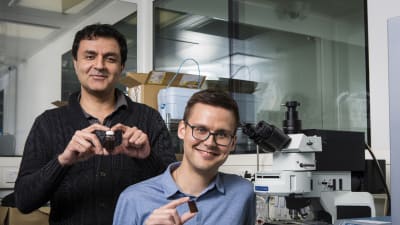
A new compressed form of glassy carbon opens up possibilities for applications requiring low weight and high strength — from aerospace parts to football helmets.

INSIDER: Medical
A team from Northwestern University created bioprosthetic ovaries that ultimately led to the restoration of hormone production and fertility in mice.

Who's Who: Materials
Thermal Protection Systems (TPS) — heatshields — form the outer surface of spacecraft and provide protection as the vehicle plunges through planetary...

Application Briefs: Sensors/Data Acquisition
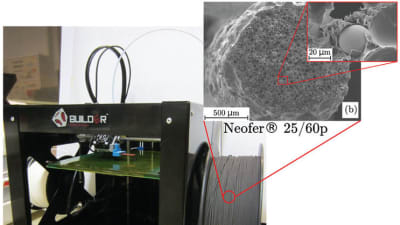
Polymer-bonded magnets are valuable for many sensor applications that require the production of unique and reproducible field profiles, not necessarily fields with the highest strength.
Briefs: Manufacturing & Prototyping
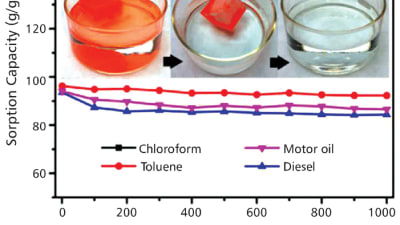
Oil spills have become an environmental problem due to the growth of offshore oil exploration, production, and transportation. There are several...
Briefs: Manufacturing & Prototyping
The Flying Carpet is a platform of any shape, size, or material that is suspended by a four-point cable system. The platform can serve as a movable scaffolding and worker...

Articles: Materials
This column presents technologies that have applications in commercial areas, possibly creating the products of tomorrow. To learn more about each technology, see the contact information provided for that innovation.
Briefs: Materials
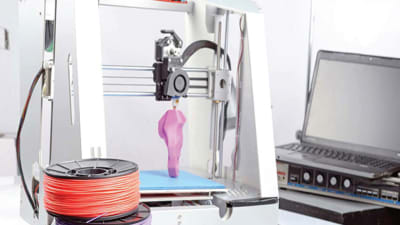
NASA's Langley Research Center has developed a system that provides both structural support and protection attributes in a failsafe manner. This innovation incorporates the use of a...

Briefs: Materials
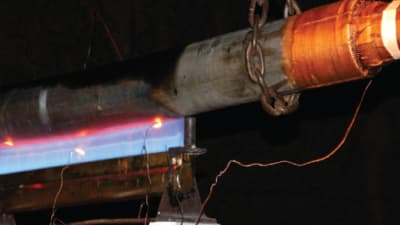
NASA's Langley Research Center has developed a new class of polyimide composite electrical insulation materials for wires, cable, and bus pipe. These new insulation materials have been shown to withstand a 12-hour...
Briefs: Manufacturing & Prototyping
Positioning Stage
Assembly of optic-electronic devices requires precision alignment of optical fibers with lasers or sensors, and then bonding. A worker looking through a microscope at the end of a fiber conventionally executes this precision alignment and bonding process.
Briefs: Materials
To comply with the Restriction of Hazardous Substances (RoHS) directive, pure tin is replacing lead-tin alloys in commercial electronic devices. Unfortunately, tin can grow whiskers...

Briefs: Materials
Electrically Conductive, Optically Transparent Polymer/Carbon Nanotube Composites
NASA's Langley Research Center researchers have developed a novel method for making carbon nanotubes that are very uniform in size. A template is used to guide the carbon nanotube growth so that all nanotubes are uniform in size. The carbon nanotubes can be used...
Briefs: Manufacturing & Prototyping
Functionalization of Carbon Nanotubes
Carbon nanotubes (CNTs) have attracted much attention due to their extraordinary mechanical and unique electronic properties. CNTs are being studied for applications in high-strength/low-weight composites and other applications. In order to alter the CNT properties for particular applications, chemical...
Briefs: Manufacturing & Prototyping
Carbon fiber (CF) and carbon fiber composites have gained widespread use in recent years due to their unique combination of high strength and stiffness-to-weight...
Briefs: Materials
An alternate heat shield concept for the Orion space vehicle is to use interlocking blocks of Phenolic Impregnated Carbon Ablator (PICA). The blocks are independent from one...

Briefs: Materials
NASA's Langley Research Center has developed a method for producing multifunctional, structural, thermally stable...

Articles: Manufacturing & Prototyping
It's one of the basic rules of manufacturing: As part complexity increases, so do machining and assembly costs. But what if there were a different way to produce metal parts — one with fewer...

Briefs: Materials
At high temperatures, currently available cast stainless steel alloys used for engine component applications do not have the long-term stability of their original castings, and are lacking in their ability...
INSIDER: Motion Control
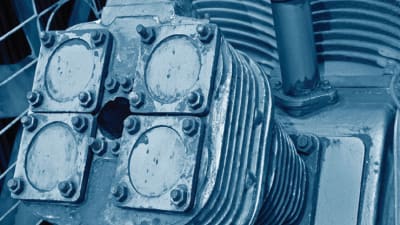
Extreme temperatures can severely strain a mechanical component because its material may have trouble enduring the heat without degrading. To address the problem, researchers at MIT developed...
INSIDER: Materials
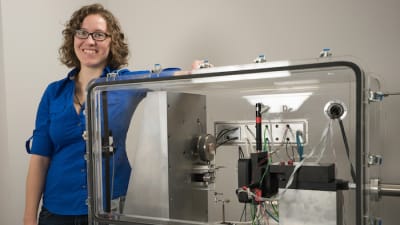
Traditional robots often feature isolated mechanical joints. These discrete components limit a rover’s ability to traverse sand, stone, and other challenging environments.
A team at the...

INSIDER: Manufacturing & Prototyping
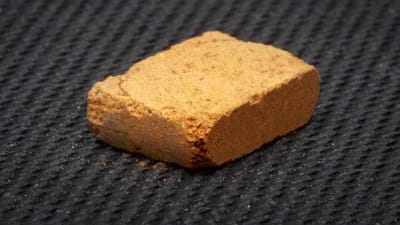
What's New on Tech Briefs: Brickmaking on Mars a 'Smashing' Success
With support from Congress and the President, NASA aims to send a manned mission to Mars by 2040. Establishing a human presence on the Red Planet, however, will require permanent shelters.
And lugging a pile of bricks on the nine-month, 35-million-mile trip is out of the...
Question of the Week: Manufacturing & Prototyping
This week’s Question: Today’s lead INSIDER story described a potentially new way of building Mars habitats. What do you think? Will Mars habitats be built from Martian soil?
Top Stories
 Blog: Robotics, Automation & Control
Aerial Microrobots That Can Match a Bumblebee's Speed
 Blog: Electronics & Computers

Turning Edible Fungi into Organic Memristors
 Blog: Manufacturing & Prototyping

Revolutionizing the Production of Semiconductor Chips
 News: Energy

 INSIDER: Electronics & Computers
World’s Smallest Programmable, Autonomous Robots
 INSIDER: Manufacturing & Prototyping

Webcasts
 On-Demand Webinars: Power

E/E Architecture Redefined: Building Smarter, Safer, and Scalable Vehicles
 Upcoming Webinars: Energy

Hydrogen Engines Are Heating Up for Heavy Duty
 Upcoming Webinars: Electronics & Computers

Advantages of Smart Power Distribution Unit Design for Automotive...
 Upcoming Webinars: Automotive

Quiet, Please: NVH Improvement Opportunities in the Early Design...
 Upcoming Webinars: Power

A FREE Two-Day Event Dedicated to Connected Mobility
 Podcasts: Defense

How Sift's Unified Observability Platform Accelerates Drone Innovation