Stories
39,49,73
0
2040
30
INSIDER: Materials
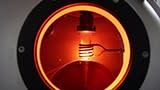
The latest generation of electric motors is increasingly being equipped with strong, multi-ton permanent magnets instead of a gearbox. The most powerful magnets are based on neodymium, iron, and...
INSIDER: Mechanical & Fluid Systems
Most robots on a factory floor are equipped with large pincers or claws to grab an object and place it somewhere else in an assembly line. Engineers at MIT have now hit upon a way to impart...

INSIDER: Mechanical & Fluid Systems
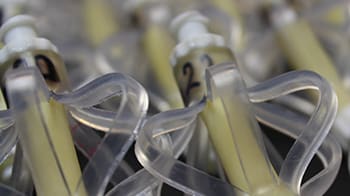
Soft machines and robots are becoming more and more functional, capable of moving, jumping, gripping an object, and even changing color. The elements responsible for their actuation...
INSIDER: Mechanical & Fluid Systems
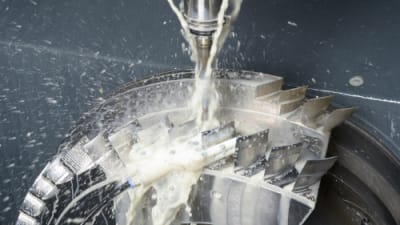
Compressor disks for aircraft turbines are milled from a single piece of material. During processing, the blades begin to vibrate. Now, a novel clamping system boosts vibration...
INSIDER: Mechanical & Fluid Systems
Engineers from the University of Sheffield have developed a novel technique to predict when bearings inside wind turbines will fail, which could make wind energy cheaper. The method uses ultrasonic...

INSIDER: Propulsion
Advances in magnet technology have enabled researchers at MIT to propose a new design for a practical compact tokamak fusion reactor — and it’s one that might be realized in...

Articles: Aerospace
NASA Technology
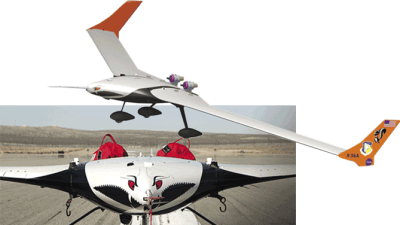
Since its founding in 1958, NASA has made profound contributions to aviation, including advancing our understanding of flight mechanics—the study of forces...
INSIDER: Mechanical & Fluid Systems
'Snap' Design Mimics Venus Flytrap
A team led by physicist Christian Santangelo at the University of Massachusetts Amherst uses curved creases to give thin shells a fast, programmable snapping motion. The technique – inspired by the natural "snapping systems" like Venus flytrap leaves and hummingbird beaks – avoids the need for complicated...
INSIDER: Motion Control
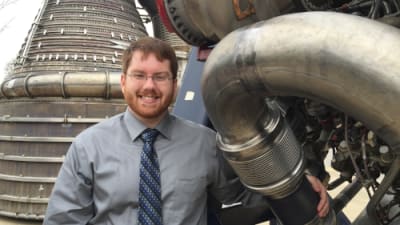
Researchers at the University of Georgia are helping NASA determine if a key rocket component can withstand the rigors of the next generation of spaceflight. The bellows...
News: Aerospace
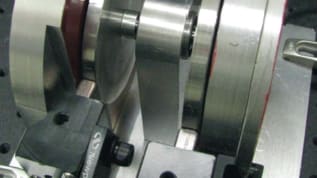
Vibration machines are crucial to test the forces that make things fall apart in the bumpy real world, from small components to complete systems like airplanes or nuclear weapons. Large,...

Briefs: Mechanical & Fluid Systems
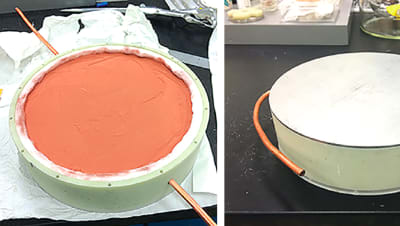
This work involved designing a liquid nitrogen cold-plate heat exchanger with a high thermal mass using code-standard, high-pressure tubing. High thermal mass requires a substantial amount of material,...
Briefs: Mechanical & Fluid Systems
Improved Attachment Design for Ceramic Turbine Blades Via Hybrid Concepts
This innovation is a hybrid metal-ceramic matrix composite (CMC) turbine blade in which a SiC/SiC CMC airfoil section is bonded to a single-crystal superalloy root section in order to mitigate risks associated with an all-CMC blade inserted in a superalloy disk. This will...
Briefs: Mechanical & Fluid Systems
Wallops Flight Facility 6U Advanced CubeSat Ejector (ACE)
Six-unit (6U) CubeSats are recognized as the next nanosatellite to be considered for standardization. The CubeSat standard established by California Polytechnic University (Cal Poly), which applies to 1U–3U sizes, has proven to be a valuable asset to the community. It has both provided...
Briefs: Mechanical & Fluid Systems
A component-level DC transformer was developed in which no alternating currents or voltages are present. It operates by combining features of a homopolar motor and a homopolar generator, both DC devices, such that the output...
INSIDER: Lighting
Nanogenerator Harvests Power from Rolling Tires
A group of University of Wisconsin-Madison engineers and a collaborator from China have developed a nanogenerator that harvests energy from a car's rolling tire friction. The technology ultimately could provide automobile manufacturers with a new way to reuse energy and provide greater vehicle...
INSIDER: Medical
An advanced driving simulator will be used to test a patient’s driving ability after cataract surgery. The trial will help determine if a newly developed artificial lens will be...

Who's Who: Aerospace
Kim Hambuchen is currently building user interfaces for Vakyrie, a six-foot-two, 286-pound humanoid robot. The two-legged Valkyrie...

Articles: Aerospace
NASA Technology
To permit safe and reliable aircraft navigation over North America using the Global Positioning System (GPS), the Federal Aviation Administration (FAA) has developed the Wide Area...

Briefs: Propulsion
Sea-Level Flight Demonstration Altitude Characterization of a LO2/LCH4-Based Ascent Propulsion Lander
A recently developed 1,500-lbf (6,672-N) thrust-class liquid oxygen/liquid methane (LO2/LCH4) rocket engine was tested at both sea level and simulated altitude conditions. Sea-level tests were conducted using both a static horizontal test bed, and...
INSIDER: Photonics/Optics
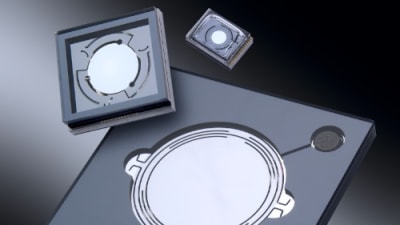
Silicon micromirrors can guide laser beams at extremely high speeds, allowing operators to dose heat input to workpieces with absolute precision. But to date, they have not been robust enough to be...
INSIDER: Mechanical & Fluid Systems
The high cost to manufacture nanofibers has relegated them to just a few niche industries. MIT researchers developed a new technique for producing nanofibers that increases the rate...
INSIDER: Mechanical & Fluid Systems
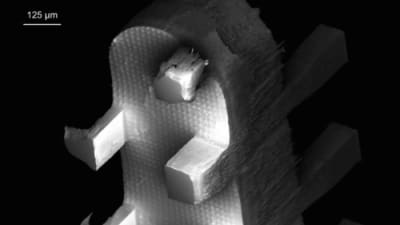
Tiny Origami Robot Folds Itself Up
MIT researchers have developed a printable origami-inspired robot that, when heated, folds itself up from a flat sheet of plastic. The robot weighs a third of a gram and measures about a centimeter from front to back.
INSIDER: Robotics, Automation & Control
Using a tablet and a red beam of light, researchers at Georgia Tech have created a system that controls a fleet of robots with the swipe of a finger. A person taps the tablet to control where the beam...

INSIDER: Robotics, Automation & Control
More American homes could be powered by the Earth's natural underground heat with a new, nontoxic, and potentially recyclable liquid that is expected to use half as much water as other fluids used to tap...

INSIDER: Manufacturing & Prototyping
New Computer Operates on Water Droplets
A synchronous computer from Stanford University operates using the unique physics of moving water droplets. The work combines the manipulation of droplet fluid dynamics with a fundamental element of computer science – an operating clock.
INSIDER: Materials
New Etching Method Boosts Nanofiber Production
A new technique from MIT researchers boosts production of nanofibers fourfold, while cutting energy consumption by more than 90 percent. Potential nanofiber applications include solar cells, water filtration, and fuel cells.
INSIDER: Software
To the naked eye, buildings and bridges appear fixed in place, unmoved by forces like wind and rain. But in fact, these large structures do experience imperceptibly small vibrations that,...

INSIDER: Mechanical & Fluid Systems
Micro actuators are needed for numerous applications, ranging from mobile and wearable devices, to minimally invasive medical devices. However, the limitations associated with their fabrication...
INSIDER: Mechanical & Fluid Systems
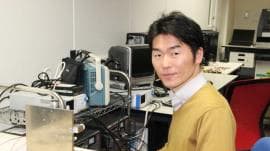
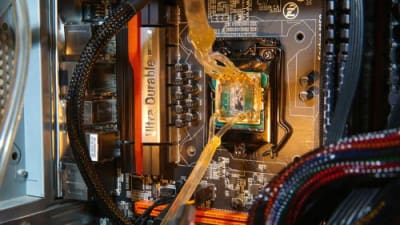
A patented passive cooling system for computer processors from the University of Alabama could save U.S. consumers more than $6.3 billion per year in energy costs...
Top Stories
 Blog: Sensors/Data Acquisition

Going for Gold in Winter Olympic Curling
 Blog: Energy

Batteries that Can Withstand the Cold
 Blog: Lighting

A Stretchable OLED that Can Maintain Most of Its Luminescence
 INSIDER: Design

Advancing All-Solid-State Batteries
 Blog: Data Acquisition

 Blog: Materials

Webcasts
 On-Demand Webinars: Defense

Cooling a New Generation of Aerospace and Defense Embedded Computing...
 Upcoming Webinars: Software

Beyond AI-Copy-Paste Engineering: Advanced AI-Integration Success...
 Upcoming Webinars: Automotive

Battery Abuse Testing: Pushing to Failure
 Upcoming Webinars: Power

A FREE Two-Day Event Dedicated to Connected Mobility
 Upcoming Webinars: RF & Microwave Electronics

Choosing the Right N-Port Strategy: Multiport VNAs vs. Switch...
 Upcoming Webinars: AR/AI