Stories
48
-1
2040
30
Briefs: Robotics, Automation & Control
Concepts are being investigated for exploratory missions to Mars based on "Bioinspired Engineering of Exploration Systems" (BEES), which is a guiding principle of this...

Briefs: Energy
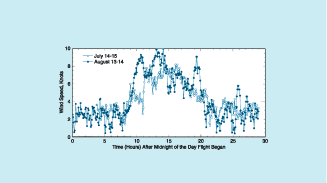
In the summer of 2001, the Helios prototype solar-powered uninhabited aerial vehicle (UAV) [a lightweight, remotely piloted airplane] was deployed to the Pacific Missile Range Facility...
Briefs: Electronics & Computers
The F-15 Advanced Controls Technology for Integrated Vehicles (ACTIVE) airplane (see figure) was the test bed for a flight test of an intelligent flight control system (IFCS). This IFCS...

Briefs: Physical Sciences
An aircraft-mounted instrument for high- resolution, in situ measurement of the abundances of liquid water and ice in clouds is undergoing development. This instrument is intended to overcome the dis-...
Briefs: Electronics & Computers
Failure-Reporting Device Concept for Spacecraft and Remote Vehicles
Failure-reporting devices somewhat similar to the “black box” data recorders on aircraft have been proposed. These devices were conceived for use on spacecraft, but might also be useful on terrestrial autonomous underwater vessels or terrestrial remote exploratory robots. The...
Briefs: Aerospace
Area Production in Supercritical, Transitional Mixing Layers
This paper presents a study of area production in mixing layers undergoing transition to turbulence. These layers evolve from the mixing of two initially segregated counterflowing streams under supercritical conditions. The study may contribute to development of means to control area...
Briefs: Physical Sciences
Paraffin-Actuated Heat Switch for Mars Surface Applications
Missions to the surface of Mars pose unique thermal-control challenges to rover and lander systems. With diurnal temperature changes greater than 100 °C, the presence of a Mars atmosphere, and limited power for night-time heating, the thermal-control engineer is faced with a fundamental...
Briefs: Aerospace
NASA’s F-15B #836 is a two-seat version of the F-15, which is a high-performance, supersonic, all-weather fighter airplane. The F-15B is used as a test-bed aircraft for a wide variety of...

Briefs: Physical Sciences
First-Generation Integrated Free-Flying Micro-Spacecraft
The concept of free-flying micro-spacecraft was to develop a miniature spacecraft system fully integrated with a scientific sensor. A fleet of such tiny spacecraft would be deployed in space for multi-probe measurements of a three-dimensional phenomenon and to separate the spatial/temporal...
Briefs: Physical Sciences
The NASA Dryden DC-8 Airborne Science Laboratory (see Figure 1) performs research around the globe, recently in support of the SAGE III Ozone Loss and Validation Experiment (SOLVE). This...

Briefs: Software
NASA has developed a system of hardware and software that can accommodate all necessary interfaces between (1) space-station flight computers and (2) a simulation host computer used...

Briefs: Aerospace
The Dryden Flight Research Center (DFRC) has been a partner in many uninhabited-aerial-vehicle (UAV) test programs. Our participation has largely been in the areas of...

Briefs: Motion Control
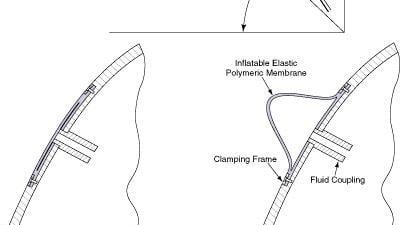
It is not necessary to allocate valuable forebody volume to strake-deployment mechanisms.
Briefs: Software
Program Computes Flightpaths From Point Radar Sightings
A computer program estimates great-circle-arc (GARC) flightpaths of multiple aircraft, given time-tagged point locations from radar sightings of the aircraft. The problem of generating such estimates is called a "clustering" problem, and is solved in this instance by use of a neural-network...
Briefs: Test & Measurement
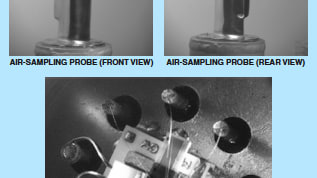
Nearly every military and commercial aircraft in the United States today uses pitot-static probes for accurate, repeatable airdata measurements. Recently, local angle-of-attack- and...

Briefs: Materials
MoSi2-based composite materials are among the advanced materials undergoing development as potential strong, stiff, lightweight replacements for the nickel-based superalloys now used in...

Briefs: Manned Systems
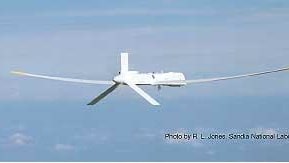
The recent summit meeting held in Kyoto, Japan, has brought world-wide attention to the issue of global climate change. For the past 5 years, the Department of Energy's Atmospheric Radiation...
Briefs: Aerospace
Adaptive performance optimization (APO) is an approach for improving aircraft performance without the need for extensive modifications of hardware. In this approach, one exploits existing...

Briefs: Aerospace
Experiments have shown that nonreactive ion-beam sputtering can be used to deposit a transparent film of aluminum oxide on a polycarbonate, silicon, or fused-silica substrate....

Top Stories
 Blog: Materials

A Stretchable OLED that Can Maintain Most of Its Luminescence
 INSIDER: Energy

Advancing All-Solid-State Batteries
 Blog: Energy

My Opinion: We Need More Power Soon — Is Nuclear the Answer?
 Quiz: Energy

 Blog: Robotics, Automation & Control

Microscopic Swimming Machines that Can Sense, Respond to Surroundings
 Blog: Physical Sciences

Webcasts
 Podcasts: Aerospace

Sesame Solar's Nanogrid Tech Promises Major Gains in Drone Endurance
 Upcoming Webinars: Semiconductors & ICs

Advantages of Smart Power Distribution Unit Design for Automotive...
 Upcoming Webinars: Transportation

Quiet, Please: NVH Improvement Opportunities in the Early Design...
 Upcoming Webinars: AR/AI

From Spreadsheets to Insights: Fast Data Analysis Without Complex...
 Upcoming Webinars: Defense

Cooling a New Generation of Aerospace and Defense Embedded...
 Upcoming Webinars: AR/AI

Beyond AI-Copy-Paste Engineering: Advanced AI-Integration Success...