
Stories
43
-1
1260
30
Briefs: Medical
Printed multi-turn loop antennas have been designed for contactless powering of, and reception of radio signals transmitted by, surgically implantable biotelemetric sensor units operating at...

Who's Who: Medical
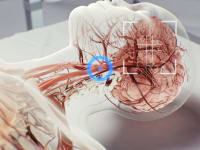
Medical imaging technology has led to quicker diagnoses of conditions that, when caught early, can be treated. However, because such devices are large, they are impractical in the...

Blog: Medical
Custom Contacts
University of Rochester (New York) researchers have developed custom- designed contacts for people with keratoconic eyes, which are rare but disabling. From the side, the eyes look more pointed or cone-shaped than round. The condition causes people to see halos, and double and triple images. About 1 in 2,000 people suffer from the...
Blog: Imaging
3D Ultrasound
The same Duke University Pratt School of Engineering research team that first developed real-time, 3D ultrasound imaging has modified the commercial version of the scanner to produce an even more realistic perception of depth. The researchers created an updated version of the image-viewing software, making it possible to achieve a...
Blog: Medical
Brain Model
Understanding the functional significance of the folds in the outermost layer of the brains of large mammals is one of the big open questions in neuroscience. A team led by MIT, Massachusetts General Hospital, and Harvard Medical School researchers recently developed a tool that could aid such studies by helping researchers "see" how...
Blog: Medical
Technology Business Briefs
A Fiber Optic-Based Integration System (FOBIS) has been developed that may be capable of in-situ, real-time biological monitoring, and is based on a single fiber optic system. A compact, multi-functional device, the FOBIS incorporates three working units (a Micro-Flow Cytometer, a Micro-Photometer, and a Micro-Sensor)...
Briefs: Medical
Wearable Environmental and Physiological Sensing Unit
The wearable environmental and physiological sensing unit (WEPS) is a prototype of systems to be worn by emergency workers (e.g., firefighters and members of hazardous-material response teams) to increase their level of safety. The WEPS includes sensors that measure a few key physiological and...
Briefs: Medical
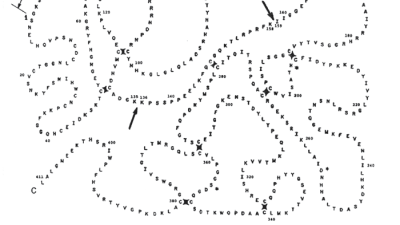
Antibodies that bind to preselected regions of the urokinase molecule have been developed. These antibodies can be used to measure small quantities of each of three molecular forms of urokinase that...
Briefs: Medical
Understanding and Counteracting Fatigue in Flight Crews
The materials included in the collection of documents describe the research of the NASA Ames Fatigue Countermeasures Group (FCG), which examines the extent to which fatigue, sleep loss, and circadian disruption affect flight-crew performance. The group was formed in 1980 — in response to a...

Blog: Medical
Pneumatic Step Motor
Medical scientists at Johns Hopkins University (Baltimore, MD) have constructed the "PneuStep," a prototype pneumatic step motor that is the first of its kind. The motor was developed as part of a project for a robot that could operate precisely within the closed bore of high-intensity MRI equipment. The pneumatic nature of the...
Blog: Physical Sciences
Diagnostic Hydrogel
Researchers at Massachusetts Institute of Technology (MIT) have created customizable hydrogel microparticles capable of identifying different biomolecules, disease monitoring, drug discovery, or genetic profiling. Each particle is equipped with a bar-coded ID and one or more probe regions that turn fluorescent when they detect...
Blog: Medical
Holographic Images
The response of tumors to anticancer drugs has been observed in real-time, 3D images using technology developed at Purdue University. The new digital holographic imaging system uses a laser and a charged couple device (CCD) to see inside tumor cells. The instrument also may have applications in drug development and medical...
Blog: Medical
Anti-Cancer Protein
Researchers at the Dana-Farber Cancer Institute (Boston, MA) have found that the p53 protein, known to guard against cancer-causing DNA damage, provides an entirely different level of cancer protection: by prompting the skin to tan in response to ultraviolet light from the sun, p53 deters the development of melanoma skin cancer....
Blog: Medical
Drug Tooth
Medical researches at Information Society Technologies (Brussels, Belgium) are developing the IntelliDrug controlled drug delivery system, where medication is stored and released from an implanted tooth. The fake tooth is a micro-system comprising of a medication reservoir and release mechanism, a built-in intelligence, micro- sensors,...
Blog: Materials
Technology Business Briefs
Printable Biosensor for On-Site, Online Measurements -- Bioactive Hybrid Materials for Photonic Microsystems It allows samples to be analyzed on site within a few minutes by integrating biotechnology, information technology, electronics, physics, and chemistry to realize small and cost-effective bio-photonic microsystems....
Briefs: Medical
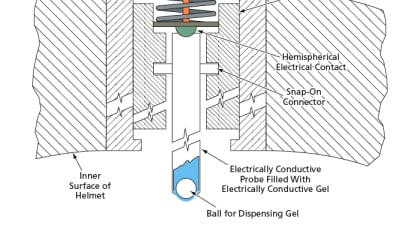
A system that would comprise mobile and stationary electronic hardware and software subsystems has been proposed for collection and automated interpretation of electro-encephalo-graphic...
Blog: Materials
Clean Water Technology
University of Delaware researchers have developed an inexpensive, nonchlorine- based technology that can remove harmful microorganisms, including viruses, from drinking water. The patented technology incorporates highly reactive iron in the filtering process to deliver a chemical "knock-out punch" to a host of notorious...
Blog: Medical
Viral Traps
Biologists at Yale University (New Haven, CT) are developing a process to trap viruses in habitats that force their extinction. Viruses are chemically lured into the wrong cells, thus preventing virus reproduction and alleviating disease. The research was conducted on phi-6 virus populations in environments containing different mixtures...
Blog: Medical
X-Ray Vision
Brown University researchers are creating a technology that will allow doctors and scientists to see inside living humans and animals, and watch their bones move in 3D as they run, fly, jump, swim, and slither. This high-resolution, high-speed imaging system will contribute to better treatments for knee, shoulder, wrist, and back...
Who's Who: Sensors/Data Acquisition
Diagnosis on Earth is a fairly simple procedure, done at any hospital or medical center. In space flight, however, where doctors and even basic medical...

Articles: Medical
New technologies are providing doctors and patients with more options for treatment and improved quality of life than ever before. Procedures once entailing long recovery times and scarring may...

Briefs: Medical
Surface Bacterial-Spore Assay Using Tb³⁺ /DPA Luminescence
Equipment and a method for rapidly assaying solid surfaces for contamination by bacterial spores are undergoing development. The method would yield a total (nonviable plus viable) spore count of a surface within minutes and a viable-spore count in about one hour. In this method, spores...
Briefs: Medical
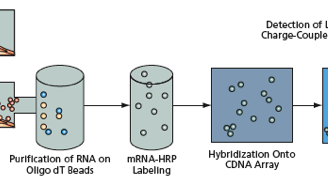
Two simplified methods of identifying messenger ribonucleic acid (mRNA), and compact, low-power apparatuses to implement the methods, are at the proof-of-concept stage of...
Blog: Transportation
"CREATE THE FUTURE" TODAY
A hybrid automobile or $20,000 in cash is the Grand Prize in Emhart Teknologies' and NASA Tech Briefs' fifth annual "Create the Future" Design Contest. Engineers, students, and the general public are encouraged to submit their ideas. View the official entry form and contest rules here. Categories are Everyday Products,...
Blog: Transportation
LAST CHANCE! DESIGN & WIN TODAY
There is only one day left to submit your original design idea to the fifth annual Emhart Teknologies "Create the Future" Design Contest. Enter your unique idea in one of four categories -- Everyday Products, Safety, Transportation, and Medical -- and you could win a 2007 hybrid car, $20,000 in cash, a 42" plasma TV,...
Blog: Medical
PHANTOM PAIN TREATMENT
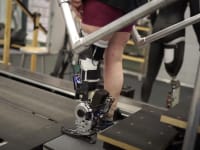
Researchers at the University of Manchester (Manchester, UK) have devised an experimental method of virtual reality for the treatment of phantom limb pain (PLP) experienced by some amputees. Using headsets, data gloves, and other sensors, amputees used their remaining physical limbs to control the movements of a...
Briefs: Medical
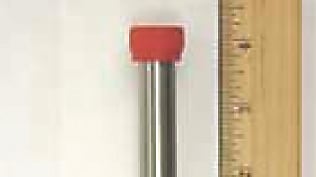
Thermal spore exposure vessels (TSEVs) are laboratory containers designed for use in measuring rates of death or survival of microbial spores at elevated temperatures. A major consideration in the design of a TSEV...
Briefs: Medical
Enumerating Spore-Forming Bacteria Airborne With Particles
A laboratory method has been conceived to enable the enumeration of:
Cultivable bacteria and bacterial spores that are, variously, airborne by themselves or carried by, parts of, or otherwise associated with, other airborne particles; and
Spore-forming bacteria among all of the...
Top Stories
 Blog: Design
Aerial Microrobots That Can Match a Bumblebee's Speed
 Blog: Energy

My Opinion: We Need More Power Soon — Is Nuclear the Answer?
 Blog: Electronics & Computers

Turning Edible Fungi into Organic Memristors
 Blog: Semiconductors & ICs

Revolutionizing the Production of Semiconductor Chips
 Blog: Robotics, Automation & Control

Microscopic Swimming Machines that Can Sense, Respond to Surroundings
 Quiz: Energy

Webcasts
 Upcoming Webinars: Power

Hydrogen Engines Are Heating Up for Heavy Duty
 Upcoming Webinars: Transportation

Advantages of Smart Power Distribution Unit Design for Automotive...
 Upcoming Webinars: Unmanned Systems

Quiet, Please: NVH Improvement Opportunities in the Early Design...
 Upcoming Webinars: Power

A FREE Two-Day Event Dedicated to Connected Mobility
 On-Demand Webinars: Automotive

E/E Architecture Redefined: Building Smarter, Safer, and Scalable Vehicles
 Podcasts: Unmanned Systems

How Sift's Unified Observability Platform Accelerates Drone Innovation