Stories
0
1020
30
Briefs: Materials
A Duke University team's approach takes a metallic nanotube, which always lets current through, and transforms it into a semiconducting form that can be switched on and off. Read on to learn more.

Briefs: Sensors/Data Acquisition
A team has created a prototype for what it calls “living bioelectronics” — a combination of living cells, gel, and electronics that can integrate with living tissue. The patches are made of sensors, bacterial cells, and a gel made from starch and gelatin. Tests in mice found that the devices could continuously monitor and improve psoriasis-like symptoms, without irritating skin. Read on to learn more.

Articles: Materials
By leveraging plasma pen technology into inline processes, manufacturers can achieve stronger, more reliable bonds, improved wettability, and enhanced performance across various materials. Read on to learn more about what this means.

Articles: Materials
The U.S. government’s microelectronics needs have evolved significantly over the decades. Now, we have entered the era of Advanced Packaging. This is the next microelectronics evolution to enhance and extend the performance of modern military and commercial systems. Read on to learn more about this.
White Papers: Manufacturing & Prototyping

Team Collaboration & PCB Design
There was a time when PCB design was handled by a single designer after the circuit was completed. Today, with complex products like tablets, smartphones, and electronic games, PCB design involves teams of...Special Reports: Aerospace
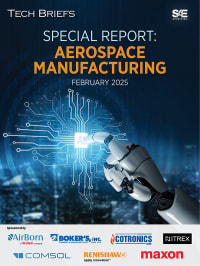
Aerospace Manufacturing - February 2025
The future of AI for aerospace manufacturing…3D‐printed engines propel next industrial revolution…engineering a new approach to satellite design. Read these and other advances in this compendium of...Videos: Manufacturing & Prototyping
Designers, engineers, entrepreneurs, makers, and students gathered at Dassault Systèmes' 3DEXPERIENCE World 2025 event in Houston, TX, from February 23-26, to explore how AI is transforming design and manufacturing.

Blog: Wearables
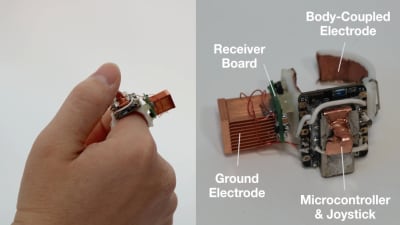
To free wearable tech from their burdens, researchers developed Power-over-Skin, which allows electricity to travel through the human body and could one day power battery-free devices from head to toe.
INSIDER: Nanotechnology
DNA-nanoparticle motors are exactly as they sound — tiny artificial motors that use the structures of DNA and RNA to propel motion by enzymatic RNA degradation. Essentially,...

INSIDER: Robotics, Automation & Control
In the future, autonomous drones could be used to shuttle inventory between large warehouses. A drone might fly into a semi-dark structure the size of several...

INSIDER: Unmanned Systems
New NASA technology works within satellite swarms. This technology, called Distributed Spacecraft Autonomy (DSA), allows individual spacecraft to make independent...

INSIDER: Connectivity
Roundabouts are an increasingly common feature of U.S. roads, in part because they reduce both traffic delays and accidents. However, they rely on the judgment of drivers to ensure traffic flows...

Blog: Energy
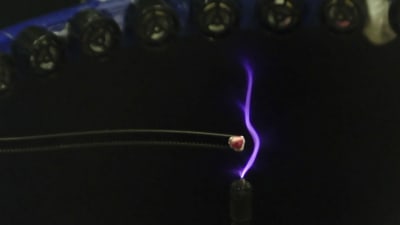
Researchers have uncovered a way of transporting electricity through air by ultrasonic waves. The level of control of electric sparks enables them to be guided around obstacles, or to hit specific spots, even into non-conductive materials.
Blog: RF & Microwave Electronics
Researchers have introduced a new approach, MiFly, that enables a drone to self-localize in indoor, dark, and low-visibility environments.

Podcasts: Defense
Lisa Ellman, Executive Director, Commercial Drone Alliance (CDA), is the guest on this episode of the Aerospace & Defense Technology podcast.

Quiz: Software
In the last decade or so, sports engineering has become very popular across the world. How much do you know about it? Take this quiz to test your knowledge.

White Papers: Manufacturing & Prototyping

Avoid Over-engineering and Design Simpler, More Cost-effective Equipment
Over-engineering is a common source of additional design costs, yet without the benefit of improved performance or quality. Read this white paper for strategies to help...Technology & Society: AR/AI
A climate model that combines generative AI and physics data is 25 times faster than the state of the art.

News: Aerospace
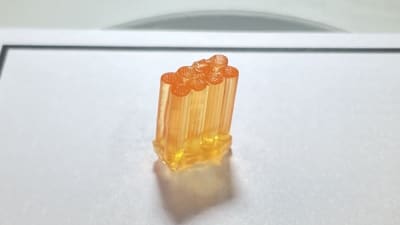
Auxilium Biotechnologies has successfully deployed its 3D bioprinter aboard the ISS. The platform is the first of its kind, making history by printing eight implantable medical devices simultaneously in just two hours.
Tech Talks: AR/AI

Did you know that AI-powered quality control can enhance sustainability in automotive manufacturing? Today’s most advanced vision sensors are transforming quality control in...
Application Briefs: Aerospace
Collier Aerospace’s design and analysis software enabled Swift Engineering to optimize nose cone structure of X-59 aircraft, designed for quieting sonic booms.

Podcasts: Defense
Taylor Sinatra, Chief Operating Officer of AeroDefense, is the guest on this episode of the Aerospace & Defense Technology podcast.

Quiz: Test & Measurement
An oscilloscope’s main purpose is capturing information on electrical signals for debugging, analysis, or characterization. The displayed waveform can then be analyzed for properties such as amplitude, frequency, rise time, and myriad others. How much do you know about oscilloscopes? Find out with this quiz.

Q&A: AR/AI
Qing “Cindy” Chang and her team at the University of Virginia have made a significant advancement in manufacturing technology by developing an AI-driven system that could transform how factories operate. Using Multi-Agent Reinforcement Learning (MARL), the team has created a more efficient way to optimize manufacturing systems, improving both speed and quality while reducing waste.

Blog: Energy
A modular worm robot built by the Organic Robotics Lab and a jellyfish that was a collaboration with the Archer Group, both in Cornell Engineering, demonstrate the benefits of “embodied energy.”

Podcasts: Aerospace
Lukáš Brchl, CEO and Founder of Dronetag is the guest on this episode of the Aerospace & Defense Technology podcast.

Quiz: Energy
Almost everyone has a microwave oven, but do you really understand how they work? How much do you know about microwave heating? Test your knowledge with this quiz.

NASA Spinoff: Aerospace
The first practical fuel cells were developed in preparation for NASA’s Apollo missions because batteries would have weighed too much. The group that produced these fuel cells, now called HyAxiom Inc., sells commercial fuel cells to power buildings and utilities.

Blog: Energy
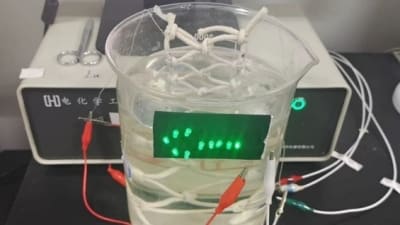
Researchers have developed a yarn-like battery prototype that works when immersed in seawater.
Top Stories
 Blog: Sensors/Data Acquisition

Going for Gold in Winter Olympic Curling
 Blog: Energy

Batteries that Can Withstand the Cold
 Blog: Lighting

A Stretchable OLED that Can Maintain Most of Its Luminescence
 INSIDER: Design

Advancing All-Solid-State Batteries
 Blog: Data Acquisition

 Blog: Materials

Webcasts
 On-Demand Webinars: Defense

Cooling a New Generation of Aerospace and Defense Embedded Computing...
 Upcoming Webinars: Software

Beyond AI-Copy-Paste Engineering: Advanced AI-Integration Success...
 Upcoming Webinars: Automotive

Battery Abuse Testing: Pushing to Failure
 Upcoming Webinars: Power

A FREE Two-Day Event Dedicated to Connected Mobility
 Upcoming Webinars: RF & Microwave Electronics

Choosing the Right N-Port Strategy: Multiport VNAs vs. Switch...
 Upcoming Webinars: AR/AI