Stories
0
2700
30
Special Reports: Aerospace
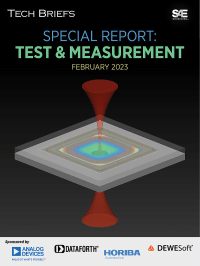
Test & Measurement - February 2023
From the racetrack to the battlefield to deep space missions, test innovations are improving device and system reliability while speeding time to market. Read about the latest advances – including the...Special Reports: Unmanned Systems

Unmanned Systems - February 2023
Unmanned helicopters take off...AI-powered machines tackle dangerous missions...autonomous robots become curious...rogue drones meet their match. Read about these and other advances in air, ground, and...Application Briefs: Lighting
Commercial buildings are responsible for roughly 18 percent of the total energy consumed in this country.

Application Briefs: Automotive
Thorough vehicle dynamics tests provide the data that will inform the final setup of the chassis and the characteristics of the control systems.

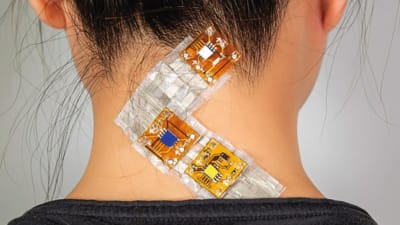
Briefs: Wearables
The next generation of wearable computing technology will be even closer to the wearer than a watch or glasses: It will be affixed to the skin.
Briefs: Robotics, Automation & Control
Research reveals that expertly timed lasers shined at an approaching LIDAR system can create a blind spot in front of the vehicle.

Briefs: Green Design & Manufacturing
To improve efficiency, it is necessary to characterize and reduce flow separation on curved surfaces.
Articles: Connectivity
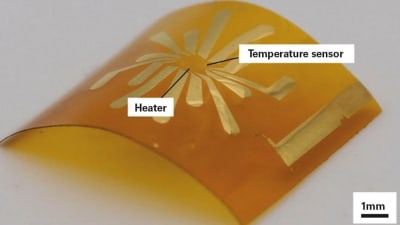
Learn about LoRaWAN networking as a solution for connecting wireless sensors at long distances, while extending battery life.

Briefs: Design
The work shows the real-world viability of their easy-to-use and inexpensive methods of testing.

Products: Sensors/Data Acquisition
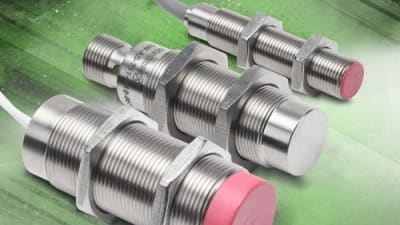
New products for February 2023, including stainless-steel specialty inductive proximity sensors, hermetically sealed position sensors, and more.
Articles: Internet of Things
What the typical consumer needs is a low-cost, high-speed communications mechanism that has few data restrictions and is unmetered.

Videos of the Month: Robotics, Automation & Control
See the videos of the month.

Articles: Automotive
According to Grand View Research, the global additive manufacturing market size is estimated to reach $76.16 billion by 2030, growing at a CAGR of 20.8 percent.

Articles: Test & Measurement
Despite recent supply-chain disruptions, semiconductor buyers are increasingly spoiled for choice when it comes to chip manufacturers.

Briefs: Materials
Inflatable and deployable beams and masts are often made of polymer composites and may be stored for one to two years in space before deployment.

Briefs: Materials
The discovery of a new category of shape-memory materials could open a new range of applications, especially for high-temperature settings.

Briefs: Electronics & Computers
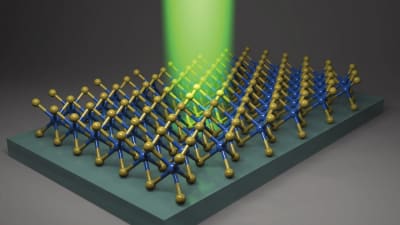
2D materials can be packed together more densely than conventional materials, so they could be used to make devices that run faster and perform better.
Briefs: Materials
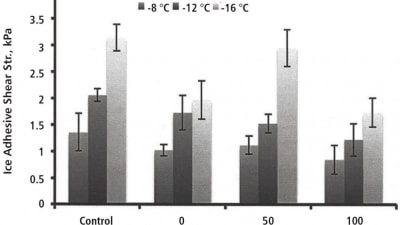
Researchers at NASA Langley are developing polymer coatings that reduce impact ice adhesion strength.
Briefs: Manufacturing & Prototyping
An MIT-developed heat treatment aims to transform the microscopic structure of 3D-printed metals, making the materials stronger and more resilient in extreme thermal environments.

Briefs: Materials
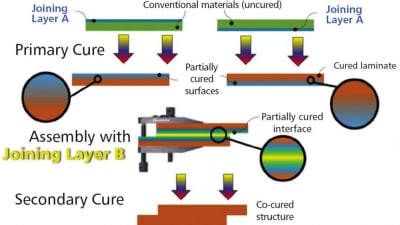
Industrial composite manufacturing is primarily accomplished through three methods: co-cure, co-bond, and secondary bond processes.
Briefs: Manufacturing & Prototyping
Researchers have developed a method of imprinting a hidden magnetic tag, encoded with authentication information, within manufactured hardware during the part fabrication process.

Briefs: Manufacturing & Prototyping
Scientists have created the first completely digitally manufactured plasma sensors — also known as retarding potential analyzers (RPAs) — for orbiting spacecraft.

Briefs: Photonics/Optics
Nearly 20 tons of extremely pure borosilicate glass made by Ohara Corporation in Japan are becoming a honeycomb mirror measuring 27.6 feet across.

Briefs: Imaging
The design may enable miniature zoom lenses for drones, cellphones, or night-vision goggles.
Briefs: Photonics/Optics
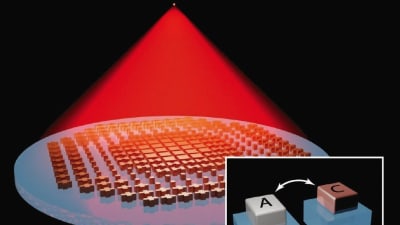
Scientists have developed a new characterization tool that allowed them to gain unique insight into a possible alternative material for solar cells.

Briefs: Data Acquisition
Real-time health monitoring and sensing abilities of robots require soft electronics but a challenge of using such materials lies in their reliability.

Briefs: Sensors/Data Acquisition
Engineers have developed a thin, flexible, stretchy sweat sensor that can show the level of glucose, lactate, sodium, or pH of your sweat — at the press of a finger.

Briefs: Wearables
The sensor can be stretched up to 50 percent with almost the same sensing performance.
Briefs: Medical
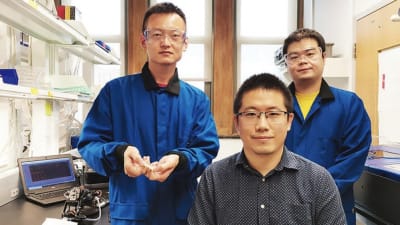
Using a suspended nanowire, a research team has created a tiny sensor that can simultaneously measure electrical and mechanical cellular responses in cardiac tissue — a first.

Top Stories
 Blog: Power

My Opinion: We Need More Power Soon — Is Nuclear the Answer?
 Blog: AR/AI

Aerial Microrobots That Can Match a Bumblebee's Speed
 News: Energy

 Blog: Electronics & Computers

Turning Edible Fungi into Organic Memristors
 Blog: Robotics, Automation & Control

Microscopic Swimming Machines that Can Sense, Respond to Surroundings
 INSIDER: Sensors/Data Acquisition

Webcasts
 Upcoming Webinars: Power

Hydrogen Engines Are Heating Up for Heavy Duty
 Upcoming Webinars: Automotive

Advantages of Smart Power Distribution Unit Design for Automotive...
 Upcoming Webinars: Automotive

Quiet, Please: NVH Improvement Opportunities in the Early Design...
 Upcoming Webinars: Test & Measurement

From Spreadsheets to Insights: Fast Data Analysis Without Complex...
 Upcoming Webinars: Automotive

Battery Abuse Testing: Pushing to Failure
 Upcoming Webinars: Connectivity