Stories
0
780
30
Briefs: Electronics & Computers
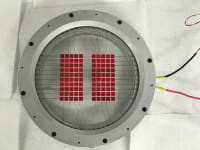
Researchers have designed and synthesized a unique material with controllable capabilities that make it promising for future electronics including cellphones and computers. Read on to learn more.

Briefs: Physical Sciences
A joint research effort led by the University of Illinois Urbana-Champaign has shown how coal can play a vital role in next-generation electronic devices. Read on to learn more about it.

Briefs: Nanotechnology
Magnets generate invisible fields that attract certain materials. Far more important to our everyday lives, magnets also can store data in computers. Exploiting the direction of the magnetic field, microscopic bar magnets each can store one bit of memory as a zero or a one — the language of computers.

Briefs: Semiconductors & ICs
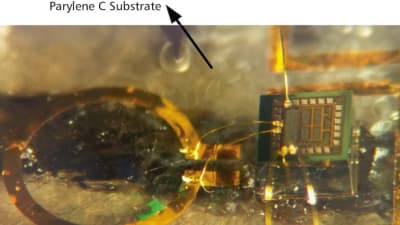
An invention that uses microchip technology in implantable devices and other wearable products such as smart watches can be used to improve biomedical devices including those used to monitor people with glaucoma and heart disease. Read on to learn more.
Briefs: Software
Southwest Research Institute is working to expand software normally used to model electrolytes and predict corrosion and turn it into a tool that can help determine whether ice-covered worlds have the right conditions for microbial life. Read on to learn more.

Briefs: Software
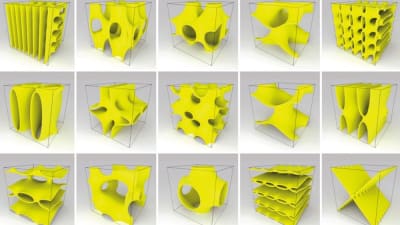
Researchers from MIT and the Institute of Science and Technology Austria have developed a computational technique that makes it easier to quickly design a metamaterial cell from smaller building blocks like interconnected beams or thin plates, and then evaluate the resulting metamaterial’s properties. Read on to learn more.
Briefs: Software
Computer scientists have invented a highly effective, yet incredibly simple, algorithm to decide which items to toss from a web cache to make room for new ones. Known as SIEVE, the new open-source algorithm holds the potential to transform the management of web traffic on a large scale. Read on to learn more.

Articles: Propulsion
The race is on for leadership in cislunar space, considered a gateway to the future of space exploration. Yet operating in this domain introduces unique challenges for propulsion systems. Read on to learn more about the progress being made on the matter.

Articles: Design
The use of AI in the design process is seeing strong adoption from engineers of all disciplines and management levels. It can be proven to deliver a faster time to market and an overall improvement in design quality. Read on to learn more about it.

Articles: Sensors/Data Acquisition
Thanks to Internet of Things technologies, there are many ways to make previously unconnected things talk. Processes, conditions, equipment, or machines have much to say about themselves and help keep the industry applications they’re integrally involved in running smoothly.

Products: Sensors/Data Acquisition
See the new products, including Teledyne FLIR's radiometric models of its high-performance Boson®+ thermal and Hadron™ 640R+ dual thermal-visible camera modules; Insight SIP's ISP2554-HM module — a dynamic IOT node, with support for Bluetooth Low Energy, Thread, and Zigbee radios; Bosch Sensortec's BMV080 particulate matter sensor; dSPACE's MicroLabBox II, a very flexible entry-level system for closed-loop tests at the controller level; and more.
Articles: Connectivity
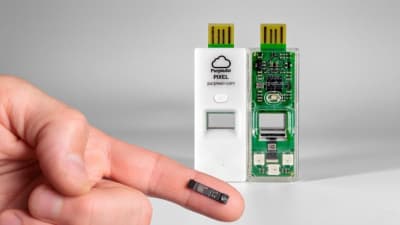
The National Institute of Standards and Technology is working to provide best practice guidelines to help manufacturers use wireless systems. Read on to learn more about it.

Briefs: Sensors/Data Acquisition
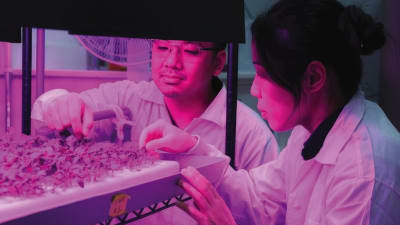
Researchers have developed a groundbreaking near-infrared fluorescent nanosensor capable of simultaneously detecting and differentiating between iron forms — Fe(II) and Fe(III) — in living plants. Read on to learn more about it.
Briefs: Sensors/Data Acquisition
Residents of the Manu’a Islands in American Samoa were feeling the earth shake, raising concerns of an imminent volcanic eruption or tsunami. Scientists from the U.S. Geological Survey used machine learning and a technique called template matching on shaking data recorded from a single seismic sensor located 250 kilometers away to locate the source of the shaking. Read on to learn more.

Briefs: Materials
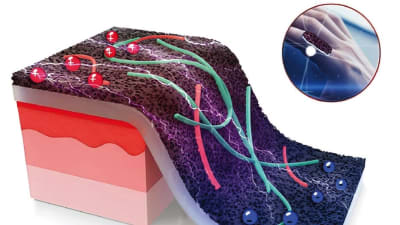
A major challenge in self-powered wearable sensors for health care monitoring is distinguishing different signals when they occur at the same time. Researchers addressed this issue by uncovering a new property of a sensor material, enabling the team to develop a new type of flexible sensor that can accurately measure both temperature and physical strain simultaneously but separately to more precisely pinpoint various signals. Read on to learn more.
Application Briefs: Information Technology
While the rapid advancement of IIoT applications is exciting, it also come with its challenges, especially from a security perspective. A recent study found that 57 percent of all IoT devices are vulnerable to medium- or high-severity threats and that two in five chief information security officers struggle to gain visibility into — and understand — their IoT deployments. Read on to learn more.

Application Briefs: RF & Microwave Electronics
The MEMS industry can’t match the rapid innovation cycles typical of the semiconductor industry — it’s been more than a decade since we’ve seen a major leap in MEMS manufacturing processes. However, Omnitron is confident that they can rapidly improve the approach to manufacturing MEMS. Read on to learn more.

Articles: Software
Machine vision is a cornerstone of modern manufacturing quality control, ensuring product consistency and reliability. However, many facilities face a dilemma: while their existing vision systems remain mechanically sound, their analytical capabilities lag behind evolving manufacturing requirements. Read on to learn the solution.

Products: Photonics/Optics
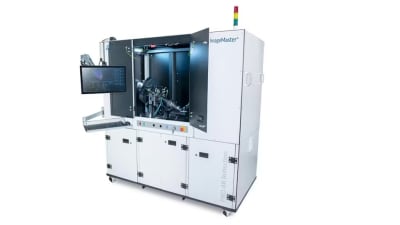
See the new products, including TRIOPTICS' ImageMaster® PRO AR Reflection waveguide testing solution; TOP-TICA’s Clock Laser System; Aerotech Inc.'s HexGen® HEX150-125HL Miniature Hexapod, a six degree-of-freedom precision positioning system; Teledyne e2v's Optimom™ 5D turnkey imaging module; Coherent Corp.'s set of pluggable optical transceivers optimized for use in data centers that incorporate optical circuit switches; and more.
Articles: Electronics & Computers
AI-driven computing is at a turning point. The old paradigm — squeezing ever-smaller transistors onto silicon chips — is becoming infeasible. Just increasing the chip size and with it the power consumption is unsustainable. The future lies in photonic processors that operate without electrical resistance, minimize heat dissipation, and deliver unmatched computational speed and efficiency. Read on to learn more.
Briefs: Medical
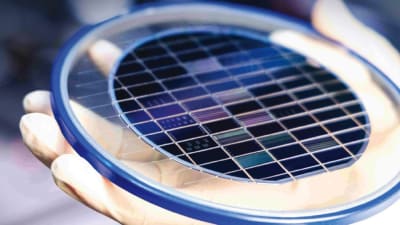
New technology developed by researchers at the University of Houston could revolutionize medical imaging and lead to faster, more precise and more cost-effective alternatives to traditional diagnostic methods. Read on to learn more.
Briefs: RF & Microwave Electronics
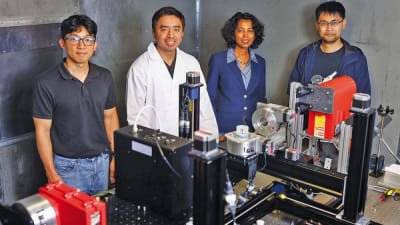
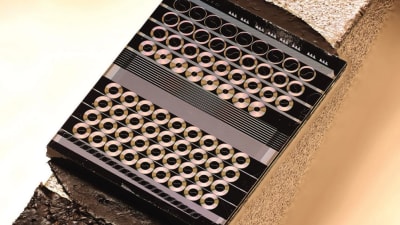
Researchers have developed a photonic chip-based traveling wave parametric amplifier that achieves ultra-broadband signal amplification in an unprecedentedly compact form. Read on to learn more about it.
Briefs: Photonics/Optics
Augmented reality has become a hot topic in the entertainment, fashion, and makeup industries. Though a few different technologies exist in these fields, dynamic facial projection mapping is among the most sophisticated and visually stunning ones. Read on to learn more about it.

Briefs: RF & Microwave Electronics
Artificial intelligence systems promise transformative advancements, yet their growth has been limited by energy inefficiencies and bottlenecks in data transfer. Researchers at Columbia Engineering have unveiled a groundbreaking solution: a 3D photonic-electronic platform that achieves unprecedented energy efficiency and bandwidth density, paving the way for next-generation AI hardware. Read on to learn more.
Briefs: Medical
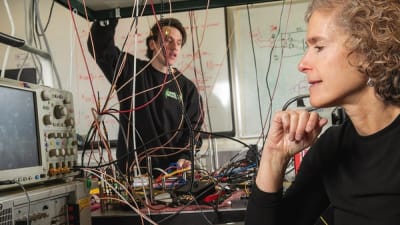
Metabolic imaging is a noninvasive method that enables clinicians and scientists to study living cells using laser light, which can help them assess disease progression and treatment responses. But light scatters when it shines into biological tissue, limiting how deeply it can penetrate and hampering the resolution of captured images. Now, MIT researchers have developed a new technique that more than doubles the usual depth limit of metabolic imaging. Read on to learn more.

Application Briefs: Photonics/Optics
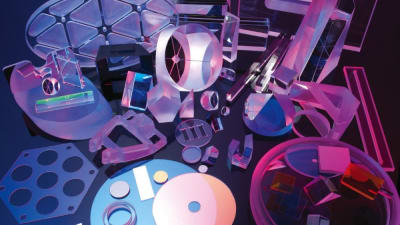
Machining metal has its challenges as many shops will attest, but machining glass is another matter – one that Dan Bukaty Jr., President of Precision Glass & Optics (PG&O) is well schooled in. Mr. Bukaty and his 35-person shop manufacture high-end precision glass optics for customers such as IMAX, Intuitive Surgical, Boeing and NASA, to name a few. Read on to learn about PG&O's use of a vision system.
Application Briefs: Lighting
Exploiting the “spatial” degree of freedom of light can mean many things. Read on to learn what they are and what the process can lead to.

Blog: Materials
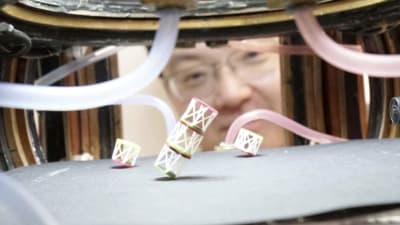
Engineers have created a type of material that can expand, assume new shapes, move, and follow electromagnetic commands like a remotely controlled robot even though it lacks any motor or internal gears.
Top Stories
 Blog: Power

My Opinion: We Need More Power Soon — Is Nuclear the Answer?
 Blog: AR/AI

Aerial Microrobots That Can Match a Bumblebee's Speed
 News: Energy

 Blog: Electronics & Computers

Turning Edible Fungi into Organic Memristors
 Blog: Robotics, Automation & Control

Microscopic Swimming Machines that Can Sense, Respond to Surroundings
 INSIDER: Sensors/Data Acquisition

Webcasts
 Upcoming Webinars: Automotive

Hydrogen Engines Are Heating Up for Heavy Duty
 Upcoming Webinars: Transportation

Advantages of Smart Power Distribution Unit Design for Automotive...
 Upcoming Webinars: Transportation

Quiet, Please: NVH Improvement Opportunities in the Early Design...
 Upcoming Webinars: Test & Measurement

From Spreadsheets to Insights: Fast Data Analysis Without Complex...
 Upcoming Webinars: Energy

Battery Abuse Testing: Pushing to Failure
 Upcoming Webinars: Internet of Things