Computed-tomography imaging spectrometers (CTISs) that contain only reflective optics (instead of at least some refractive optics) have been proposed. As is the case for other types of optical instruments, the change to all-reflective designs for CTISs would eliminate the chromatic aberration exhibited by refractive optics and would relieve designers of the task of finding optical materials with adequate transmissivity over wavelength ranges of interest. As a result, it would be easier to scale CTIS designs to different wavelength ranges from ultraviolet through long-wavelength infrared.

The CTIS concept and transmissive implementation were described previously in "Improvements in Computed-Tomography Imaging Spectrometry" (NPO-20561) NASA Tech Briefs, Vol. 24, No. 12 (December 2000), page 38. To recapitulate: A CTIS offers capabilities for imaging a scene with spatial, spectral, and temporal resolution. In the case of a CTIS that contains refractive optics, the spectral disperser is a two-dimensional diffraction grating made of a transparent material and positioned between two relay lenses in a video imaging system. In the absence of the grating, the system would produce ordinary images of the scene in its field of view. In the presence of the grating, the image on the focal plane contains both spectral and spatial information because the multiple diffraction orders of the grating give rise to multiple, spectrally dispersed images of the scene. By use of algorithms adapted from computed tomography, the image on the focal plane can be processed into an "image cube" - a three-dimensional collection of data on the image intensity as a function of the two spatial dimensions (x and y) in the scene and of wavelength (l). Thus, both spectrally and spatially resolved information on the scene at a given instant of time can be obtained, without scanning, from a single video snapshot.
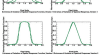
The figure shows the basic optical layout of one of many possible all-reflective CTIS designs. This design features the Offner configuration, which provides for relay of images by two concentric spherical mirrors. Traditional slit-type imaging spectrometers (not CTISs) in the Offner configuration have become popular in the past several years because they can be very compact and exhibit excellent imaging. In order to implement a CTIS in this Offner configuration, it will be necessary to fabricate the two-dimensional diffraction grating on the convex mirror surface. Heretofore, this would have been a formidable or even an impossible task; however, it is now feasible, thanks to recent advances in analog-relief electron-beam lithography on curved surfaces.
This work was done by Daniel Wilson, Paul D. Maker, Richard Muller, and Pantazis Mouroulis of Caltech for NASA's Jet Propulsion Laboratory. For further information, access the Technical Support Package (TSP) free on-line at www.techbriefs.com/tsp under the Physical Sciences category.
This invention is owned by NASA, and a patent application has been filed. Inquiries concerning nonexclusive or exclusive license for its commercial development should be addressed to
the Patent Counsel
NASA Management Office-JPL; (818) 354-7770.
Refer to NPO-20836.
This Brief includes a Technical Support Package (TSP).
All-Reflective Computed-Tomography Imaging Spectometers
(reference NPO-20836) is currently available for download from the TSP library.
Don't have an account?
Overview
The document discusses the development of all-reflective computed-tomography imaging spectrometers (CTISs) designed by a team from NASA’s Jet Propulsion Laboratory (JPL), including Daniel Wilson, Paul D. Maker, Richard Muller, and Pantazis Mouroulis. The focus is on a specific design utilizing the Offner configuration, which employs two concentric spherical mirrors to relay images. This innovative approach allows for the fabrication of a two-dimensional diffraction grating on the convex mirror surface, a task made feasible by recent advances in analog-relief electron-beam lithography on curved surfaces.
The all-reflective design of CTISs offers significant advantages over traditional refractive optics. By eliminating chromatic aberration, these instruments can operate effectively across a wide range of wavelengths, from ultraviolet to long-wavelength infrared. This flexibility simplifies the scaling of CTIS designs for various applications, enhancing their utility in imaging transient scenes.
CTISs are capable of capturing multispectral images with high spatial, spectral, and temporal resolution. The system operates by using a two-dimensional diffraction grating to disperse light, allowing for the simultaneous capture of multiple spectrally dispersed images. This results in an "image cube," which is a three-dimensional dataset representing image intensity across two spatial dimensions and wavelength. The ability to obtain detailed spectral and spatial information from a single video snapshot without the need for scanning is a key feature of this technology.
The document also notes that the invention is patented by NASA, and inquiries regarding commercial development can be directed to the Patent Counsel at NASA Management Office–JPL. The work is part of ongoing efforts to advance imaging technologies for various scientific and practical applications.
In summary, the document outlines a significant advancement in imaging technology through the development of all-reflective CTISs, highlighting their potential to improve imaging capabilities across a broad spectrum of wavelengths while addressing challenges associated with traditional optical designs. This innovation represents a promising step forward in the field of imaging spectrometry, with implications for both research and commercial applications.