

Variable-thermal-conduction devices containing shape-memory-alloy (SMA) actuators have been proposed for use in situations in which it is desired to switch on (or increase) thermal conduction when temperatures rise above specified values and to switch off (or decrease) thermal conduction when temperatures fall below those values. The proposed SMA thermal-conduction switches could be used, for example, to connect equipment to heat sinks to prevent overheating, and to disconnect the equipment from heat sinks to help maintain required operating temperatures when ambient temperatures become too low. In comparison with variable-conductance heat pipes and with thermostatic mechanisms that include such components as bimetallic strips, springs, linkages, and/or louvers, the proposed SMA thermal-conduction switches would be simple, cheap, and reliable.
The basic design and principle of operation of an SMA thermal-conduction switch is derived from an application in which thermal conduction from hot components to a cooling radiator takes place through the contact area of bolted joints. The thermal conductance depends on the preload in each joint. One could construct an SMA thermal-conduction switch by simply mounting an appropriately designed SMA washer under the bolthead. As the temperature falls below (or rises above) the SMA transition temperature, the SMA washer would contract (or expand) axially by an amount sufficient to unload (or load) the bolt, thereby shutting off (or turning on) most of the thermal conduction through the joint contact area. SMA washers with various transition temperatures can be made to suit specific applications.
This work was done by Virginia Ford and Richard Parks of Caltech for NASA's Jet Propulsion Laboratory.
This Brief includes a Technical Support Package (TSP).
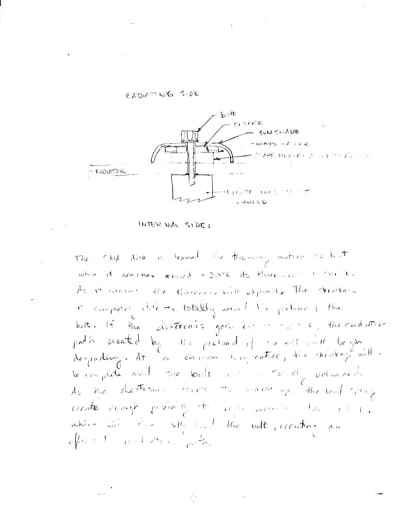
Shape-memory-alloy thermal-conduction switches
(reference NPO20437) is currently available for download from the TSP library.
Don't have an account?
Overview
The document outlines a novel invention related to thermal management technology, specifically focusing on a shape-memory alloy (SMA) thermal conduction switch developed by NASA's Jet Propulsion Laboratory (JPL). This invention aims to address the challenges of overheating electronic components, particularly in environments where temperature fluctuations can significantly impact performance.
The core concept of the invention revolves around the use of SMA washers that adjust thermal conduction based on temperature changes. When the temperature drops below a certain threshold, the SMA material undergoes a phase change, effectively reducing or shutting off thermal conduction. This mechanism is designed to protect sensitive electronic components from overheating by controlling the heat transfer through bolts that preload the SMA washers. The invention is particularly relevant for applications in aerospace and other high-tech industries where efficient thermal management is critical.
The document also discusses the development process of the invention, including its conception, testing, and potential commercialization. It highlights the collaboration among inventors and the historical context of the technology, noting that the invention is at a prototype stage and is not yet ready for commercialization. However, it is positioned as a promising solution that could significantly improve thermal management systems compared to existing methods, which are often complex and less efficient.
Additionally, the document identifies potential markets for the invention, including automotive and semiconductor industries, and mentions competitors in the field. It emphasizes the advantages of the SMA thermal switch over traditional methods, such as its simplicity and effectiveness in regulating heat transfer without the need for complex mechanical systems.
The report also touches on the patent rights status, indicating that a written description of the invention has not yet been published, and there are no current sales or public disclosures. The inventors express interest in disseminating their findings through NASA Tech Briefs, which could facilitate further interest from industry representatives.
In summary, this document presents a promising innovation in thermal management technology, leveraging the unique properties of shape-memory alloys to create a more efficient and reliable solution for controlling thermal conduction in electronic systems.











