

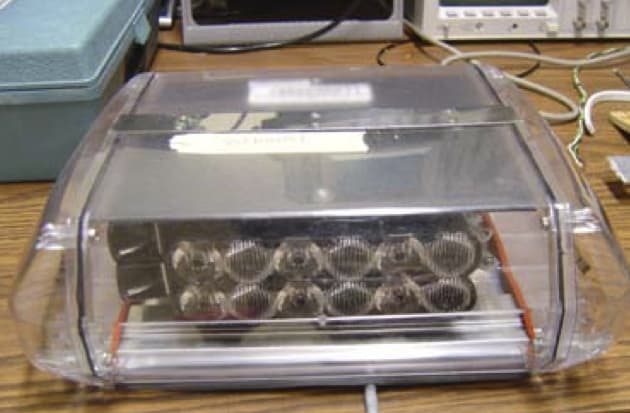
LEDs are well known for their long life and low current requirements, resulting in their use in a variety of applications including emergency vehicle lighting.
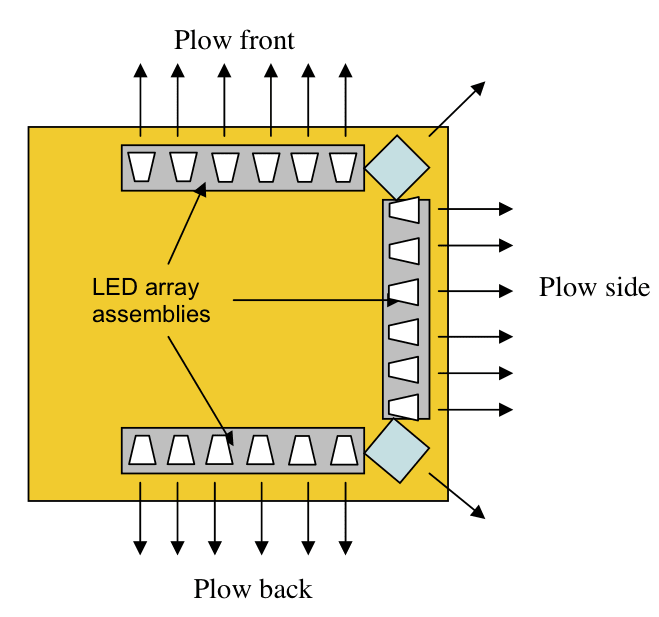
The scope of this project is to review the strobe type lighting currently used on Mn/DOT snow plows and LED replacements for that lighting. Included in the study is laboratory and field testing of the different light types in order to correlate objective and subjective test results. Lab testing included detailed optical measurements of angularity, brightness, and color for the standard and LED strobes. Field tests included visibility testing of different lights under typical driving conditions. Lights tested in this study were supplied by Whelen Engineering, Public Safety Equipment (PSE), and Federal Signal. The standard plow lighting currently used on Mn/DOT snow plows is a high-intensity discharge (HID) strobe made by Whelen Engineering.
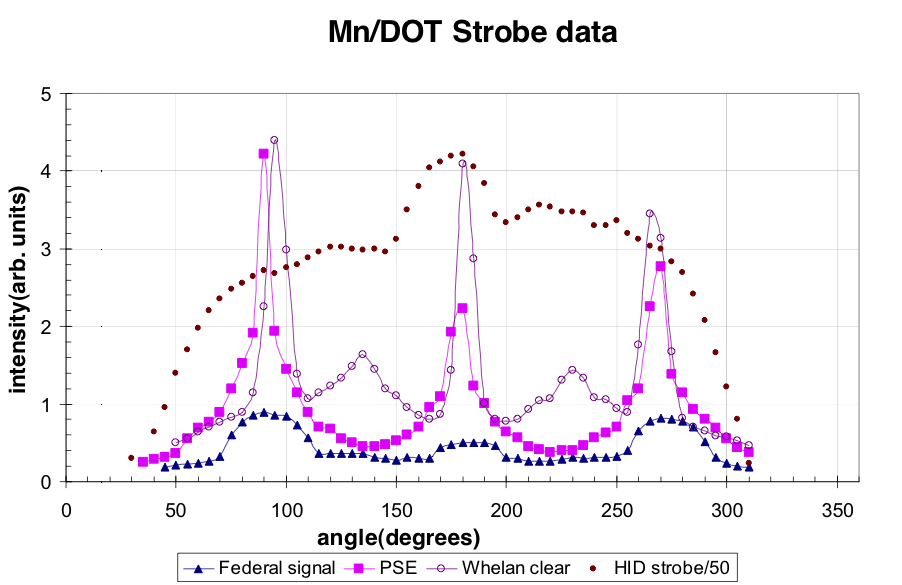
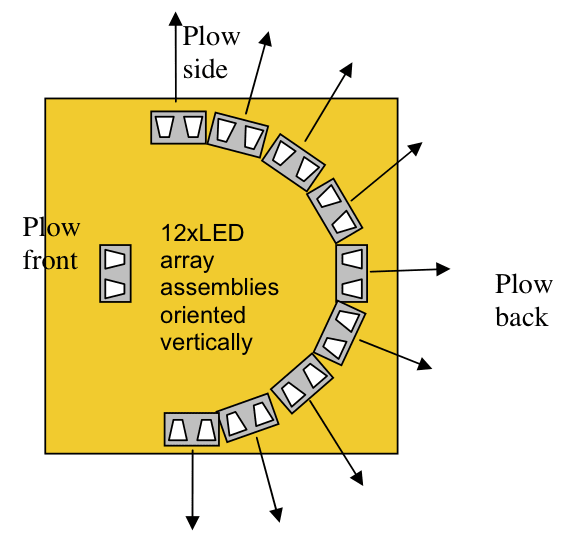
This work was done by Tim Vogt and Kenneth Miller of St. Cloud State University .
This Brief includes a Technical Support Package (TSP).
LED Lighting for Maintenance and Construction Vehicles
(reference GDM0007) is currently available for download from the TSP library.
Don't have an account?
Overview
The document titled "LED Lighting for Snow Plows and Related Maintenance and Construction Vehicles" is a technical report that investigates the effectiveness of LED lights as replacements for traditional strobe lights used on snow plows. Authored by Tim Vogt and Kenneth Miller from St. Cloud State University, the report was published in August 2008 and is designated as MN/RC 2008-29.
The primary focus of the study is to evaluate the visibility and performance of LED lights under various environmental conditions, particularly during winter operations when snow and fog can significantly impair visibility. The analysis includes field tests and intensity measurements to determine how well these LED lights can be seen compared to conventional strobe lights.
Key findings from the report suggest that LED-based lights can be configured to maintain visibility even in challenging conditions such as snow and fog. This is particularly important for snow plow operators who rely on effective warning lights to ensure safety on the roads. The report emphasizes that while the study did not establish a direct correlation between light intensity and visibility, the LED lights demonstrated comparable visibility to traditional strobe lights when viewed from specific angles.
The report also highlights the importance of ambient lighting conditions, noting that LED lights are better suited for environments with reduced ambient light, such as during dawn and dusk. The authors recommend conducting more detailed measurements under varied conditions to further understand the effects of ambient lighting on the observability of warning lights.
In addition to the findings, the report includes a summary of the strobe lights tested and references relevant literature that supports the research. The overall conclusion of the study is that LED lights present a viable and effective alternative to traditional lighting solutions for snow plows and related vehicles, enhancing safety and operational efficiency during winter maintenance activities.
This document serves as a valuable resource for transportation agencies and vehicle manufacturers looking to improve the visibility and effectiveness of warning lights on snow plows, ultimately contributing to safer road conditions during adverse weather.











