

-1
1170
30
Briefs: RF & Microwave Electronics
A novel nanostructure produces uniquely shaped light.
Briefs: Imaging
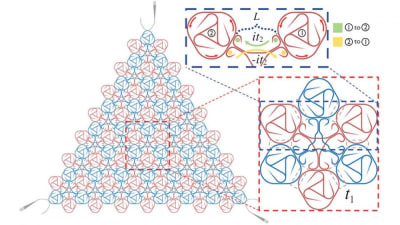
A wavelength of visible light is about 1,000 times larger than an electron, so the way the two affect each other is limited by that disparity. Now, researchers have come up with a way to make...

Briefs: Photonics/Optics
3D nanometer-scale metamaterial structures hold promise for advanced optical isolators.

Products: Manufacturing & Prototyping
See the new products on the market, including Clean-in-Place Utilities and Automated Reporting Analytics software, radar-level sensors, power ultrasonic transducers, and more.

Products: Design
See the product of the month: InnoPhase IoT, Inc.'s Talaria TWOTM Ultra-low power (ULP) Wi-Fi optimized market-ready solution for cloud-connected IP video IoT devices.

Q&A: Sensors/Data Acquisition
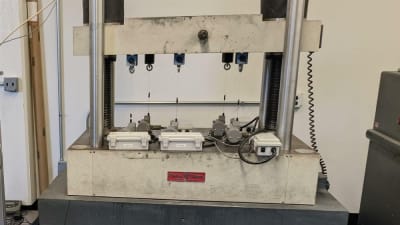
A solar-powered wireless sensor system developed by a Drexel University team can continuously monitor bridge deformation and could be used to alert authorities if the bridge performance deteriorates significantly.
Application Briefs: Robotics, Automation & Control
Combining an industrial robot, computerized vision system, AI, and machine learning, Skyline Robotics has succeeded in automating window washing for the world’s skyscrapers.

Application Briefs: Mechanical & Fluid Systems
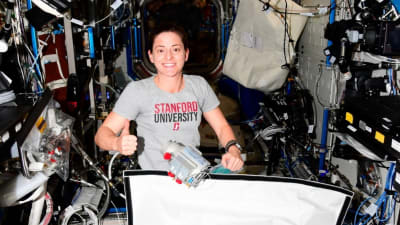
Leveraging a high-speed permanent magnet motor, an environmental control system aboard the ISS represents a step change toward electrification and optimization.
NASA Spinoff: Aerospace
Squishy Robotics’ tensegrity sensor robots gather data at the scenes of fires, crashes, explosions, and other disasters to help first responders determine their approach to a disaster scene.

5 Ws: Test & Measurement
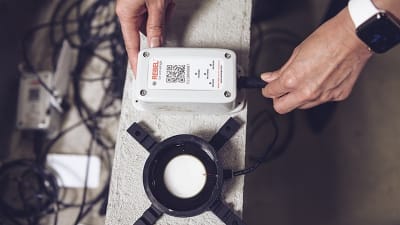
A new technology allows concrete to “talk,” decreases construction time and how often concrete pavement needs repairs while also improving the road’s sustainability and cutting its carbon footprint.
Articles: Aerospace
Since the dawn of the space race, the idea of sending humans to Mars has been the subject of aerospace engineering and scientific studies. From the successful flyby of NASA’s Mariner 4 in 1964 to the Perseverance rover in 2020, the missions to Mars have come a long way.

Articles: Manned Systems
As NASA builds a blueprint for exploration throughout the solar system, the agency is doing it with staying power in mind. The agency's new analysis process is designed to align its Moon to Mars exploration strategy and codify the supporting architecture.

Articles: Manned Systems
University of Arizona engineers have developed a system that allows autonomous vehicles to scout out underground habitats for astronauts. Their robust platform could allow robotic explorers to operate underground or even submerged in liquid environments.

Articles: Aerospace
Researchers at the Exolith Lab, University of Central Florida, are simulating realistic materials to be used for testing a range of technologies for Martian surface interactions and operations.

Articles: Unmanned Systems
One of the most demanding needs for dexterous and sustained subtle control inputs during EVA could be the operation of drones as robotic assistants. The Astronaut Smart Glove amplifies the effects of subtle finger, hand, and wrist gestures while wearing existing rigid pressurized spacesuit gloves.

Articles: Manned Systems
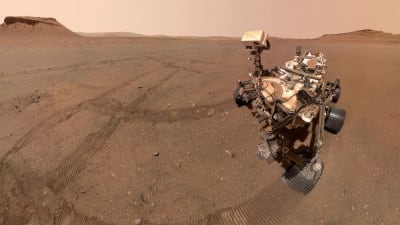
OPTIMISM, the full-scale engineering model of Perseverance, on Earth is helping NASA assess the risk of potential driving hazards on the surface of the Red Planet.
Articles: Unmanned Systems
CHAPEA is a series of analog missions that will simulate year-long stays on the surface of Mars. Insights from these missions will help NASA make informed decisions to design and plan for a successful human mission to Mars.

Articles: Energy
The battery industry is forecasted to grow tenfold by the end of the decade. This growth is driven by increasing demand for Li-ion cell batteries, predominantly for electrified transportation and energy storage.

Articles: Energy
Examining an EV battery degassing automated cell that is widely installed across the industry exemplifies many design features.

Articles: Electronics & Computers
A report from consultants at McKinsey & Co. strikes an optimistic tone that major reductions in carbon emissions from the electric vehicle battery supply chain can be attained in the next five to 10 years.

Briefs: Energy
Researchers have employed a novel technique to investigate and modulate electric double layer dynamics at the solid/solid electrolyte interface.

Briefs: Materials
Researchers at Texas A&M University have discovered a 1,000 percent difference in the storage capacity of metal-free, water-based battery electrodes.

Briefs: Energy
TU Wien has developed an oxygen-ion battery that has some important advantages. Although it does not allow for quite as high energy densities as the Li-ion battery, its storage capacity does not decrease irrevocably over time.

Briefs: Energy
Researchers at Lawrence Berkeley National Laboratory (Berkeley Lab) have developed a conductive polymer coating – called HOS-PFM – that could enable longer lasting, more powerful lithium-ion batteries for electric vehicles.

Products: Energy
See the new products, including a battery management system, a battery simulator, a battery charger, and much more.
Articles: Materials
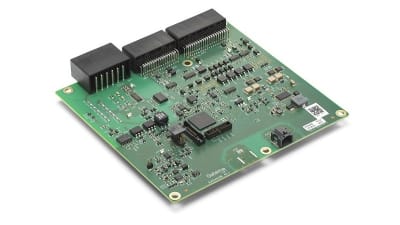
Whether you call them packs, boxes, or trays, the structures that envelop and protect EV battery cells and their supporting electrical and thermal-management hardware are among the industry's top subsystem priorities.
Application Briefs: Manufacturing & Prototyping
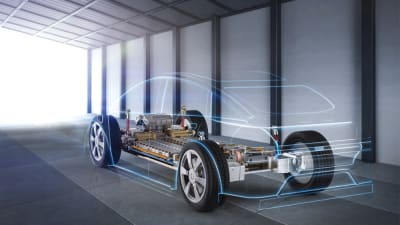
Products for nautical applications face an unusual set of design challenges. The corrosiveness of salt water can cause premature degradation, and the impact of fast-moving vessels bouncing up against forceful ocean waves can also damage equipment.
Application Briefs: Robotics, Automation & Control
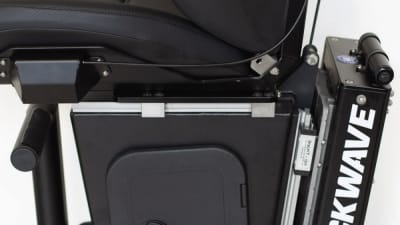
“AurOrA” is a small autonomous vehicle, which in the future will move independently around fruit orchards and detect full fruit boxes, pick them up, and take them to a defined unloading point.

Briefs: Imaging
Inspired by the human finger, MIT researchers have developed a robotic hand that uses high-resolution touch sensing to accurately identify an object after grasping it just one time.
Top Stories
 Blog: Lighting

A Stretchable OLED that Can Maintain Most of Its Luminescence
 Blog: Energy

Batteries that Can Withstand the Cold
 INSIDER: Energy

Advancing All-Solid-State Batteries
 Quiz: Energy

 Blog: Physical Sciences

 Blog: Materials

Webcasts
 Upcoming Webinars: Test & Measurement

From Spreadsheets to Insights: Fast Data Analysis Without Complex...
 Upcoming Webinars: Electronics & Computers

Cooling a New Generation of Aerospace and Defense Embedded...
 Upcoming Webinars: Test & Measurement

Beyond AI-Copy-Paste Engineering: Advanced AI-Integration Success...
 Upcoming Webinars: Automotive

Battery Abuse Testing: Pushing to Failure
 Upcoming Webinars: Internet of Things

A FREE Two-Day Event Dedicated to Connected Mobility
 Upcoming Webinars: Test & Measurement

Choosing the Right N-Port Strategy: Multiport VNAs vs. Switch...