

-1
0
30
NASA Spinoff: Aerospace
An innovative 3D printing process that advanced NASA’s approach to outfitting a lunar habitat is making buildings on Earth beautiful, efficient, and strong.

5 Ws: Green Design & Manufacturing
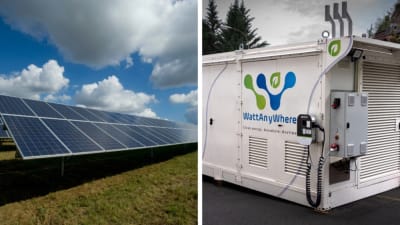
WattAnyWhere’s pollutant-free fuel cell generator converts renewable ethanol into clean electricity, offering businesses and communities a sustainable alternative to traditional grid-based power.
Articles: Aerospace
Originally scheduled for September 2025, Artemis II, NASA’s first crewed mission in the Artemis program is now targeted no later than April 2026 for launch. Taking the crew around the Moon is going to be the agency’s first step toward sustained lunar presence. Read on to learn more about it.

Articles: AR/AI
By leveraging rich simulation data to train AI models, which can then be used to quickly explore a design space and guide further simulations, the existing product design process can be enhanced to become faster and more flexible. Read on to learn more.

Briefs: Software
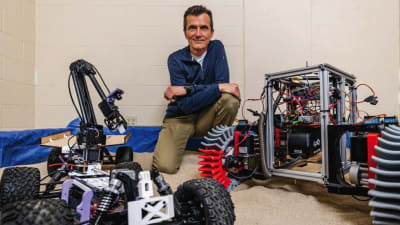
Using computer simulations, University of Wisconsin-Madison mechanical engineers have uncovered a flaw in how rovers are tested on Earth. That error leads to overly optimistic conclusions about how rovers will behave once they’re deployed on extraterrestrial missions. Read on to learn more.
Briefs: Aerospace
Batteries are nearing their limits in terms of how much power they can store for a given weight. That’s a serious obstacle for energy innovation and the search for new ways to power airplanes, trains, and ships. Now, researchers at MIT and elsewhere have come up with a solution that could help electrify these transportation systems. Read on to learn more.
Briefs: Manned Systems
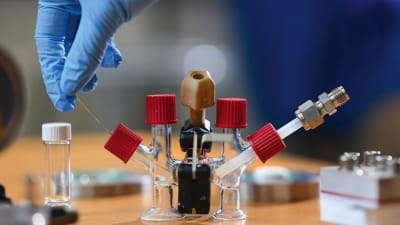
A team of scientists and researchers has found a way to make oxygen production lighter, easier, and more sustainable — using magnetism. Read on to learn more.

Briefs: Communications
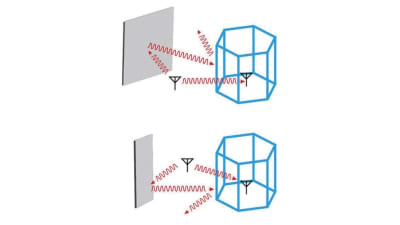
A research team has designed a passive metasurface-based filtering system that breaks free from LTI constraints through an innovative time-varying interlocking mechanism. The design incorporates metasurface panels with internally coupled circuit elements, including metal-oxide-semiconductor field-effect transistors (MOSFETs). Read on to learn more.
Briefs: Software
The technique promises immediate impact not only on high-capacity optical communications but also on real-time endoscopic imaging, vibration-tolerant fiber sensors, and any application that demands fast, energyefficient phase retrieval. Read on to learn more.
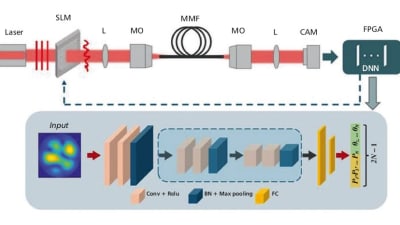
Briefs: Communications
A new Microelectromechanical system (MEMS) grating modulator has been developed, offering significant advancements in optical efficiency and scalability for communication systems. By integrating a tunable sinusoidal grating with broadside-constrained continuous ribbons, a large-scale aperture of 30 × 30 mm is achieved and supports high-speed modulation up to 250 kHz. Read on to learn more.
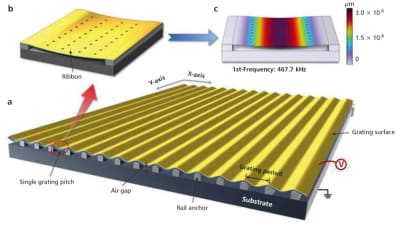
Briefs: Electronics & Computers
Engineers at the University of California San Diego have developed a new cooling technology that could significantly improve the energy efficiency of data centers and high-powered electronics. The technology features a specially engineered fiber membrane that passively removes heat through evaporation. It offers a promising alternative to traditional cooling systems like fans, heat sinks and liquid pumps. Read on to learn more.
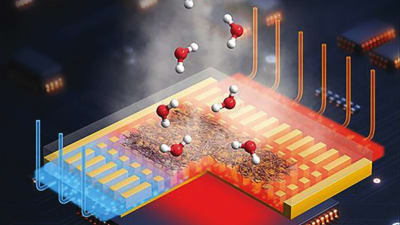
Briefs: Energy
In a new collaboration, the Argonne National Laboratory and National Energy Technology Laboratory are leveraging their expertise in RDEs to develop advanced computational fluid dynamics tools that can give scientists a deeper understanding of the combustion process to unlock more of the engine's potential. Read on to learn more.
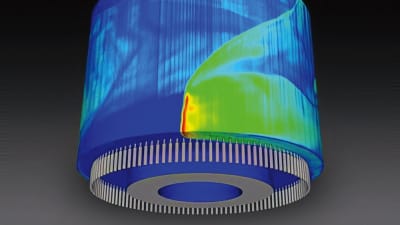
Briefs: Power
Researchers at McGill University have made a major breakthrough in advancing all-solid-state lithium batteries, a promising next-generation technology for electric vehicle (EV) batteries. By addressing a long-standing issue with battery performance, this innovation could pave the way for safer, longer-lasting EVs. Read on to learn more.

Briefs: Software
Imagine simply telling your vehicle, “I’m in a hurry,” and it automatically takes you on the most efficient route to where you need to be. Purdue University engineers have found that an autonomous vehicle (AV) can do this with the help of ChatGPT or other chatbots made possible by artificial intelligence algorithms called large language models. Read on to learn more.

Briefs: Software
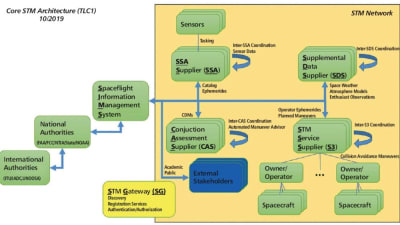
Space is becoming increasingly congested due to rising numbers of on-orbit satellites and debris objects. Uncontrolled growth will severely affect future space operations. NASA Ames has developed a novel patent-pending technology known as Space Traffic Management (STM) which provides a robust framework for on-orbit coordination of activities to enhance the safety, stability, and sustainability of operations in the space environment. Read on to learn more.
Briefs: Software
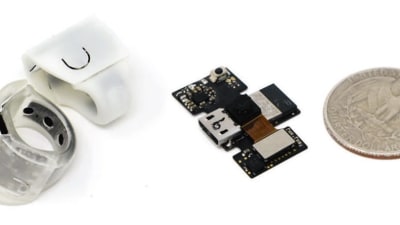
University of Washington researchers have developed IRIS, a smart ring that allows users to control smart devices by aiming the ring’s small camera at the device and clicking a built-in button. The prototype Bluetooth ring sends an image of the selected device to the user’s phone, which controls the device. Read on to learn more.
Application Briefs: Power
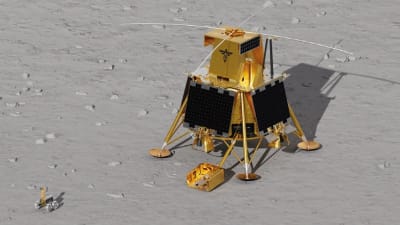
Firefly Aerospace recently announced a new commercial payload agreement with Volta Space Technologies to host a wireless power receiver on Firefly’s Blue Ghost Mission 2 lander on the far side of the Moon. The payload will serve as a technology demonstration for Volta’s planned lunar power network, called LightGrid. Read on to learn more.
Products: Imaging
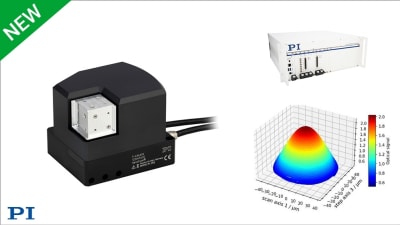
See what's new on the market, including Aerotech's PICAlignTM architecture, a new active alignment solution designed to overcome the manufacturing challenges of high-volume Co-Packaged Optics (CPO) production; PI's 6-axis piezo alignment platform: the P-616.65S Nano-Cube® 6-DOF piezo-flexure nano positioning system; a high-impedance miniaturized ferrite-core wire wound inductor from Coilcraft; and more.
Articles: Photonics/Optics
See the products of tomorrow, including a bio-mimetic, light-powered soft lens that mimics the human eye’s ability to refocus and adjust to varying light conditions; a new material for insulating windows that could improve the energy efficiency of buildings worldwide; and more.

Products: Electronics & Computers
See the product of the month: Dart Controls' EZ VFD® family of variable frequency drives for three phase, ¼ to 2 HP motors.

Products: Software
Last December, Tech Briefs readers were asked to select one product from our 2025 Products of the Month to be named Readers’ Choice Product of the Year. Thanks to all of our readers who cast their votes. Read on for the three 2025 winners.

Q&A: Power
Yilu Liu, lead researcher and UT-ORNL Governor’s Chair for Power Electronics, and her team at Oak Ridge National Laboratory partnered with the University of Tennessee to develop the Universal GridEdge Analyzer, a secure, affordable sensing device that delivers real-time insight into electric grid behavior.
Articles: Defense
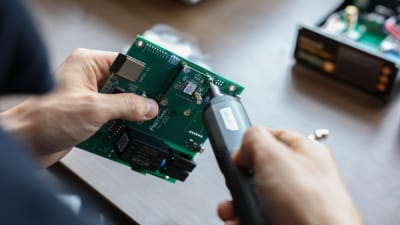
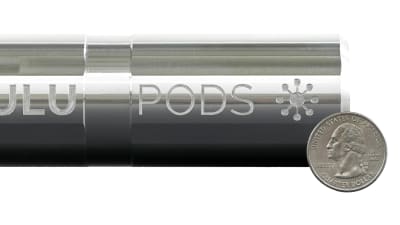
On the heels of taking first place in the Aerospace & Defense category at the 2023 Create the Future Contest, Zulu Pods has grown in nearly every way imaginable and shows no signs of slowing down (nor a desire to!) at any point soon.
NASA Spinoff: Data Acquisition
NASA-funded hybrid power system makes drones more capable in disasters.

5 Ws: Sensors/Data Acquisition
One of the 2026 CES Innovation Awards honorees in the robotics category is AEON — a humanoid robot developed to address labor shortages as industries adapt to ageing populations and shifting workforce demands.

Articles: Propulsion
Pinggao Group focuses on the development and production of high-voltage and ultra-high-voltage electrical equipment. Different teams at the company use simulation to explore in depth the factors that affect the performance of high-voltage switches as well as to optimize switch designs and predict the operational status of equipment. Read on to learn more about the work.

Briefs: Robotics, Automation & Control
For a robot, the real world is a lot to take in. Making sense of every data point in a scene can take a huge amount of computational effort and time. Using that information to then decide how to best help a human is an even thornier exercise. Now, MIT roboticists have a way to cut through the data noise, to help robots focus on the features in a scene that are most relevant for assisting humans. Read on to learn more.

Briefs: Robotics, Automation & Control
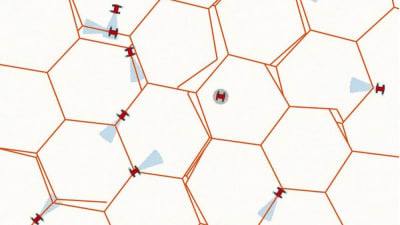
Bees, ants, and termites don’t need blueprints. They may have queens, but none of these species breed architects or construction managers. Each insect worker, or drone, simply responds to cues like warmth or the presence or absence of building material. Now, researchers at Penn Engineering have developed mathematical rules that allow virtual swarms of tiny robots to do the same. Read on to learn more.
Briefs: Design
Researchers have created a light-powered soft robot that can carry loads through the air along established tracks, similar to cable cars or aerial trams. The soft robot operates autonomously, can climb slopes at angles of up to 80°, and can carry loads up to 12 times its weight. Read on to learn more.

Top Stories
 Blog: Lighting

A Stretchable OLED that Can Maintain Most of Its Luminescence
 Blog: Energy

Batteries that Can Withstand the Cold
 INSIDER: Energy

Advancing All-Solid-State Batteries
 Quiz: Energy

 Blog: Physical Sciences

 Blog: Materials

Webcasts
 Upcoming Webinars: Sensors/Data Acquisition

From Spreadsheets to Insights: Fast Data Analysis Without Complex...
 Upcoming Webinars: Electronics & Computers

Cooling a New Generation of Aerospace and Defense Embedded...
 Upcoming Webinars: Sensors/Data Acquisition

Beyond AI-Copy-Paste Engineering: Advanced AI-Integration Success...
 Upcoming Webinars: Power

Battery Abuse Testing: Pushing to Failure
 Upcoming Webinars: Connectivity

A FREE Two-Day Event Dedicated to Connected Mobility
 Upcoming Webinars: Test & Measurement

Choosing the Right N-Port Strategy: Multiport VNAs vs. Switch...