
-1
420
30
Blog: Aerospace
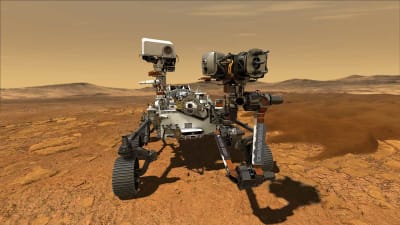
Watch as the Perseverance rover lands on Mars.
Blog: AR/AI
Design engineers should be cautious in how they design and deploy mixed-reality technologies, says an industry expert.

Blog: Test & Measurement
Should you replace your big coordinate measurement machine with laser radar? Or should you just add a laser scanner with a CMM? A reader asks our expert.

Blog: Materials
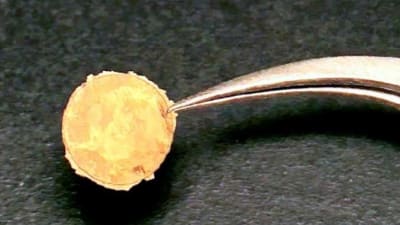
The hard “coin,” could be used to make super-strength metal coatings or larger industrial components.
Blog: Materials
The "polymer of squares” could one day enable the use of plastic products many times over.

Blog: Automotive
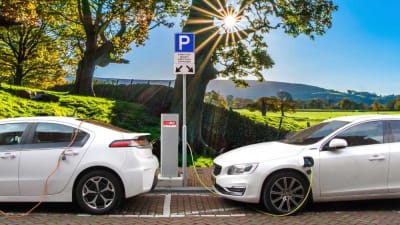
If you're concerned that electric vehicles don't have the reliability to get you where you need to go, Penn State engineers are working on a battery for...
Blog: Nanotechnology
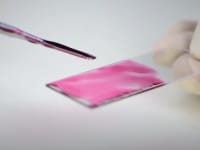
Inspired by the squid's color-changing chromatophore, Rutgers engineers set out to create an artificial one.

Blog: Materials
The non-contact method of curing leads to adhesives that can be activated on demand.

Blog: Transportation
In a roundtable presentation at the virtual CES 2021, panelists said the COVID-19 pandemic has changed driving patterns and consumer preferences – and that those shifts are here to stay.

Blog: Robotics, Automation & Control
A survey of over 170 experts assessed the opportunities and challenges that drones, robots, and autonomous systems could have for urban nature and green spaces.

Blog: Sensors/Data Acquisition
The sensor is able to detect ice formation far before you can see it occurring on a surface.

Blog: Mechanical & Fluid Systems
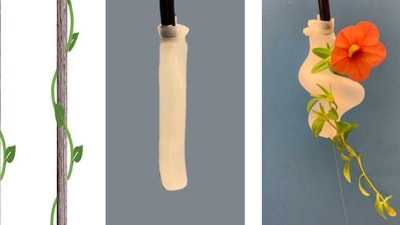
As engineering professor Mable Fok saw how the pole beans in her garden wrapped tightly around any objects nearby, she had an idea:
What if a robotic gripper could do the same thing?
Blog: Robotics, Automation & Control
UW doctoral student Melanie Anderson explains how to make an autonomous 'Smellicopter' to navigate toward smells.

Blog: Photonics/Optics
Optical interference filters are critical to the overall performance of machine vision applications. So how do you select the right one?

Blog: Aerospace
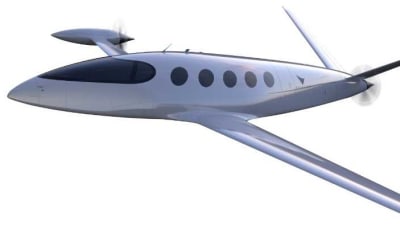
An Israel-based company called Eviation is working on an all-electric aircraft known as "Alice." Will it match the speeds of a jet?
Blog: Sensors/Data Acquisition
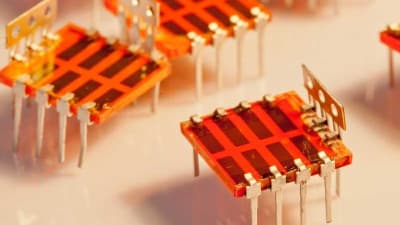
By jumpstarting electrons, a team at Washington University in St. Louis has developed sensors that can power themselves for more than a year.

Blog: Software
The model analyzes three factors that drive infection risk: where people go in the course of a day; how long they linger; and how many other people are visiting the same place at the same time.

Blog: Energy
A new material is especially effective at absorbing indoor light and converting it into usable energy.
Blog: Materials
The RepelWrap inventors explain why their product is especially valuable as the world confronts a pandemic like COVID-19.

Blog: Motion Control
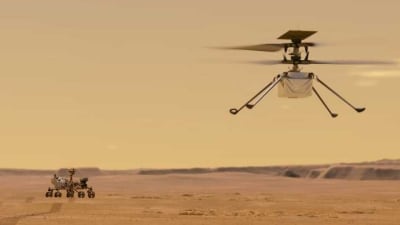
The great tasks of retrieving samples and flying a helicopter on Mars requires a number of small parts — specifically motors and drives.
Blog: Energy
The soil microbial fuel cells produce energy to filter enough water for a person’s daily needs, with potential to increase scale.

Blog: Sensors/Data Acquisition
Purdue University innovators are taking cues from the spider to develop 3D photodetectors for biomedical imaging.

Blog: Design
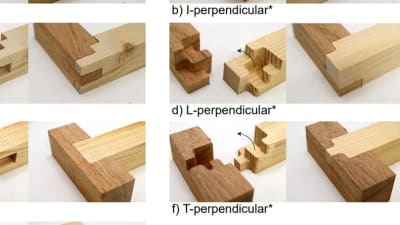
An interactive software being developed at the University of Tokyo allows architects and furniture makers with little experience in woodworking to to design and build structurally sound wood joints.
Blog: Transportation
A reader asks, "For AV testing, what are the respective role of simulation, closed course, and public road testing?"

Blog: Robotics, Automation & Control
A robot being tested at the University of California San Diego takes after an aquatic invertebrate that has a jet-like way moving through the water: The Squid.

Blog: Electronics & Computers
University of Central Florida researchers are developing a human-like way for large machines to cool off and keep from overheating: Letting the machines "breathe."

Blog: Unmanned Systems
Researcher Nina Mahmoudian is finding a new way for underwater robots to recharge and upload their data, and then go back out to continue exploring, without the need for human intervention.

Blog: RF & Microwave Electronics
A reader asks, "Will the public feel safe enough in an autonomous vehicle?"

Blog: Mechanical & Fluid Systems
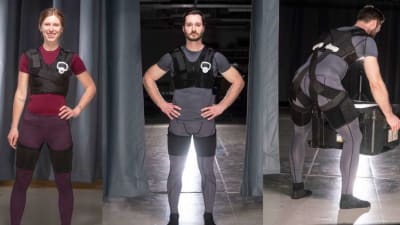
Vanderbilt University engineers are proving that their elastic exosuit can provide relief for people doing the heavy lifting.
Top Stories
 Blog: Design

Aerial Microrobots That Can Match a Bumblebee's Speed
 Blog: Energy

My Opinion: We Need More Power Soon — Is Nuclear the Answer?
 Blog: Electronics & Computers

Turning Edible Fungi into Organic Memristors
 Blog: Semiconductors & ICs

Revolutionizing the Production of Semiconductor Chips
 Blog: Robotics, Automation & Control

Microscopic Swimming Machines that Can Sense, Respond to Surroundings
 Quiz: Energy

Webcasts
 Upcoming Webinars: Power

Hydrogen Engines Are Heating Up for Heavy Duty
 Upcoming Webinars: Transportation

Advantages of Smart Power Distribution Unit Design for Automotive...
 Upcoming Webinars: Unmanned Systems

Quiet, Please: NVH Improvement Opportunities in the Early Design...
 Upcoming Webinars: Power

A FREE Two-Day Event Dedicated to Connected Mobility
 On-Demand Webinars: Automotive

E/E Architecture Redefined: Building Smarter, Safer, and Scalable Vehicles
 Podcasts: Unmanned Systems

How Sift's Unified Observability Platform Accelerates Drone Innovation